Skip to content

Heuristic

  • GitHub
  • Email
  • Scholar
  • LinkedIn
  • Twitter
  • Instagram
  • Medium
  • Twitch

  • The university as a four-year Fourier Transform

    Inspirational wisdom from an anesthesiologist

    Yesterday afternoon I arrived from the 2017 Annual AAAS Conference. Interviews, networking, dinners, parties were only the skeleton of the experience. Handing out curved-corner business cards, sipping coffee with world-renowned journalists, and partying with funky scientists filled in the rest. And of course, the Northeastern-style seafood was pretty cool too. And, as my undergraduate years come to a close, the culmination comes like a roll of the dice.

    I’ve spent the past three years ranting about everything. From business-like motives to the liberal arts to a general philosophy of life, things suck. And these things haven’t gone away. But I chaos brings order. Struggle brings wisdom. And resourcefulness brings ingenuity. Over the past five days at the 2017 American Association for the Advancement of Science Conference, things were dire. With rallies in the streets and speakers repeating the phrase “now more than ever”, there’s a need for truth at every corner of today’s society. The emphasis on the need for policymakers, journalists, and scientists to let their voices be heard in the current political climate couldn’t have been overstated.

    Educating the public on the need for scientific research in all areas got people fired up. The post-truth search for objectivity and facts have taken center stage in mostly every debate.

    But, as I listened to speakers in the Hynes Convention Center and watched the sunrise on Boston Bay, I wanted to make sense of the world by myself. It seemed like math. 
    Mathematical functions help us make sense of the world. The Fourier transform is a mathematical function that shows the different parts of a continuous signal. It can be used to convert from time domain to frequency domain. Fourier transforms are often used to calculate the frequency spectrum of a signal that changes over time. This processing solves equations for uses in cryptography, oceanography, and recognition of speech or handwriting.

    A Fourier transform shows what frequencies are in a signal. Fourier transform of the sound waves of the musical note frequencies.

    Many signals can be created by adding together cosines and sines with varying amplitudes and frequencies. The Fourier transform plots the amplitudes and phases of these frequencies.

    It’s the type of transform that takes a function and turns it into something you’ve never seen before.

    College is much the same way. Spending years of introspection at a desk twists yourself so much you forget who yo are. The way you evaluate other people, the thoughts that catch your interest, and the struggles of the world need a different set of tools to measure them. Finding the right system of equations or problem-solving method of looking at the world are all part of Aristotle’s crafty advice. And, if science is going to offer anything to world, the value will come after a thorough analysis of why we need it. Education on theories of evolution would an empathetic soft-spot for human cognitive biases. Research on space exploration would need to instill a wonder and curiosity to remain relevant.

    Yesterday morning, I had a phone interview with a post-baccalaureate position at the National Institute of Health. I spoke My interviewer, Ryan Dale was a bioinformatician looking for a new trainee. After the interview, I took the subway to the airport so I could get home. When I was on the subway, I ran into a friend of Ryan Dale. We exchanged contact info and talked about science. It was spurious, surprising, and serendipitous!

    Anyone else who would have had this experience would have praised the importance of random encounters. But why did I need reassurance that random walks can be transformed into order? Making beauty from from chaos is what drives me through everything. And, even with the undeniable necessity of chance, there are so many understandable factors that aren’t so evident. I roll the dice and sip my coffee. But I remember the rest of the universe at work.

    I’ve heard a lot of advice. From the good, the bad, and the ugly, I’ve always wanted to put these words of wisdom into context that makes sense. No matter what I’m learning or thinking about, I’ve wanted to grapple with ideas before accepting them as truth. Even innocuous advice on networking or self-acceptance seem absurd and difficult for me to believe. It’s easy to repeat mantra like “It’s not about what you know; it’s about who you know,” without realizing the limits, context, and culture that infect what we say.

    Talk about the need to question ideas and search for truth is cheap. Seemingly innocent science rhetoric to stand for “truth” can hide smugness and naïvety. Until scientists can learn to get off the supposed moral high ground of intelligence, the rest of the world won’t trust them one bit. It’ll take communication with precision, empathy, and reason to get there.

    One piece of advice that has stuck with me is that you can’t plan out your whole life, but, if you make the right decisions at the right times, things will make sense when you look back on them.

    February 22, 2017
    Science

  • The pursuit of science for art’s sake

    Urdu poet Faiz Ahmad Faiz rejected the notion of “art for art’s sake.” The leftist revolutionary used poetry for political influence toward Pakistani nationalism, humanism, and love poems.

    What’s the point of science? Aesthetic, utility, personal fulfillment plague our rhetoric as we search for knowledge. But a purpose is just a purpose till its probed further. Then it becomes something deeper. It becomes something meaningful for people to make sense of their lives. With existential fears of artificial intelligence, biotechnology, and climate change on the rise, science becomes more and more an idea to be scrutinized, rather than left to the whim of desire. What does it become? An art.

    Before coming to understand the use and purpose of science, there must be a way people derive meaning from their lives in any sort of context. And this wide context might be applied to a search for meaning in science. After all, meaning is everywhere. Urdu poet Faiz Ahmed Faiz faced the reality of this search for meaning. How could poetry, in words on a page, strike the souls of change in the world? Surely by reading the history and cultural context surrounding Faiz’s life, we choose various links in meaning here and there. In constructing a story, the links follow in time. We say X causes Y and Y causes Z. I am hungry because I have not eaten breakfast. I am 22 years old because I was 21 years old last year. And Faiz took on sociopolitical issues of his time as those were the ones that drove him. But, as Ken Chen of the New Republic argues, there are issues and limits in finding the use of poetry in politics. As Aristotle would have said, history is philosophy but with examples, so there must be a deeper purpose.

    Art might have more to offer than pretty pictures and pleasant poems. In any poem, movie, or video game, the observer should ask what it is about that work of art that moves them. People should ask themselves what features cause them to have a certain experience, and what might be common between those features. When those works of art seem to exist in an alternate dimension, there must be some human connection with it.

    With science, though, the world revolves so much around its utility and progressiveness that changing its direction would prove difficult. Even in art, work can often be commodified. Usurping its rational, rigid emphasis on having the right answers at the right time while art flourishes in the anti-reality. But even in the most far-fetched state of nature, there is a movement of the human soul from the aesthetic. “We are far too inclined to regard art as an ornament and to perceive taste as a fixed, narrow track along which each one of us travels, alone or in select, like-minded company,” said A. O. Scott in his book “Better Living Through Criticism: How to Think about Art, Pleasure, Beauty, and Truth.”

    “Beauty is truth, truth beauty,—that is all Ye know on earth, and all ye need to know.” John Keats, “Ode to a Grecian Urn”

    What does this mean for art today? The world of art should encompasses all aesthetic value, extending beyond the paintings of Andy Warhol or the tracks of Beyoncé’s new album, and into the the most remote and peculiar of places we would find artistic value. This would mean down to the filters of our Instagram photos. And the surreal state of art, in its malleable, superficial form with the advent of technology and globalization, has lost much of the way artists add style to their own work. We are only now coming to terms with what happens to the idea of art when images can be endlessly circulated, reproduced, and manipulated, we’ve prized the “look” as an instant style, said Ricky D’Ambrose of the Nation. This sort of “look” changes the way we look at the value of these images.

    Philosopher John Dewey said that glorifying art and setting it on a pedestal separates it from community life. Such theories might do harm by preventing people from realizing the artistic value of their daily activities and the popular arts (movies, jazz, newspaper accounts of sensational exploits) that they most enjoy, and drives away the aesthetic perceptions which are a necessary ingredient of happiness.

    Has science gone down the same path? Coming to appreciate the equations on the chalkboards of my courses in mechanics and differential equations, I’ve always been moved in much the same way an aficionado of an art museum would be. Finding the meaning and purpose of different sorts of theories and mechanisms, whether its about the structure of DNA or on a convoluted chemical reaction, there was always something more to understand than its utility for human progress. It becomes an art. Even the search for utility (in maximizing the practical value of a scientific phenomena) would provide me with a feeling of satisfaction only comparable to the happiness of listening to my favorite music. Everything becomes just right.

    Through this understanding of the nature of art and its place in the world, scientists could develop their own ideas of the purpose of their own fields and disciplines. Not just for the sake of the fields themselves, but for the sake of finding that sake.

    “Art for art’s sake is an empty phrase. Art for the sake of truth, art for the sake of the good and the beautiful, that is the faith I am searching for.” – George Sand

    The relation between aesthetic and science should be explored. Throughout his work, cognitive science professor Douglas Hofstadter thoroughly examines how life can come out of the inanimate. Anything without a soul moves us in a certain way, whether its through a computer algorithm or an analogy. Hofstadter’s work on the relations between words, ideas, and anything else at the core of cognition sheds light on these answers. He could show that the decision of a computer might be the result of an aesthetic choice, not an algorithmic one. 

    December 28, 2016
    Philosophy, Poetry, Science

  • Computer-based biology uncovers secrets to rice growth

    Read this article in the Indiana Daily Student here…

    December 12, 2016
    Science

  • Analogies and word choice shape political discourse

    What patterns do you see? From Douglas Hofstadter’s “Fluid Concepts and Creative Analogies”

    Read this article in the Indiana Daily Student here…

    December 11, 2016
    Science

  • Playgoing in the digital age could help understand literature, professor says

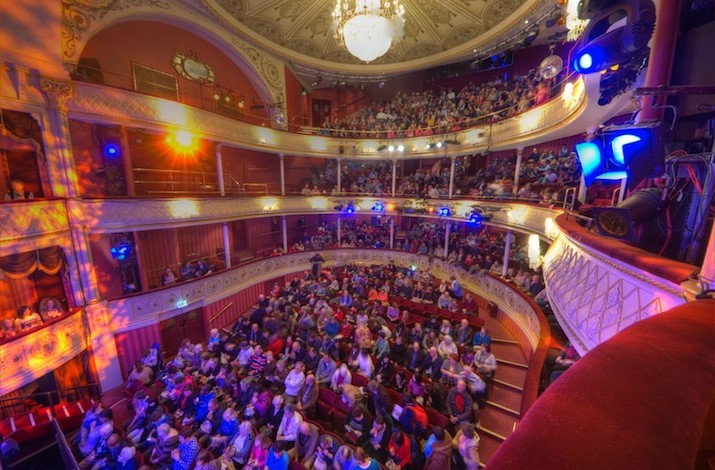
    Theatre Royal Bath

    Read this article in the Indiana Daily Student here…

    December 6, 2016
    Education

  • Professor says male birth control study may have had sexist bias

    Read this article in the Indiana Daily Student here…

    November 28, 2016
    Medicine, Science

  • Journalists in a post-society and returning to untruth

    Jonathan Jones asks if anyone cares about Van Gogh’s drawings in a post-truth world.

    Post-truth, post-9/11, postmodern, post-industrial, post-everything in our post-society.

    Who do we trust anymore? In a whirlwind of upsets, unpredictability, and unsettlement, the world is at edge in post-truth. At least Oxford Dictionary’s “post-truth” as the word of the year was no surprise. But the rise of populist rhetoric, distrust of anyone in power, and general heightened insecurity have drawn scrutiny from the philosophers for centuries. And the truth is nowhere to be found.

    Through the democratic forces that give agency and a playing field for any soul who chooses to engage, the news drives discourse. The mass media, with all it offers to love and hate, has evolved from newspaper stands from writers to an amorphous, ever-consuming ghost which infects all parts of society. And, through Trump, Brexit, and everything else, the discourse has had a tough fight. The post-truth world might be less about figuring out right from wrong, but what right and wrong really mean anymore. It’s no longer the case that the right answers to problems will appear when we find solutions, but, rather, result from understanding the role of subjectivity, validity, justification, certainty, and other epistemic values that give color to the truth. With these shades and hues that taint the blacks and whites, the post-truth world becomes a bit more understandable. Or at least, a bit more entertaining.

    Journalism might not be dead, but it’s tough to say where it’s going to go. The few who have turned to those who think about the big questions, it’s not so clear. But asking for answers from philosophy was never meant to be easy. Philosopher Charles Taylor hopes everyone can restore their faith in democracy. Diplomacy analyst Franz-Stefan Gady wants more philosophers in the Pentagon. One might also turn to the witty, easygoingness of Hume or the lighthearted disdain for mass media of Nietzsche for inspiration. Gady even goes so far to say, “In the post-truth world, victory is a delusional fancy, as was the case in Iraq, but the philosopher would have insisted on defining a military victory in war in clear and delimited terms predicated upon immediate and enduring peace as the only logical metric for defining success on the battlefield.” Such a thorough, deliberate course of thinking only brought upon by the philosophers would give the world a much-needed voice of reason or sigh of relief through whatever happens. And it’s more than just a simple matter of being trained in Hegel and Kant or doing well on philosophical essays and standardized tests, but a reflective and much-needed manner of intellectual growth that every soul desires. 
    Sexual assault stories from Kelly Oxford and others took center stage.
    And surely there’s a battle going on inside everyone and everything in the world to not only make sense of the world but to find truth in a post-truth world. In my time working at the Indiana Daily Student for the past three semesters, I’ve found myself at ends with meaning. As many members of our staff shared personal experiences with sexual assault over Twitter, we took a bold move but risked integrity and objectivity to expose a greater harm. The way a reporter decides what to call a story and breath life into his or her own experience. And this raises a concern. Breathing life into stories we can’t touch might just be what’s wrong with journalism. Reporting unprovable anecdotes in sob stories, especially in the trite, contextless realm of social media, presents these existential struggles. But there might be a better way to look at it. In communicating an experience with assault this way, the journalists do not ask the readers to weigh in on their personal moments. There are no vendettas, malice, or personal agendas to get revenge on nasty ex-boyfriends. Rather, the meaning of the story comes from virtue of the reader imagining the journalist’s scenario. The reader adds a truth in his or her personal subjectivity of what sexual assault is like (much like Kierkegaard’s “Truth as subjectivity” claim), and, through an understanding of the values and experience at play, we bring light to this greater problem. The sharing of sexual assault stories becomes a sentiment-based movement that avoids the pitfalls of the “court of social media” while giving enough detail to make a statement. While it doesn’t truly overthrow the ambiguity and distrust of post-truth stories, it shares a lesson to understand people have been through, reconciling uncertainty with experience.

    This post-truth approach to something as fragile as a sexual assault story gives the reader, however detached and disillusioned he or she might be, a connection. One voice is a pebble in the ocean, but many become a crowd.

    Søren Kierkegaard wrote in, “The Crowd is Untruth”,

    The crowd is untruth. And I could weep, in every case I can learn to long for the eternal, whenever I think about our age’s misery, even compared with the ancient world’s greatest misery, in that the daily press and anonymity make our age even more insane with help from “the public,” which is really an abstraction, which makes a claim to be the court of last resort in relation to “the truth”; for assemblies which make this claim surely do not take place. 

    Where does the public go? The minority who speak to uphold the truth find themselves at odds with the crowd. Meandering through the messages of today require attention to these limits, lest we lose the battle on truth. 

    November 24, 2016
    Philosophy

  • Digital economy could pose environmental risks, professor says

    Read this article in the Indiana Daily Student here…

    November 18, 2016
    Science

  • Trump presidency a "gloomy forecast" for climate change, scientists warn

    De Kooning “Attic”

    Read this article in the Indiana Daily Student here…

    November 16, 2016
    Science

  • Liberal arts challenges career-driven education

    “Pyramid of Skulls” by Cézanne

    Read this article in the Indiana Daily Student here…

    November 15, 2016
    Education, Philosophy

Previous Page Next Page

  • Subscribe Subscribed
    • Heuristic
    • Already have a WordPress.com account? Log in now.
    • Heuristic
    • Subscribe Subscribed
    • Sign up
    • Log in
    • Report this content
    • View site in Reader
    • Manage subscriptions
    • Collapse this bar