Skip to content

Heuristic

  • GitHub
  • Email
  • Scholar
  • LinkedIn
  • Twitter
  • Instagram
  • Medium
  • Twitch

  • The Appropriate Rhetoric on the Purpose of a College Education

    Since I was a young high schooler, I’ve felt uncomfortable with the way I am expected prepare for college, and, even in college, this fear has not subsided. I’ve never been able to shake off the pressure to fit myself into a mold to please future admissions officers or employers and subsequently felt rather disillusioned that the things I do are only meant to fill up lines on a resume rather than give myself anything else. Surely there are reasons why, for example, medical school admissions officers would want us to volunteer and gain leadership experience. There are definitely benefits and valuable things that we can get from extracurriculars, but those details don’t change the fact that there has been a distinct shift in the purpose of our education over the past several decades; we are turning the high school & college experiences away from learning how to grow as a person and towards providing a practical benefit. 

    I will assert that, while an overemphasis on practical motives can be harmful, one does not need to obtain instant gratification of a deeper meaning at every moment of his/her life. In other words, we don’t have to make every decision in our lives with the burdensome thought that we are not pursuing these activities for the proper motives. When I spoke to one of my friends, an undergraduate majoring in Mathematics & Philosophy, he gave me some great insight on this issue. To find fulfillment in a certain activity, a person often relies on a “feeling” that he or she experiences when doing that activity. For example, when one is performing scientific research, he/she may be motivated by a satisfaction that he/she feels when analyzing data or looking for the right answers. But, when we look at this type of “feeling”, then the question of whether or not the activity that we are doing is only personal satisfaction. It’s just a feeling. Statements like “My research that I’m performing is meaningless” are similar to “I really like waffles.” The same way one does not desire waffles at every single moment, one does not have to obtain a feeling of satisfaction that one is finding a deeper meaning of research at every given moment.

    This isn’t to suggest that the big questions of what a value of a college education has are meaningless nor that an individual’s self-guided search for meaning is meaningless. It’s still very important for individuals to analyze their own motives and act the appropriate way to ensure that, overall, their actions are well-justified from reasonable principles.

    William Deresiewicz, English Instructor at Yale University, has written about much of the way undergraduates are taught to think and learn. In his book, “Excellent Sheep”, he describes how “our universities have become places to turn students into tunnel-visioned careerists, adept at padding their résumés and filling their bank accounts but unprepared to confront life’s most important questions.” (sauce). Deresiewicz also goes on to tell about how the shift away from the humanities and towards the more self-evidently “practical” subjects have caused us to lose sight of understanding how to think. He explains how college should be a time for self-discovery, when students can establish their own values and measures of success, so they can forge their own path. While putting a stronger emphasis on the humanities seems like a romantic goal and I do definitely think that undergraduates should appreciate the humanities more, I’m dubious that simply getting more students to major in English or History will strengthen our ability to learn how to think. Besides, it sounds pompous and myopic for me to insist that because I study the humanities, therefore other students should too. Perhaps the answer lies not in that we need to stop being “practical”, but that we simply haven’t adequately identified the “practicality” of various subjects like Philosophy or the Arts. I think there may be deeper problems in the way we structure and teach courses in those subjects of the humanities, as well. 

    But, surely, these questions don’t apply to pre-medical students, right? Wrong. On the Harvard Medical School Requirements for Admissions page, it is written, 

    “We adhere to the important principle that the college years are not, and should not be, designed primarily to prepare students for professional schools. Instead, the college years should be devoted to a creative engagement in the elements of a broad, intellectually expansive liberal arts education.”

    How can we, undergraduates as a whole, address these issues? We need to talk about it. We need to establish a meaningful rhetoric when we give reasons why do the things that we do. we need to talk about what the true meaning of learning. When we advertise or write about the activities we do, we need to use the appropriate rhetoric to address any issues that may arise. “We are devoted to giving findings the skills/experience necessary to prepare us for medical school”, we should say “We are devoted to create experiences that are necessary for intellectual growth.” When we volunteer, we can encourage students to ask questions about the ethics/motives of what we do. (For example, viewing volunteering as an avenue for one’s own practical experience denies the core ethical truths of selflessness and generosity that should guide volunteering.) When we take classes, we encourage students to discover new areas and study new things. We can encourage more students to openly debate and ask questions about the purpose of their research/classes/whatever. Most importantly, we need to remember that we are not here for the purpose of getting into medical school or preparing for future careers. We’re here so we can understand what it means to learn. 

    Before I end this post, I want to address the fact that I am aware that a lot of the things I am saying will seem critical and abrasive to many people. It may seem as though I am attacking the very foundations that many students have built their academic careers upon and I am pointing out the ethical flaws in the individual. Let me emphasize that I am not here to criticize individual people or organizations. I am not here to judge others for what they have done. At the same time, we need to be able to point out wrongdoings in a healthy and diplomatic way. It is true that we often find ourselves avoiding disagreement out of fear that others may be upset. We often confuse general statements about problems as personal attacks. We find students being non-confrontational about poor behavior for the sake of being “open-minded” and “tolerant.” I want to open up a discourse about these issues so we can all come to our own solutions about these problems. 

    Throughout our education, we should remember that our objective should be to find a purpose in the things that we create. By this, I mean that we need to see success as something that an individual student can create (ie., earning good grades, starting conversations about new things, coming up with new ideas, studying new things, asking questions about the things we do etc.), rather than something that students needs to obtain (ie., vapid leadership positions, “professional” skills, interpersonal experience, etc.). We need to encourage student to not be afraid to take risks nor experience failure. If we can make our souls deep and rich, then whatever we choose to do in life will be incredibly meaningful. 

    July 9, 2015
    Education

  • The Purpose of Art and the Beauty of Science

    I’ve already touched a little bit about how our study of aesthetics may parallel the value we derive from other experiences, including experiences like a college student’s education. From the films on the big screen to Egyptian hieroglyphics (or even the most extreme modern versions of nihilism), art has has caused an insane amount of controversy among philosophers surrounding its purpose and nature. In this article, I’d like to explore the relationship between art and science, and, specifically, how the I’m not sure how much of a parallel there is between theories of art and theories of how we approach science, but I do believe that an exploration of cultural and aesthetic value can help scientists understand what meaning they truly draw from science and, overall, help everyone take steps to determine the value of a college education.

    M. C. Escher: dismissed by the art world and venerated by mathematicians

    When I visited the Art Institute of Chicago for the first time this past weekend, I was blown away to say the least. Though I found hundreds of amazing works of art stretching from the Medieval to the modern, I preferred to stay in two or three different rooms for hours at a time, absorbing a lower number of paintings in preference to meditating upon the value that the artwork has to offer. I didn’t know what to expect, and, as I am by no means an expert on art or art history, I tenaciously struggled to search for a deeper meaning behind the works. The quiet, everlasting atmosphere that captured moments from any time or place in history certainly said something to me. This was most likely dazzle and glitter that any neophyte without serious training in art or culture would feel. Aesthetics, used in this sense, is not simply a matter of looking at things that are “pretty” or “pleasing to the eye”, but, I believe, a word that is used to describe the ways we perceive things that are beautiful. Some might use “aesthetics” to talk about a sense of pleasure that is derived from artwork or, in general, anything.

    What is the purpose of art? Plato believed that it was immoral. Tolstoy believed it communicated feelings between people. Kant believed that art creates intellectual activity. Clive Bell would write that art has the power to carry us away from the woes and trials of mankind to a new land of aesthetic praise in which we find ourselves freed from worry and other human weakness.

    “The pure mathematician rapt in his studies knows a state of mind which I take to be similar, if not identical. He feels an emotion for his speculations which arises from no perceived relation between them and the lives of men, but springs, inhuman or super-human, from the heart of an abstract science.”

    I can faintly remember the first days of my 9th year physics class when I was immediately to mathematics and physics in the way that they could be so practically and fundamentally used to describe the world. Though there is a great amount of beauty in these fields, I don’t believe that this initial appeal had much to do with aesthetics, but, more-so, utilitarian purposes. Even in my Thermodynamics & Statistical Mechanics class this past semester, the other students and I would mostly drive towards finding the most practical solutions for common engineering problems (ie., Carnot Cycles, Debye theory, etc). However, my friends and I would still find the process of reducing complex phenomena of equilibrium, differentiable phase-space diagrams, and work down to a small number of equations and variables.

    In addition, the self-checking tendencies of math and physics (for example, setting a derivative equal to zero to identify maxima), allow us to find different value in different methods of studying those areas. Whether or not our state of mind (that Bell describes) is an emotion similar to the one of a museum-goer overcome by van Gogh’s “The Bedroom” might be a question that can be explored through research in neuroscience, but, ultimately, the similarities of aesthetic between science and art shakes the fundamental ideas of what science is. I do not want to be too quick to conclude that the two feelings are the same since human beings feel “pleasure” in many situations (being physically close to a loved one, being economically stable, doing drugs) that may be distant from the values of art and science. And this “pleasure” can often be confused with the feelings we experience when we find something beautiful.

    Can art, or this aesthetic value, be beneficial to scientists? We often talk about equations, proofs, experimental designs, or even the materialistic phenomena themselves as having some sort of aesthetic appeal to them. Mathematicians love to use the term “elegant,” and physicists love to explore the underlying beauty and appeal of their science. These ways of looking at science still carry aesthetic value that has not been ultimately reduced to In biology, however, beauty is hardly ever the focus of science. (And, of course, chemists fall somewhere in between). This generalization obviously does not account for many exceptions and individual beautiful findings in biology, however. Some might say that our model of DNA is beautiful because it aligns with the ethos “form follows function.” But how can we know if this biological beauty comes from the way we, human beings, have chosen to model and look at those phenomena or whether Darwinian natural selection has a certain taste in modernism? Perhaps the absurdity of the ideas that nature has a personal taste in the design of DNA or that complicated molecular pathways and networks have some sort of “end-goal” in mind has prevented the study of biology from truly approaching nature in a manner guided by aesthetics.

    Einstein, in addition to being a good-looking dude, enjoyed to meditate on the nature of the aesthetic appeal in his work. Though the claim that Einstein’s breakthrough theories of the early 20th century were driven by modernist or similar cultural trends of artwork in Europe is untrue, there is truth in the story of how Einstein’s interpretation Schopenhauer influenced his way of thinking and looking at the world in the years leading up to his monumental formulations. And it would surely be difficult for any scientist to swallow the idea that his/her work and discoveries have only come about through the cultural and artistic ideologies that govern their time period. If we are to allow a sense of artistic value or beauty in the well-reasoned and defended world of science, do we lose objectivity? It seems detrimental to the notion of reason and intelligence that our empirical and true exploration of the universe can have a human element to it. Bell might respond that, before we experience a good work of art, we, whether we are aware of it or not, find something about the work of art to be “right” or that it just has to be the way that it is. Is this sense of “rightness” the same as that which drives science? Then, we must ask ourselves whether science is right because it is the way it is or because we have perceived it this way.

    Throughout art and science, let us appreciate what all fields of study have to offer and, hopefully, we can learn to respect the disciplines for what they are before we can too tangled up in the pseudo-intellectual speculation of crossroads (I’m looking at you, evo-psych.)

    July 8, 2015
    Philosophy, Science

  • The Art of Asking a Question

    I sat in front of the professor during office hours two days before the midterm exam. As I was flipping through my notes, page after page, I was searching for something that would allow me to ask a question. What were the things that I was at least a little bit “fuzzy” on? What material that we have learned could potentially be on the exam? And how could I create a question? The professor would stare at me with an earnest smile and his hands clasped together on his desk as he waited for a query. 

    The peculiar thing about asking a question is that it simultaneous shows what you know and what you don’t know. It would shed light on whether or not you understand the information of a course, but, more importantly, it shows that you are aware of how well you understand the information. I don’t know how much we should  students who ask questions in class are not the ones who are ignorant or stupid, but the ones who are the most cognizant of their own knowledge.

    As I sat there in front of my professor with my eyes rested in my poorly-organized sketches of notes and homework problems, I realized that I couldn’t think of a question. The professor suggested that I should come up with a list of questions that night to ask him during the next day. One thing that has made my classes more and more difficult over the years is that professors expect more initiative from students to ensure that they understand the material of the course. It becomes so demanding that professors can most likely tell whether or not students know that they truly understand the material. Throughout my academic journey, I’ve noticed a shift in the responsibility of learning from the teacher to the student. Back in high school, it seemed the responsibility of the teacher to make sure that everyone in the classroom was able to integrate by parts or understand how to write a thesis statement in preparation for the test at the end of the week, but, in my Logic and Philosophy class this past semester, the professor did not give us a “textbook” of material that we would “need to know”, but, rather, present information through lectures that required the students to initiate queries to make sure we understood the information. It forced us to confront the omnipresent fear of asking a question, whether in class or elsewhere.

    I think that, when students are too afraid to ask questions, it is due to a social pressure that we worry how others perceive us. Indeed, when one asks a question, he/she definitely doesn’t understand something, so, by doing so, we are revealing our true ignorance. But, in addition to understanding material, we must know if we understand that we know the material. If students were able to recognize that this “ignorance” is what keeps science and research running, maybe we wouldn’t be so afraid to ask questions. 

    July 7, 2015
    Education, Philosophy

  • Myths in Medicine: The Epistemology behind so-called “Conflicts-of-Interest”

    As tempting as it may be for one to believe that the medical products industry is free of corruption and that there are no people acting for heinous purposes, it’s difficult for anyone to take a position on issues in the health care industry without extensive knowledge. With the negativity of the discourse and multitude of issues surrounding making sure that we can provide for the health of everyone, it would be very refreshing and relieving for one to believe that all of those are simply results of misinformation and bad statistics.

    In “Pharmaphobia” Dr. Thomas Stossel delineates his decades of research and work on studying the so-called “conflict-of-interest” issues in the medical industry. Stossel begins with general statements about how the health care that we receive today is, for better or for worse, much better than it has ever been in the history of forever. The modern medicine Dr. Stossel packs his book full of scientific studies, anecdotes, and policy analysis in his journey through the history of medicine up to the problems we face today. He makes the contrarian claim that there has been a “conflict-of-interest” movement founded on unjustified claims about responsibility of results, exploitation of research, flawed policies, and a number of other lofty subjects. As a result, we end up with unnecessary taxes on products, price controls, misconstrued research data and other causes that thwart medical innovation and progress.

    Before we continue to explore these giants problems facing the medical industry, I’d like to take an aside and discuss certain epistemological approaches We tell ourselves to believe what is right and avoid what is wrong. What exactly does this mean though? As the moral value of knowledge lies on the foundation of what is true and what is false, it would be reasonable for us to ask ourselves what right we have to believe things that are true. Taking this a step further, we may posit that, by believing the truth, we are attempting to avoid believing things that are false and to have the most comprehensive set of beliefs as possible.

    “The ‘flat earth’ vs. ’round earth’ is not a difference in opinion. It’s a matter of right & wrong.”

    Consider two different approaches to solving a murder case. In the first approach, we choose to only use information given to us by evidence. In the second approach, we regard information by evidence as well as that information which we theorize. Which approach should we use? The former gives us a lesser chance of being wrong, as we take fewer risks with what could be true or false. The latter gives a greater chance of knowing more information. One might argue that you should believe something it  true to a certain degree of probability. Maybe there is a certain risk that we can take with the possibility of believing something that is false. But before we can confront knowledge as a microeconomics problem, things get more confusing when we confront paradoxes such as the preface and the lottery. Hopefully it should be more apparent why our right to have knowledge brings about issues upon close inspection. The epistemology in our approach must align with the appropriate rights to knowledge in research, industry, practice, or any other part.

    These challenges to our knowledge seem devastating (and they’re only the tip of the iceberg of epistemology), but there are ways for us to try to make sense of things. One may suggest that beliefs about which we confidently believe to be true are different from those beliefs that we believe true during inquiry. This way, there is a certain context to the truth of beliefs that we determine to be true. In other words, when we take for granted that a certain thing is true, then it doesn’t matter whether or not we regard it as true in the context of inquiry. Does it truly make sense to regard a certain belief as true in one context yet false in another? Well, throughout the history of science and medicine we see theories that change time and time again through the self-amending scientific method. Our current models always match existing data and information, and our theories make sense to us at the moment of what is available of scientific research. But, since most theories and models eventually are replaced by bigger, better ones, then it is reasonable to assert that our beliefs are false in the context of inquiry (since there is a very high chance that, someday, they will be disproved), but, as we are confident with the knowledge of those beliefs, we can believe they are true for now.

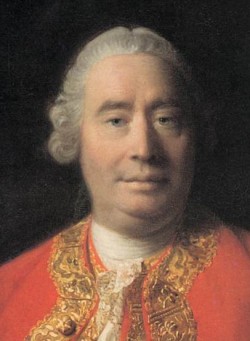
    “principle, that instances, of which we have had no experience, must resemble those, of which we have had experience, and that the course of nature continues always uniformly the same. (Hume “A Treatise of Human Nature” I.III.VI)

    Evidence-based approaches to medicine have been criticism by scientists and philosophers, or both, such as Mario Bunge. Bunge would remark that evidence-based medicine “has only strengthened the empiricist tendency to accumulate undigested data and mistrust all theory.” Why should we throw away theory and hypothesis to only limit ourselves to the what may appear more “truthful” as empirical science? It may be appropriate to use the word “skepticism” here not in the sense that we are trying to believe as little information as possible to avoid the risk of believing something that is false, but applying skepticism to our theories of research and regulation in medicine to get a better understanding of the underlying assumptions that govern our lives. Any attempt to circumvent possible motives and purposes by mankind by putting our entire faith into the numbers and graphs given by scientific experiments does not allow the theoretical lead that should guide medical research. And, the more faith we put into developing models that we can use for developing medical products, the greater room we have for skepticism. We need to ask ourselves what are the true causes of the issues we face in medicine. If we don’t correctly identify the proper causes and effects of the issues, then, as Stossel explains, the conflict-of-interest myth will continue like a foggy, intimidating machine that envelopes various sectors of the American public.

    Whether or not we call them “conflicts of interest” it is true that there have been dreadful instances in which the truth of science has been shrouded for other motives. When internist Barry Marshall and pathologist Robin Warren were working on a treatment for stomach ulcers, the cure, antibiotics, were cheap and easy to find. But the gastroenterologists had other ideas of the 1980’s had other ideas.

    During that year Robin and I wrote the full paper. But everything was rejected. Whenever we presented our stuff to gastroenterologists, we got the same campaign of negativism. I had this discovery that could undermine a $3 billion industry, not just the drugs but the entire field of endoscopy. Every gastroenterologist was doing 20 or 30 patients a week who might have ulcers, and 25 percent of them would. Because it was a recurring disease that you could never cure, the patients kept coming back. And here I was handing it on a platter to the infectious-disease guys.  (source)

    Ultimately, the two ended up experimenting on themselves to prove to the world that H. pylori, not stress, spicy foods, or anything else, caused stomach ulcers. More importantly, we see that, even as recent as the 1980’s, there were still causes for disease that we are unable to completely “rule out.” There are also issues between medical journals and doctors themselves in asserting what is actually true and false about diseases and treatments.

    What are the best ways for us to dispel the Conflict-of-Interest myth? Maybe it is more appropriate for us to search for evidence of collusion or similar ethical issues in the actions among researchers and practitioners before taking for granted what we may imagine to be the case. But, before we can do that, we must ask ourselves, do we really know anything?

    July 7, 2015
    Medicine, Philosophy

  • Myths in Medicine: The Epistemology behind so-called "Conflicts-of-Interest"

    As tempting as it may be for one to believe that the medical products industry is free of corruption and that there are no people acting for heinous purposes, it’s difficult for anyone to take a position on issues in the health care industry without extensive knowledge. With the negativity of the discourse and multitude of issues surrounding making sure that we can provide for the health of everyone, it would be very refreshing and relieving for one to believe that all of those are simply results of misinformation and bad statistics.

    In “Pharmaphobia” Dr. Thomas Stossel delineates his decades of research and work on studying the so-called “conflict-of-interest” issues in the medical industry. Stossel begins with general statements about how the health care that we receive today is, for better or for worse, much better than it has ever been in the history of forever. The modern medicine Dr. Stossel packs his book full of scientific studies, anecdotes, and policy analysis in his journey through the history of medicine up to the problems we face today. He makes the contrarian claim that there has been a “conflict-of-interest” movement founded on unjustified claims about responsibility of results, exploitation of research, flawed policies, and a number of other lofty subjects. As a result, we end up with unnecessary taxes on products, price controls, misconstrued research data and other causes that thwart medical innovation and progress.

    Before we continue to explore these giants problems facing the medical industry, I’d like to take an aside and discuss certain epistemological approaches We tell ourselves to believe what is right and avoid what is wrong. What exactly does this mean though? As the moral value of knowledge lies on the foundation of what is true and what is false, it would be reasonable for us to ask ourselves what right we have to believe things that are true. Taking this a step further, we may posit that, by believing the truth, we are attempting to avoid believing things that are false and to have the most comprehensive set of beliefs as possible.

    “The ‘flat earth’ vs. ’round earth’ is not a difference in opinion. It’s a matter of right & wrong.”

    Consider two different approaches to solving a murder case. In the first approach, we choose to only use information given to us by evidence. In the second approach, we regard information by evidence as well as that information which we theorize. Which approach should we use? The former gives us a lesser chance of being wrong, as we take fewer risks with what could be true or false. The latter gives a greater chance of knowing more information. One might argue that you should believe something it  true to a certain degree of probability. Maybe there is a certain risk that we can take with the possibility of believing something that is false. But before we can confront knowledge as a microeconomics problem, things get more confusing when we confront paradoxes such as the preface and the lottery. Hopefully it should be more apparent why our right to have knowledge brings about issues upon close inspection. The epistemology in our approach must align with the appropriate rights to knowledge in research, industry, practice, or any other part.

    These challenges to our knowledge seem devastating (and they’re only the tip of the iceberg of epistemology), but there are ways for us to try to make sense of things. One may suggest that beliefs about which we confidently believe to be true are different from those beliefs that we believe true during inquiry. This way, there is a certain context to the truth of beliefs that we determine to be true. In other words, when we take for granted that a certain thing is true, then it doesn’t matter whether or not we regard it as true in the context of inquiry. Does it truly make sense to regard a certain belief as true in one context yet false in another? Well, throughout the history of science and medicine we see theories that change time and time again through the self-amending scientific method. Our current models always match existing data and information, and our theories make sense to us at the moment of what is available of scientific research. But, since most theories and models eventually are replaced by bigger, better ones, then it is reasonable to assert that our beliefs are false in the context of inquiry (since there is a very high chance that, someday, they will be disproved), but, as we are confident with the knowledge of those beliefs, we can believe they are true for now.

    “principle, that instances, of which we have had no experience, must resemble those, of which we have had experience, and that the course of nature continues always uniformly the same. (Hume “A Treatise of Human Nature” I.III.VI)

    Evidence-based approaches to medicine have been criticism by scientists and philosophers, or both, such as Mario Bunge. Bunge would remark that evidence-based medicine “has only strengthened the empiricist tendency to accumulate undigested data and mistrust all theory.” Why should we throw away theory and hypothesis to only limit ourselves to the what may appear more “truthful” as empirical science? It may be appropriate to use the word “skepticism” here not in the sense that we are trying to believe as little information as possible to avoid the risk of believing something that is false, but applying skepticism to our theories of research and regulation in medicine to get a better understanding of the underlying assumptions that govern our lives. Any attempt to circumvent possible motives and purposes by mankind by putting our entire faith into the numbers and graphs given by scientific experiments does not allow the theoretical lead that should guide medical research. And, the more faith we put into developing models that we can use for developing medical products, the greater room we have for skepticism. We need to ask ourselves what are the true causes of the issues we face in medicine. If we don’t correctly identify the proper causes and effects of the issues, then, as Stossel explains, the conflict-of-interest myth will continue like a foggy, intimidating machine that envelopes various sectors of the American public.

    Whether or not we call them “conflicts of interest” it is true that there have been dreadful instances in which the truth of science has been shrouded for other motives. When internist Barry Marshall and pathologist Robin Warren were working on a treatment for stomach ulcers, the cure, antibiotics, were cheap and easy to find. But the gastroenterologists had other ideas of the 1980’s had other ideas.

    During that year Robin and I wrote the full paper. But everything was rejected. Whenever we presented our stuff to gastroenterologists, we got the same campaign of negativism. I had this discovery that could undermine a $3 billion industry, not just the drugs but the entire field of endoscopy. Every gastroenterologist was doing 20 or 30 patients a week who might have ulcers, and 25 percent of them would. Because it was a recurring disease that you could never cure, the patients kept coming back. And here I was handing it on a platter to the infectious-disease guys.  (source)

    Ultimately, the two ended up experimenting on themselves to prove to the world that H. pylori, not stress, spicy foods, or anything else, caused stomach ulcers. More importantly, we see that, even as recent as the 1980’s, there were still causes for disease that we are unable to completely “rule out.” There are also issues between medical journals and doctors themselves in asserting what is actually true and false about diseases and treatments.

    What are the best ways for us to dispel the Conflict-of-Interest myth? Maybe it is more appropriate for us to search for evidence of collusion or similar ethical issues in the actions among researchers and practitioners before taking for granted what we may imagine to be the case. But, before we can do that, we must ask ourselves, do we really know anything?

    July 7, 2015
    Medicine, Philosophy

  • On the Value of a College Education: A Philosophy Professor’s Perspective

    Why do we go to college? Surely, we know that spending four years to get a degree should have much more value than just sitting through a few tests and racking up lines on a resume. We oughta learn how to think, for “an undergraduate experience devoted exclusively to career preparation is four years largely wasted.” (Deresiewicz). Are we here to prepare ourselves for a future career? Or do we need ot embrace deeper meanings behind the things that we study? On top of that, what significance does the different approaches to education put forward by professors have on the way that we think and grow as human beings? Recently, I’ve been speaking to a few of my professors about the value of a college education.

    Throughout my undergraduate experience, none of my classes have come close to answering these sorts of questions except for my Problems in Ethics course last Fall. The Professor, Wiebke Deimling (currently a Professor of Philosophy at Clark University), covered the theory of emotions as well as ethical topics in art. Most of the course focused on those philosophical problems that drive artwork and literature as well as the rest of society as we learn how draw meaning from ourselves. The topics of emotion, value, and history can be placed in the light of biological sciences, psychology, literature, from the existential to the physical.

    During a regular old powerpoint presentation in the class, a few bullet points on a single slide sparked a flurry of questions that would allow me to begin asking the questions of the purpose of a college education to my professors. Specifically, on slide 24 of the powerpoint entitled “21 Gaut and Caroll”, key words “moralism” and “moderate autonomism” juxtaposed the issues of moral and political engagement (post-60’s) and minimalism (pre-60’s), respectively. These words “moralism” and “moderate autonism” describe different ideologies that explain the significance of art. “Moralism” (at least, in its most radical sense) maintains that art must serve a moral purpose. “Autonomism” usually emphasize the aesthetic, as opposed to ethical, value. Though we have seen, time and time again throughout history that works of art can have political and social influence on human beings, it may be surprising to learn that the idea of moral value being relevant to the aesthetic value of a work is enough to ruffle the feathers of quite a few different thinkers (including Leo Tolstoy and Clive Bell). If I am not mistaken, I believe that this schism between the two forms of appreciation of art parallels the distinction between how we are pressured to learn for utilitarian purposes or curiosity’s sake. And, as the powerpoint slide depicted, it seems as though the shift between these two ideologies of art appreciation over the 20th century is similar to the shift in the purpose of our college education.


    Eschers’s “Relativity”
    Hofstadter’s “Godel, Escher, and Bach” relate the worlds of music, art, and mathematics

    Recently, I asked Professor Deimling for her opinion on different issues that plague the minds of undergraduates. She explained how the primary goal of a college education should not be to prepare someone for a future career. Not only does it cause us to miss the value of any academic discipline that we encounter, we really couldn’t do something like this. The college administration doesn’t know exactly what will be the best things to know for future careers or be able to do for future careers. Granted, I’m sure we could write out some skills such as being able to learn efficiently, act ethically, think creatively (maybe not all the time, though!), or various other one-liners that flourish networking sites. But the idea that a college education should be geared towards career preparation would never be able to achieve any thing like this.


    If there are different ways to value art, be it a stunning image that gives an otherworldly feeling or a political message that wakes up a voice of reason, then who isn’t to say that it might parallel our value of education? We must be very careful before drawing too many comparisons between fields that are tangential to one another, and we mustn’t let a the evidence for making claims in one field compensate the need for justification in another. I don’t know whether or not this parallel is superficial or incredibly profound. If we truly listen to ourselves, then a moral purpose may be our primary goal of education that is underlined by a deeper need to search for truth. Pursuing academic disciplines may serve an aesthetic purpose in the same way that art does, and, though we don’t have the answers yet, we can at least free ourselves from the chains that bind us to the prospects of a good life and take a step or two towards the small drops of daylight that enter our cave.

    The light at the end of a midterm paper

    For now, maybe undergraduates should just stick to cramming for tests and getting free t-shirts until we get better answers. 

    July 1, 2015
    Education, Philosophy, Science

  • Logic and the Crossroads of Philosophy, Mathematics, and Science

    Though I’m studying a wide breadth of math, science, and philosophy courses, I never really had much of an interest in the philosophy of science. Every now and then, I would find myself reading up about ethics, linguistics, art history, but even the philosophy of science seemed like irrelevant disputing of semantics and terms that don’t tell us very much. Why should I care whether our scientific knowledge is going through a paradigm shift or some other type of cycle? I once liked to heed to Feynman’s quote “The philosophy of science is as useful to scientists as ornithology is useful to birds.” However true it may be that the philosophy of science is useful and amazing to study, it never seemed too relevant to me, as a lad interested in the natural sciences and mathematics. I preferred to leave philosophy to philosophy and leave science to science. But, like many stories, this one has a turning point. (insert “meta” joke here)

    Among my classes this past semester was an upper-level logic course taught by Dr. David McCarty. From day one of the class, I knew I was in for a wild ride. Imagine a class of 30 students in a small, somewhat-adequately lit room with no windows. The desks sat close to one another with pieces of water and ice on the floor from the snowy walk to class. I looked around to see only a few familiar faces. This desolate atmosphere was only matched by daily quizzes and automatic course failure for tardiness or phone disruption. Keep in mind: this is a logic class. We would teach ourselves how to complete fundamental and rigorous proofs and theorems as though we questioned the reasoning of reasoning itself. And, like all the ironic tendencies of the universe, the course was amazing.

    It should not come as a surprise that there were only about 20 students remaining in the course by the end, and it should not be surprising that we struggled a lot. As students, we were forced to ask questions and give answers. There was no spoon-feeding nor hand-holding. It was only questions and answers from the students and professors. Learning logic was a group passion, if there could be such a thing as that. Like a Socratic dialogue that forced us to make something of ourselves, Dr. McCarty lead our winding journey through database models and recursive relations that pushed the boundaries of what could be taught in any course: be it math, science, or philosophy.

    (Programs for recursive relations can also explain how rabbit populations increase over time. Just look at how far I’ve come along the way too!)

    Anyways, during the last week of the course (as we had all mostly accepted our fate), we explored the history of logic for a bit. Maybe you have noticed that I have been sparing the reader many of the difficult and intricate details of logic and mathematics (so as not to be a bore), but, being at the crossroads of philosophy, mathematics, and science, the lives of various mathematicians, scientists, and philosophers who could study a field that would otherwise seem incredibly trivial to someone really makes you stop and wonder. Perhaps there is more to mathematics than just being a tool for scientists? Is there an aesthetic or an epistemic quality to it? The course allowed me to understand what the natural world really meant to us, human beings. In other words, it was kind of cool.

    Last week I began my internship at the University of Chicago. Quite similar to my experience at Cornell University last summer, I’m working on a bioinformatics project at the Conte Center for Computational Neuropsychiatric Genomics. Those are some big words that basically mean I push buttons on a computer and look at numbers until I learn something or other. Mostly I look at the DNA of the brain.

    Before I finish, I need to mention that logic doesn’t actually tell you how things work. Unlike the empirical sciences that may have elements of reductionist phenomena (such as how Chemistry can explain biological phenomena or Physics can explain chemical phenomena), logic is truly its own monster. I will (hopefully) write more about actual content of logic and science in upcoming posts. As for the actual reasons why we do things, perhaps those reasons are best left unanswered for now. For Kant once wrote:

    “we find that the more a cultivated reason purposely occupies itself with the enjoyment of life and with happiness, so much the further does one get away from true satisfaction;” (4:386 “Groundwork of the Metaphysics of Morals”)

    Finally, I’m proud to announce that I will be writing for the Indiana Daily Student in the Fall. More greatness to come! I promise!

    June 26, 2015
    Philosophy, Science

  • Learning Why We Learn: A Call to Action for all Undergraduates

    Last month, I attended the CSRES Symposium “Wonder and the Natural World”, and I had a chance to listen to a speech by Dr. Richard Gunderman, Professor of Liberal Arts at the IU School of Medicine. (He actually completed an MD-PhD in Philosophy, and I’m actually going to be shadowing him next week.) If anyone would be able to talk about the pre-medical/medical struggles that involve humane issues, it would be him.

    During his speech, he talked about how medical students are not interested in learning out of wonder and curiosity, and many medical students face challenges in which they fail to realize the motivation that would allow them to succeed. He went on to talk about how studying the humanities allows people to understand what they need to succeed. He fiercely criticized students who were learning for the sake of “doing well on tests.” At the end of his speech, I asked about how we, pre-medical students, should go about encouraging the pursuit of activities for the sake of curiosity and knowledge itself. Dr. Gunderman said that it was a great question that he had hoped everyone (not only pre-medical students) should understand. He said that Aristotle, the greatest thinker of Western Civilization, once said “The most important things in life are useless,” and that pre-medical students often find themselves approaching everything and only things for purposes that are utilitarian (ie., designed to be practical). The greatest scientists and physicians are the ones who explore what they do for the sake of wonder and learning itself. Dr. Gunderman said that the way we spread the true motives is by finding the people who we respect the most and having them talk about it to other students. Essentially, we just need to make sure that we talk about these issues. 

    After I had posed the question, several professors approached me to commend me on posing such an important and unexplored issue. They said that they (mostly professors in the humanities) have found pre-medical students taking their classes (usually for the purpose of fulfilling general ed or core requirements) who do not seek to explore the topics themselves but, rather, only seek to learn things that “will be on the test”. All classes (not only pre-medical/science classes) can fall on a “scale” with one extreme being “learning because we need to get a good grade” and the other extreme “learning for the sake of learning itself.” I’ve found that, in many of my pre-medical classes (specifically in biology and chemistry), I have struggled quite a bit due to the fact that the class material is presented in such a way that the professors will directly tell us “this will be on the test”, “this is how we solve this problem”, and “this is what you need to know.” This lazy, mechanistic, and materialistic approach to our undergraduate education shows no sense of humanity in the way that we behave. I was able to talk to with the different professors on that issue, as well as several different relevant issues to the way we, human beings, perceive the world.

    It’s time for undergraduate students to start asking themselves what the real value of their education should be. We need to engage in self-reflection on our own goals to find meaning in the things that we do. We should not be satisfied in learning, creating, and doing only for some sort of benefit of a future career or for another line on a resume.  If understanding the human condition is the only thing that sets us apart from robots and animals, then let that be the goal of whatever we do. 

    June 26, 2015
    Education

  • The Pre-medical Motive: Curiosity, Practicality, and Numbers

    We are what we learn.

    As a lie in the bedroom of my dorm, I have only a few weeks left of classes for this semester. This summer I will have the wonderful opportunity of performing research at the Conte Center of the University of Chicago.

    If anything, my participation in activities and classes year have certainly shaken the way I perceive the world. After taking an introductory philosophy course during my freshman year, I decided to explore the breadth that the discipline has to offer this year through courses in epistemology, ethics, and logic. These courses certainly were not no-brainers, and they’ve definitely given me a taste of the difficult journey that is yet to come. But, on top of that, my journey through the humanities has given me the insight into deeper issues that pre-medical students face.

    It’s that we have to understand that the motive for our college decisions are important just as the decisions themselves. When we choose to participate in activities (such as volunteering, organizing events, performing research, etc.) we can have many different motives for those activities. Broadly (but not exhaustively)-speaking, I think we can divide our motives into those that are designed to provide a practical benefit for now or the future and those motives that are for self-fulfillment and satisfaction. For example, one can perform research because he/she wants to develop a cure for cancer or one can perform research because he/she wants to explore that area of science. One can volunteer because he/she wants to help build houses for poor people or one can volunteer because he/she wants to understand what it is like to help people who are vulnerable. This schism between types of motives dictate what we pre-medical students truly obtain from those activities.

    In my experience at IU, I’ve noticed that there is a strong tendency towards motives that emphasize practical benefit. We talk about gaining “professional skills” such as networking, employability/marketability, and other words that I’m not familiar with. We talk about tangible “skills” such as communication, writing, and quantitative reasoning. Though these practical benefits are important, unfortunately, this emphasis can sometimes mean that the purpose of self-fulfillment can get left behind. Fortunately, I think that the liberal arts education can help guide our self-fulfillment through motives such as curiosity and creative exploration.

    One of my favorite writers Ilana Yurkiewicz posed the question “What single quality best predicts a good doctor?” and explores the role that curiosity plays in medicine. She even goes on to write about how studying the humanities can help students as well. The question of what quality determines a good doctor is not simply a matter of “finding the right answer” or trying to encompass all situations that a doctor would find him/herself in. It would not make sense to choose a quality that could be easily attained through simple measures (such as intelligence or good grades) nor to choose a quality that is ambiguous (such as being a “good person”). It would have to be a factor that is the most important among other factors in shaping the behavior of that doctor.

    I would presume that curiosity is the most important factor a doctor can have. By this, I do not only limit curiosity to learning how the universe works or what makes scientific phenomena occur, but a curiosity that also allows us to ask about the human condition as well. This would lead doctors to be able to understand what problems patients truly experience and arrive at conclusions on difficult questions. Albeit, I may have to concede that, as some might say, “curiosity killed the cat” (as some may be able to point at examples in history in which mankind’s curiosity has lead to disastrous results), but we can explore these topics in detail later.

    In my own experience, when I chose the things that I wanted to study, I wanted to have this ability to ask questions. From my perspective, physics and philosophy gave me those freedoms to truly explore the “how” and the “why”, rather than the “what.” In my spare time, I’ve been reading about Intuitionistic Number Theory among other issues in Logic (that hopefully I will write more about in the future). The art of asking a question allows us to see the world as an inquiry in a scientific, philosophical, and humanistic sense.

    I think that the liberal arts education can help us satiate this undying curiosity. I’m sure many pre-medical students understand this issue. But I do hope that more students understand this role of the liberal arts education (especially through the humanities since those fields are often overlooked). The practical benefits such as professional skills should be pursued alongside the creative engagement in the elements of a  liberal arts education.

    June 26, 2015
    Education

  • What pre-medical students can learn from the humanities

    As I finish writing my final lab report for my Intermediate Physics Lab, the fall semester of my sophomore year comes to a slow, much-needed end. I’ve taken some time to reflect on the impact my classes have had since the beginning of the year. This semester, unlike those of my freshman year, has been markedly different in several ways. For one thing, all my classes were either directed towards my physics or my philosophy degree; none of them were pre-medical requirements. This was a huge breather for me, not because it was less work or I had the chance to be lazy, but because I had more time to develop as a person.

    When I took an Introductory Logic course last spring, I leveled up in “Hipster skills” by declaring my second major in Philosophy. Bear in mind that I didn’t know a thing about philosophy. I didn’t know a thing about fancy buzzwords like “existentialism”, “objectivity”, and “postmodernism” that the layman will throw around, and I had never read any philosophy text in my life.

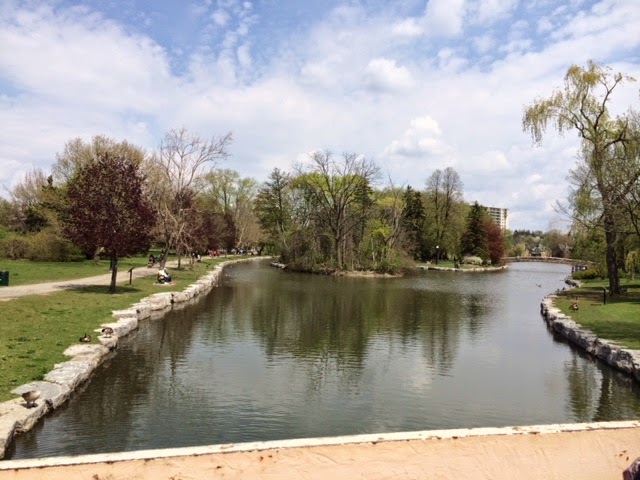
    Some park I visited while I was in Waterloo last summer or something.

    Fast-forward to the present moment: the end of the fall semester after I had finished my Ethics course. Since the beginning of this class, I have created skills for myself in communication, resourcefulness, and an ever-increasing insight in human behavior and thought. I have started a Medical Ethics Committee and a Bioethics Society to promote the curiosity of ethics. These groups feature (or will feature) student-led discussions, lectures from faculty, opportunities to attend ethics conferences across the country, high school outreach, and a debate-style team to compete in bioethics competitions. I’ve developed a purpose for myself and helped others do the same for themselves through understanding the values of research, ethics, and curiosity in the world. All of this was only possible through my work in philosophy. It’s amazing how much you can learn when you step out of your comfort zone and, in my case, I did so by diving off the deep-end into philosophy.

    Unlike the hypothesis-driven, progressive world of science, the humanities help us see each other as human beings capable of morals, emotions, judgements, and values. By understanding how society works from a non-scientific point of view, we are reminded that human beings are not guided by psychological or social phenomena. We are not physical or biochemical problems that are waiting to be solved. We are rational creatures who desire justice and purpose. Some might say that, unlike the sciences, the humanities make you feel more “humane.” I can agree with that.

    (Physics equations on the wall from my visit to the Perimeter Institute.)

    Though I would advise that humanities courses (like philosophy, history, art, or literature) are very helpful, their effectiveness ultimately depends on whether or not a student can find courses with a meaningful and welcoming atmosphere. I have no desire to sit through a humanities course that is a giant-lecture hall of watching lectures as though you were sitting through a movie with zero interaction.

    When I was a freshman, I was incredibly unsure of myself for double-majoring in Physics and Philosophy with a pre-medical track. Though I loved those subjects, I thought it was too unfocused and doubted how they would ever be helpful for a career in medicine. Now, I think my choices have given me more than any other degree program would have, and I’m certainly glad I chose to make those decisions. 

    December 19, 2014
    Education, Medicine, Philosophy

Previous Page Next Page


Loading Comments...
 

    • Subscribe Subscribed
      • Heuristic
      • Already have a WordPress.com account? Log in now.
      • Heuristic
      • Subscribe Subscribed
      • Sign up
      • Log in
      • Report this content
      • View site in Reader
      • Manage subscriptions
      • Collapse this bar