I’d like to proudly announce the creation of my new website “A history of artificial intelligence.” (http://ahistoryofai.com). Through it, I show the various ways artificial intelligence has changed since its dawn thousands of years ago. I hope to use this website to craft a story of understanding between different civilizations and eras citing writers like Mary Shelley and scientists like Claude Shannon. Stay tuned as I add more and educate the world with it.
Chinese scientists recently created gene edited babies using the controversial CRISPR-Cas9 technique. Scholars have alarmed the world about the ethical questions raised by genetic engineering. Writers also grappled with the recent explosion of machine learning and its effects. This includes the science behind how computers make decisions. This way they can determine its effects on society. These issues of artificial intelligence arise in self-driving cars and image recognition software. Both issues raise questions of how much power humans should exert in controlling genes or computers.
I believe we need to examine our heuristics and methods of moral reasoning in the digital age. With these issues of the information age, I’d like to create a generalized method of moral reasoning. With this, any human can address these issues while remaining faithful to the work of philosophers and historians. In 1945 mathematician George Poyla introduced “heuristic” to describe rough methods of reasoning. It should come as no surprise that I fell in love with the term immediately. I drew fascination in how way we could make estimations and speculate on issues. In science in philosophy, we can discuss them in such a way to find solutions and benefit the world.
I’ve written on the digital-biological analogue in these issues. Scientists and engineers harness the power of machine learning to form decisions from large amounts of data. Though this is data that we, humans, feed to computers, the decisions comes algorithm design and even aesthetic choices. The algorithm design would be the scientific process a computer performs in making decisions. An aesthetic choice might be the way an engineer designs the appearance of a computer itself. The results of these choices illustrate the tension brought upon by robots making these decisions. They arise in the way self-driving cars make decisions or what sort of rights might a robot have. The ways our sense of control and autonomy, the way we control our lives, come into play are common among genetic engineering and artificial intelligence. The ways our sense of control and autonomy, the way we control our lives, come into play are common in them. One of the basic principles of health care ethics and a subject to debate, autonomy pervades through everything.
We can reason about science by some notions of scientific realism, as philosophers argue. The philosophical notion of scientific realism generally holds that our scientific phenomena are real. The atoms that make up who we are or the genes of our DNA are phenomena that exist. One might argue for scientific realism because our scientific theories are the closest we can approximate of them. Through this line of thought, we should take positive faith in the world described by science. Under this interpretation, our arguments about digital-biological autonomy depend upon what sort of decisions empirical research dictates we can create. Our arguments about digital-biological autonomy may depend upon what decisions empirical research dictates. We can rely on science to show this. A constructed idea of an autonomous driver that algorithms dictate could make autonomous decisions. In her paper “Autonomous Patterns and Scientific Realism”, professor of philosophy Katherine Brading argues that scientific theories, under a notion of scientific realism, should allow for phenomena partially autonomous from data itself. It emerges about the context of the data. It comes down to creating an empirical process, from lines of code on a computer screen to the swerving motion a self-driving car. We can dictate what choices would be moral and immoral because those processes hold the truth of autonomy.
One might opt to take a more pessimistic view. It’s possible our scientific reasons for phenomena only amount to persuasion. A proponent of this point of view may argue that, we aren’t reasoning: we’re rationalizing. Atoms and genes don’t exist, or may not be able to determine their existence. Our methods of observing them, such as theories and equations, might not need to argue that atoms and genes exist. They only need those theories and equations to hold true given the circumstances of those phenomena. This may be the theory dictating the formation of atoms or a equations determining when a gene activates. An anti-realist might argue that, as the universe supposes no such notion of autonomy on humans, we can exercise an unrestricted autonomy. Our notions of autonomy would then give humans power over machines and scientific theories. This battle between realists and anti-realists has taken place through much of the history of philosophy. Philosopher Thomas Kuhn wrote that discoveries cause paradigm shifts in our knowledge. We experience changes in perception and language itself that allow us to create new scientific theories. This idea that science depends on the history and language of our time contrasts the scientific realism. In contrast, philosopher Ludwig Wittgenstein argued for remaining silent on such issues of what science tells. We can avoid some of the conflicts between realists and anti-realists. On gene editing, an anti-realist may argue autonomy depends upon unknowable factors of genes.
Ethicists have to contend with moral realism as well. Moral realism is the idea that moral claims we make depend on other moral components such as obligations, virtues, autonomy, etc. Something like “Murder is wrong” may depend on responsibility to do no harm. It can also be the idea that claims can be true or false and some are true. The first definition is the ontological definition while the second is the semantic definition. Au contraire, moral anti-realists may argue these claims don’t hold such a value. They may also argue that the claims may have the value, but no moral claim is actually true. To a non-philosopher, this might seem trivial. It’s easy to say “Of course moral claims depend upon things like obligations and autonomy!” But reasoning through arguments shows the this difference. A moral realist might argue that objective theoretical values such as autonomy are self-imposed, but not from our own self. Instead, they’re from an idealized version of ourself reflecting upon those values. The moral realist would create a biological-digital autonomy from this idealized notion. It might be ambiguous or impossible to define with complete clarity.
We can improve these methods of reasoning and thinking in areas such as logic or statistical reasoning. We can also determine knowledge of what our scientific theories tell us. Through this, we can create notions of autonomy to address these issues. In addressing these issues, we must identify what philosophical struggles the digital age imposes upon us. Silicon Valley ethicist Shannon Vallor teaches and conducts research on artificial intelligence ethics. In a recent interview with MIND & MACHINE, she spoke about how her students began experiencing cycles of behavior with technology. Students experienced anxieties when jumping into new technologies of smartphones and social networks. These students would become reflective and critical about technology. They would become more selective as time went on. She described a “metamorphosis” as students tried new technologies. They would reflect to understand how they themselves changed as a result of them. This could be with attention span or notions of control similar to autonomy. Throughout the process, the students ask what role the technology has in their lives.
Through human and machine autonomy, Vallor explained how the power to govern our lives relates to these ethical theories. This meant using our intellectual control to make our own choices. AI presents a challenge of the promise of off-loading many of those choices to machines. But, though we give machines values, a machine doesn’t appreciate these values the way humans do. They’re programmed to match patterns in a way that’s completely different from our methods of moral reasoning. The question of how much autonomy we must keep for ourselves so we can maintain the skills of governing ourselves. Being clear, though, Vallor said machines don’t make judgements. Judgements must perceive the world. While machines process data in code, they don’t understand the patterns we perceive as humans. Instead, we have to understand what’s gained and what’s lost in giving that choice to machines. I believe these judgements are exactly how our heuristics about moral reasoning and theories come into play. It’s what separates man from machine.
Artificial intelligence programs, computers, and robots also learn from our biases we instill in them based on how we train them. Vallor expressed concerns of authoritarian influences taking control of artificial intelligence. Still, there are ways to use AI for democratic choices. One example of such an issue was China’s social credit system built on ideas of society built only on social control and social harmony. It uses an all-encompassing AI system to track citizen performance. It serves the centralized standards of behavior with systematic rewards and punishments to ensure people are on a narrow path. Vallor said “we are not helpless unless we decide that we’re helpless.”
One might present objections to these methods of moral reasoning. One might argue that humans are irrational on the basis of behavioral psychology. The biases, false judgements, and poor methods of reasoning that are in our nature from this field show that we rely on heuristics. Falling victim to fallacies such as ad hominem or sunk cost, our methods of reasoning my seem flawed. We can at least create arguments that have some degrees of certainty, though. It may includes the predictions economists and psychologists make of our behavior. I address this argument by arguing that, though our methods of reasoning may have flaws, they can improve. We learn life lessons and proper etiquette about treating people as we gain experience. This suggests that moral reasoning such as on issues of our digital-biological autonomy may improve too.
Still, there are reasons to remain pessimistic about our moral reasoning we derive in this sense. One might argue that our brains developed not to find truth, but to be better than those around us. An evolutionary psychologist may theorize these are social connections of “survival of the fittest.” They haven’t lead us to achieve a more objective truth, but a more effective persuasion. I address this by explaining human beings might have these naturalistic tendencies. But it doesn’t mean that the brain developed to behave in response to these social forces only. If an individual has to convince others to avoid certain dangerous species of animals, it depends on problem solving. This is the method of reasoning by the tribe. The cognitive method of deliberating facts and reflecting upon them shows this reality of our nature. It can apply to moral reasoning.
Another argument could be that our methods of reasoning are only rationalizations, not reasons. They’re only conclusions we want to believe. I illustrate this with how politicians may go to war or limit the rights of certain groups through the solutions. Then, they reason backwards from the solutions such that they contrive justification of them. The ideologies of politics, in general, seek these sorts of conclusions on rights, liberties, and other values. We may find ourselves emphasizing these answers before we have the questions. It amounts to ideology. I address this by arguing we can test rationalizations against observation and intuition to come closer to reasoning. We may have intuitive reasons that we are not able to articulate for every action. But we still may have the ability to form moral judgements about those actions. It’s this intuition about our moral reasoning that we trust to lead us in the right direction.
I have attempted to outline methods of moral reasoning given the constraints of technology. I did this while reckoning with the arguments put forward by philosophers for decades. I hope these notions can prove beneficial to conversations of autonomy and rights of the individuals and machines in the digital age. We must re-evaluate these thoughts to address today’s issues. Artificial intelligence and genetic engineering can seem more similar than they first appear. Through a notion of moral reasoning, determine what this digital-biological autonomy should be.
“Truth Coming Out of Her Well” – Jean-Léon Gérôme (1896)
To speak of our own intellectual character requires a tremendous amount of humility and generosity. To speak broadly, intellectual character is all about embracing truth, criticism, and ideas in a way that’s justified, fair, and ethical. It’s very easy for many scholars and students to treat their own intellect in arrogant, bodacious ways that only serve to satisfy our selfish desires. In today’s era of fake news and post-truth, we find abundant examples of trying to win arguments out of sheer pride and vengeance or spreading misleading or false information to make one’s self appear better. To determine the ways these intellectual conflicts and conversations reflect our moral character means understanding what intellectual character is and how to maintain it in today’s society.
When we interpret information and draw conclusions from it, at the background of all the judgements we make is our intellectual character. If I choose to spread false information, does that make me a liar? Or, perhaps more subtly, if I choose to misrepresent information, what does that say about me? At what point do our accomplishments define who we are, and where do we draw the line about what determines our character?
Many people would rather live in ignorance of these truths and ideals. It’s much easier for us to call ourselves paragons of ideas and criticism without putting ourselves through the struggles and challenges to ourselves. Ask anyone who engages in serious reflection of their own life and their abilities to act in a manner that reflects those ideals they determine. As courageous as it is for an individual to bring their self to heed to moral values, it’s far more tempting for us to shun moral rules and guidelines and, instead, put our selfish goals first.
Fake news is at least partly created by the tactics used to distort facts and spread deliberately misleading information. The way we may choose to highlight certain ideas that suit our own agendas instead of representing them as they truly are introduces our subjective biases which twist our thoughts and ideas. In this sense, the transmission of fake news reflects an individual’s ability to behave as a moral human being and account for the responsibility they have as a person. However, it’s this very connection between discourse and moral character which fuels the fake news tactics to begin with.
On a psychological level, we find ourselves gauging the effectiveness of rhetoric, rather than its morality or justification. The “winner” of an argument would be deemed as the person who makes the other person look worse, instead of allowing a detachment between thoughts and the human themselves. The dimension of these actions is psychological as we naturally rather invest in ideological self-image and appearance rather than deep, careful understandings of themselves. The tactics employed become a self-defense mechanism for shunning ideas we find uncomfortable or dangerous to hear. Instead of creating appropriate justifications for difficult-to-digest and contradictory ideas, we engage in delusional habits that cause us to pretend. Fake news emerges from this. It’s very much in the guise of truth, yet acts in a way counter to everything we hold true and sacred about intellect itself.
In our efforts to get claims right (in a way that is truthful, justified, and honest), we have reasons that are instrumental and inherent. We may want statisticians to be as accurate as possible in prediction election outcomes for the sake of giving us a clear idea of the future, but we also may want authors to share a story for their true intentions and purposes so we may find aesthetic pleasure in its value. These methods of getting things right govern our behavior in the fake news era, and the way we construct priorities and moral rules shows how those meanings of “rightness” manifest themselves. On top of this, we care about who we are as people. For us to act as noble people, we should want to be noble people. But this puts us as odds with ourselves. We fail to recognize the negative, imperfect aspects of who we are and many people will go to great means to avoid and ignore these dire issues. Any reasonable person would react negative to the notion that they’re prejudiced or dishonest in what they’re saying. This paradoxical way of trying to be a good, moral human being while engaging in methods to ignore our darker sides is what reveals our true intellectual character. Being able to confront this confusion and represent truth no matter what becomes the most difficult moral endeavor for anyone.
Some further questions to ponder:
(1) Does intellectual virtue depend on our social environment? Or is it inherent within us?
(2) When is it appropriate to make any sort of claim about the character of a human being with regards to the information they communicate?
(3) How can we fight fake news at any level while respecting our own intellectual character?
Let’s put our own character on the stand and cross-examine it. That way we can fight fake news in all its forms.
Pondering difficult questions of her own cultural background, German author Nora Krug asks the questions of what belonging is and what that means to her. To belong to a culture of Germans responsible for the unspeakable atrocities of World War II meant Krug was challenging the very idea that she should belong to that culture. Though she was born several dozen years after the fall of the Nazis, the actions would cast a shadow on her life. Searching for answers, Krug’s graphic memoir wrestles with home and her self.
For a German civilian to recognize and understand the actions of Nazi Germany would shake anyone to the bone. Like a scientist studying her own brain through fMRI or a philosopher accounting for his personal story with depression, Krug both detaches herself from who she is while becoming intimately close to it. It’s a delicate balance between self-criticism and appreciation for the value it is that makes Krug’s story tricky and challenging. Krug fortunately approaches these issues and limitations by capturing the images of Nazi Germany memories and stories with an empathetic brushstroke. By invoking symbolic images and a subdued art style, Krug invites the reader to join her in asking intense questions that represented history. “Are Jews evil?” “What is my home?” “Where do I belong?” “Who am I?” These questions accompany stylized pictures of people that appear both fundamentally flawed in their thinking and terrifyingly real. I find myself shocked, yet soothed that my reactions and perceptions are okay to experience. To manage and interpret these feelings of guilt and shame mixed with a pride that any ordinary individual would hope to have for themselves, Krug’s interviews and anecdotes account for the abhorrently evil actions that shaped the past. To be a German is to understand the notion of Heimat, or the German word for the place that forms us. As humans, this responsibility to society and humanity in general means they must account for their decisions. For Germans, this means a humble, gentle remembrance of what mankind is capable of and determining what that means for the future. Other aspects of the memoir, such as the tender pacing between panels and scenes allow the reader to become truly close to Krug’s thoughts. The shock and sorrow the reader experiences parallel the shared responsibility Germans have for recollecting and understanding the meaning of their past. Contrasting the realistic photographs with comical, nearly bizarre, human faces, Krug almost invokes a dark sense of humor. This would be humor that one may realize their own dark history to fully move on and recover as a nation. Does war ever leave a country? Or does it plague mankind forever? A German may worry that sort of patriotism might be a reminiscent eulogy of the days of Nazi Germany. Despite the end of the war and the dismantling of Nazi Germany, the humans of today continue to struggle to understand their purpose and meaning in life. One might even argue that the journey of looking for meaning is much more important the destination itself. Similar to the Myth of Sisyphus, we imagine ourselves content in grappling with questions of existence despite never having completely satisfying answers. Nora sets out to really find the truth about what her family did in what seems like a way to absolve her of her guilt. There’s no deux ex machina or dramatic catharsis of guilt and tragedy. Krug only wants answers. She wants to know what happened even if it does’nt make her feel better. For her to put this paramount truth above all else gives her a much more objective and sublime look at her own past. I hope the reader can pick up the book and wonder what their past means for them.
Pondering difficult questions of her own cultural background, German author Nora Krug asks the questions of what belonging is and what that means to her. To belong to a culture of Germans responsible for the unspeakable atrocities of World War II meant Krug was challenging the very idea that she should belong to that culture. Though she was born several dozen years after the fall of the Nazis, the actions would cast a shadow on her life. Searching for answers, Krug’s graphic memoir wrestles with home and her self.
For a German civilian to recognize and understand the actions of Nazi Germany would shake anyone to the bone. Like a scientist studying her own brain through fMRI or a philosopher accounting for his personal story with depression, Krug both detaches herself from who she is while becoming intimately close to it. It’s a delicate balance between self-criticism and appreciation for the value it is that makes Krug’s story tricky and challenging. Krug fortunately approaches these issues and limitations by capturing the images of Nazi Germany memories and stories with an empathetic brushstroke. By invoking symbolic images and a subdued art style, Krug invites the reader to join her in asking intense questions that represented history. “Are Jews evil?” “What is my home?” “Where do I belong?” “Who am I?” These questions accompany stylized pictures of people that appear both fundamentally flawed in their thinking and terrifyingly real. I find myself shocked, yet soothed that my reactions and perceptions are okay to experience. To manage and interpret these feelings of guilt and shame mixed with a pride that any ordinary individual would hope to have for themselves, Krug’s interviews and anecdotes account for the abhorrently evil actions that shaped the past. To be a German is to understand the notion of Heimat, or the German word for the place that forms us. As humans, this responsibility to society and humanity in general means they must account for their decisions. For Germans, this means a humble, gentle remembrance of what mankind is capable of and determining what that means for the future. Other aspects of the memoir, such as the tender pacing between panels and scenes allow the reader to become truly close to Krug’s thoughts. The shock and sorrow the reader experiences parallel the shared responsibility Germans have for recollecting and understanding the meaning of their past. Contrasting the realistic photographs with comical, nearly bizarre, human faces, Krug almost invokes a dark sense of humor. This would be humor that one may realize their own dark history to fully move on and recover as a nation. Does war ever leave a country? Or does it plague mankind forever? A German may worry that sort of patriotism might be a reminiscent eulogy of the days of Nazi Germany. Despite the end of the war and the dismantling of Nazi Germany, the humans of today continue to struggle to understand their purpose and meaning in life. One might even argue that the journey of looking for meaning is much more important the destination itself. Similar to the Myth of Sisyphus, we imagine ourselves content in grappling with questions of existence despite never having completely satisfying answers. Nora sets out to really find the truth about what her family did in what seems like a way to absolve her of her guilt. There’s no deux ex machina or dramatic catharsis of guilt and tragedy. Krug only wants answers. She wants to know what happened even if it does’nt make her feel better. For her to put this paramount truth above all else gives her a much more objective and sublime look at her own past. I hope the reader can pick up the book and wonder what their past means for them.
Tasks like discerning difference between modern and postmodern illness would prove difficult for anyone without appropriate training in the arts and humanities. What is and what isn’t a fact has never been obvious or uncontroversial. There was no golden age of truth. Given the present day notions of post-truth in an era of decreasing trust towards authorities, physicians and other professionals in the field of health care find themselves faced with understanding humanity’s struggles in several different points of view. As I sat in the crowded audience of the Warner Theatre in downtown Washington D.C., I was lost in thought. Staring at the paintings that physician and literary scholar Rita Charon discussed, I reflected upon their aesthetic and moral value as they related to medicine. According to Charon, the field of narrative ethics seeks to address these issues. David Morris, a contributor to Rita Charon’s book Stories Matter, the modern perspective is “biomedical”: we are our genes, our organs, our laboratory measurements. The postmodern perspective is “biocultural”: we are made of stories. These stories have dimensions that are cultural, familial, emotional, interpersonal, psychological, and biological.
Two weeks ago I had the amazing opportunity to attend Charon’s 2018 Jefferson Lecture in the Humanities “To See the Suffering: The Humanities Have What Medicine Needs.” As Charon projected Whistler’s painting “Sea And Rain 1865” before my eyes, she commented how the painting demonstrates, “the human scale of physicality, the cosmic scale of the oceans and relativity, and the existential dilemma of meaning are together in the universe and in each individual human body.” By the end of the lecture I found myself wanting to sit down and stare at paintings, read books, and spend the rest of my life in this intellectual bliss to cultivate my undergraduate passions I once had.
“Sea And Rain 1865” – James Abbott McNeill Whistler
As physicians treat patients, uncover the nature disease, and set educated standards in the field of health care, they create stories. These stories, when physicians create them, become the way of “reading” as Charon describes. Physicians and medical ethicists come together and, through the notion of constructionism that we are narratively constructed, we create meaning from the world and form a deeper understanding of medicine. A diagnosis becomes less about treating a patient like they’re a biological or physiological problem and more of a human. This gives rise to the ethical dilemmas, epistemic purposes, and other issues grounded in speculation a physician would encounter. Charon herself studies this issues from the point of view of both a physician and literary scholar. Shedding light on this humanistic discourse of medicine, these narratives constructed by narrative ethicists are a modified version of postmodernism. In this sense, narratives don’t constitute persons themselves, but they are the most effective way of accessing persons. Those who learn from fiction, literature, poetry, philosophy, and the arts gain a nuanced, heavy understanding of medicine they can use in any physician’s context. Doctors who embrace these techniques get the truest, most humanistic vision into what makes a patient a patient. They can attack fundamental ideas of disease and health such that those concepts carry appropriate meaning in a 21st century world of post-truths.
The self is within the narrative. One cannot look for one without finding the other. Searching for meaning as a physician would be like creating a pattern of a fabric interwoven that only becomes clear when one takes a step back and looks at the entire picture, or declaring a line as beautiful from points of data on a graph. Charon herself notes that “the self cannot be created — or even found — independent of narrative activities.” Still, other scholars might argue that a true self is to be found if one looks close enough or reflects for long enough. Regardless, physicians should understand how similar they themselves are to patients to practice with both their own objective professionalism alongside the personal, intimate stories of a patient. With characters that have their own backgrounds, morals, beliefs, and even blood type, physicians can make the most informed decisions to adequately provide for patients.
In the packed Warner Theatre of downtown Washington, D.C., I sat on the edge of my seat. I grasped my chin as I fell deep in thought and immersed every moment of time and inch of space into Charon’s speech. Inside of me a feeling erupted. I began to see elegant patterns between both science and the art. With this robust interconnected knowledge of both sciences and the humanities, I felt as though I could transcend both disciplines, and I sat in awe at how Charon used craftiness and wisdom to weave medicine and humanities in such a way that she could engage anyone with the pure intentions of learning and making the world a better place.
Physicians have a duty to recognize the principles that govern their profession, most notably beneficence, non-maleficence, justice, and autonomy. The role these concepts play in medical ethics and bioethics issues and the exact relationship among those principles serve the basis for decisions physicians make. But the narratives and principles physicians use are often at odds with one another. Marginalized groups of people have their own voice in narrative ethics which blurs the lines between human differences while “principlist” ethics lays down ethical rules by the fundamental principles themselves. Physicians and scholars can view the world through the absolutes of principlism or the gray area of narrative ethics. Taking the narrative to the extreme, in not just the lives of physicians but placing the narrative at the heart of all knowledge, provides a fundamental in the way scientific research is performed, as well. As medical ethicists take note of how these senses of constructionism and pirnciplist ethics govern medicine, they extended these narrative techniques to the sciences as well. The narrative of the sciences takes this human form to research. As more and more physicians and medical students realize the power and value of the humanities in their work, the more humanized, mature, and ethical approaches physicians can make in whatever task they may have to do.
Debra Malina of the New England Journal of Medicine, writes “Many of the contributors to Rita Charon’s Stories Matter are major players in this narrative movement. Here, they practice what they preach, building their essays on stories of patients who want to conceal their medical conditions from their families, 60-year-old women who want to use assisted reproductive technology, parents of infants born with neurologic injuries who want to let them die — stories on whose proper endings reasonable people might disagree. The authors do agree on certain concepts — the emphasis on particulars, multiple perspectives, context, and emotional as well as rational understanding. Many stress the obligation incurred by hearing a story of suffering.”
It’s difficult to establish clear rules and guidelines for physicians developing narratives. If anything, the way to form narratives that encompass the humanistic side of medicine is more about physicians and medical students developing senses of right and wrong, aesthetics, purpose, intention, and motive in whatever they do. What procedure a physician chooses to take, especially in the details of a story such as character development and plot, may not be set in stone, but the implications and premises upon which those conclusions are reached hold a great amount of value for the meaning of that story. Techniques from literature that become essential for physicians become the actions of physicians themselves such as the way doctors obtain consent from patients or debate among themselves on ethics committees. The variation could be seen as something that makes the process all the more humane, and embracing the uncertainty provides physicians the way to understand the human condition all the more. Physicians, however, need to account for this sort of ambiguity in the work that they do. The crises people face today, brought upon by postmodernism and post-truth dialogue, mean it’s difficult for Charon and the other contributors to Stories Matter to give single, perfect answers to the specific issues physicians face, and, instead, provide a framework to manage the relationships among physicians and patients. However detached disillusioned one may be with these limitations, addressing them in a sense based in reality gives the reader some solace and connection to the thoughts of the contributors. Some of the contributors argue that going over different perspectives that seem to contradict one another is sufficient, while others maintain physicians should return to a narrative-based approach on the principles of medical ethics. The perspectives, research, anecdotes, and reasoning by the contributors can provide physicians with a place to start when understanding their profession on a more humane level.
Charon’s writing and lecture gave me a greater appreciation for the work of physicians given my background in both the sciences and the humanities. It made me all the more excited to tackle the intellectual issues of the 21st century.
This is the story of how I won. This is the story of how I spoke out against wrongdoing that sought to hurt me fundamentally as a human being. I overcame these struggles with the fearlessness that has been given to me. The world is full of moral ambiguities and existential horrors. Yet I made the right decisions at the right time in such a way that I found success and happiness.
I’m an Indian American Muslim male. During my junior year of college at Indiana University-Bloomington, I was also a physics-philosophy double-major with a pre-med track. I became interested in the purpose of a college education and doing research on the history/philosophy of education to find answers to questions I pondered such as: What is the purpose of volunteering/grades/extracurriculars/etc? Why do we learn the way we do? How do we use these classes to help us realize those things? I spoke w/philosophers, scientists, professors, and other professionals to gather information about these issues from them, too. I’ve written these topics on complacency, academic freedom, advice for incoming freshmen, and rhetoric in our models of learning.
I tried starting a conversation among a premed club I was part of, but they retaliated against me. They isolated me, manipulated me, made lies about me, and reported me to the Dean that I was harassing them. They mostly did this out of their insecurities for those questions I was suggesting, but it was also because I was presenting well-researched, justified beliefs that contradicted theirs. Through months of them ignoring the issues I wanted to raise and the discussions I wanted to have, I felt even more disillusioned. The Dean proceeded to criticize, interrupt, mock, and interrogate me with force. She said I was acting “bizarre” and called my story “twisted.” She didn’t give me a chance to defend myself. She’d laugh at me when I tried explaining how my friends were making up lies about me to silence me. She interrupted me in ways that I couldn’t even finish what I was saying. She continued this behavior for months through email and in-person. I was traumatized. The university charged me with harassment and stalking. They left me off with a warning, but they required that I’d start therapy with a social worker who had no graduate training so I could better myself. I had no choice but to blame myself for everything and agree with whatever the Dean told me. Throughout all of this, I had no chance to defend myself on any claim others made against me.
That’s when things got worse. I felt the pain, fear, anxiety, and distrust spreading into other parts of my life. Even when I tried doing positive things (like exercising and meditating) I felt the mocking voice of the Dean resonating in my head. I began sleeping 10-12 hours a day, stopped praying and exercising, eating less healthy, going to class less, and lost sight in the purpose of my classes. It got to the point where I wasn’t doing any studying and felt my blood boiling in my lectures. I had no idea what I was suffering from.
I couldn’t do anything to defend myself because I feared repercussions and abuse from the Dean of Students. My friends didn’t know how to help me so they isolated themselves from me. My professors watched as my grades dropped and I could barely will myself out of bed for the last two years of college. Not having answers to my questions of the purpose of a college education started taking its toll on me. And the toxicity of the environment around me towards me just made me scared of myself. In hindsight, my therapist didn’t help much. He mostly talked about superficial things like social skills, didn’t take notes, gave me a blank stare most of the time, and only tried to keep me out of trouble instead of understanding me. He’d say things like “Oh, people are idiots,” and he even believed in astrology.
It’s now been over a year since I graduated. I’ve been working at the National Institutes of Health while taking weekly therapy sessions with a therapist with a PhD and decades of experience out of my own will. This therapist is amazing like a modern day Sigmund Freud in how he gives detailed answers, speaks truthfully and with justification, and has amazing skills in rhetoric.
After I graduated, I struggled with coming to terms with difficult events in my past, figuring out what my purpose is, and trying my best to prepare for a successful career as a scientist. My doubts lingered. What am I looking for? I was tired of asking that question. I was tired of all the crazy things it lead to in my life. How could I trust anyone truly wanted to support me? During this time, I opened up. I began speaking to officials from Indiana University-Bloomington about my experience. I told them about how I had tried to answer questions related to the purpose of college education and my pre-medical friends retaliated against me. I told them how the questions I wanted to talk about weren’t some kind of side hobby or interest of mine but actual fundamental pieces of any student’s essential education. It was so much so that I needed that opportunity or right to ask them so that I could further my education, seeing as how negatively they were affecting my life. Every time I wrote out my story or spoke to someone about it, I felt like I needed a glass of water or needed to take a walk. I also told them I wasn’t trying to do anything in particular. My sole intention was to share the story because it was the right thing to do.
In August I got off the phone with a senior investigator from the university. I had explained to her everything that happened. She said what I went through was egregiously wrong and should have never happened to anyone. She said they’re going to require racial and religious bias training from the Dean and other staff members that were involved. She said this because the Dean and the pre-medical student who bullied me were both white women. They said they were going to keep close check on all of the Dean’s communication of all forms. I told the investigator I didn’t want anymore input.
It took 3 years. But I finally got my voice heard and taken seriously from the university. That’s all I needed to know that I won. I began to realize the university would probably handle issues related to the purpose of a college education much differently from now and onward. They would recognize the struggle of students who don’t see a purpose in anything anymore and recognize that as a valid, vulnerable position that needs to be defended and protected such that students could make the world a better place and achieve their goals. That was the proof the university could act in the way I wanted it to, and that my goals could be achieved. The university took my side in making the future a brighter place not just for me but for anyone who wishes to learn. I never knew whether I was truly a victim of racism or Islamophobia, either, but the university’s action in taking the issue of a racial or religious bias seriously at least satisfied me.
I want to take a sigh of relief and say I’m fine now, but it’s still going to take me a while to figure myself out. It’s gonna take some visits to coffee shops and long walks. It took me a while to get back on my feet, though. I began eating well, exercising, studying and performing research spanning science to philosophy, I won. Let this be a victory for everything a university should stand for. Let the future be brighter for students who wish to learn and grow. The past is heavy, but the future is greater. And I will no longer be shackled by fear. I want to extend my gratitude to everyone who supported me along the way. I want to thank my current therapist most of all. And thank you for reading this. It really means a lot to me.
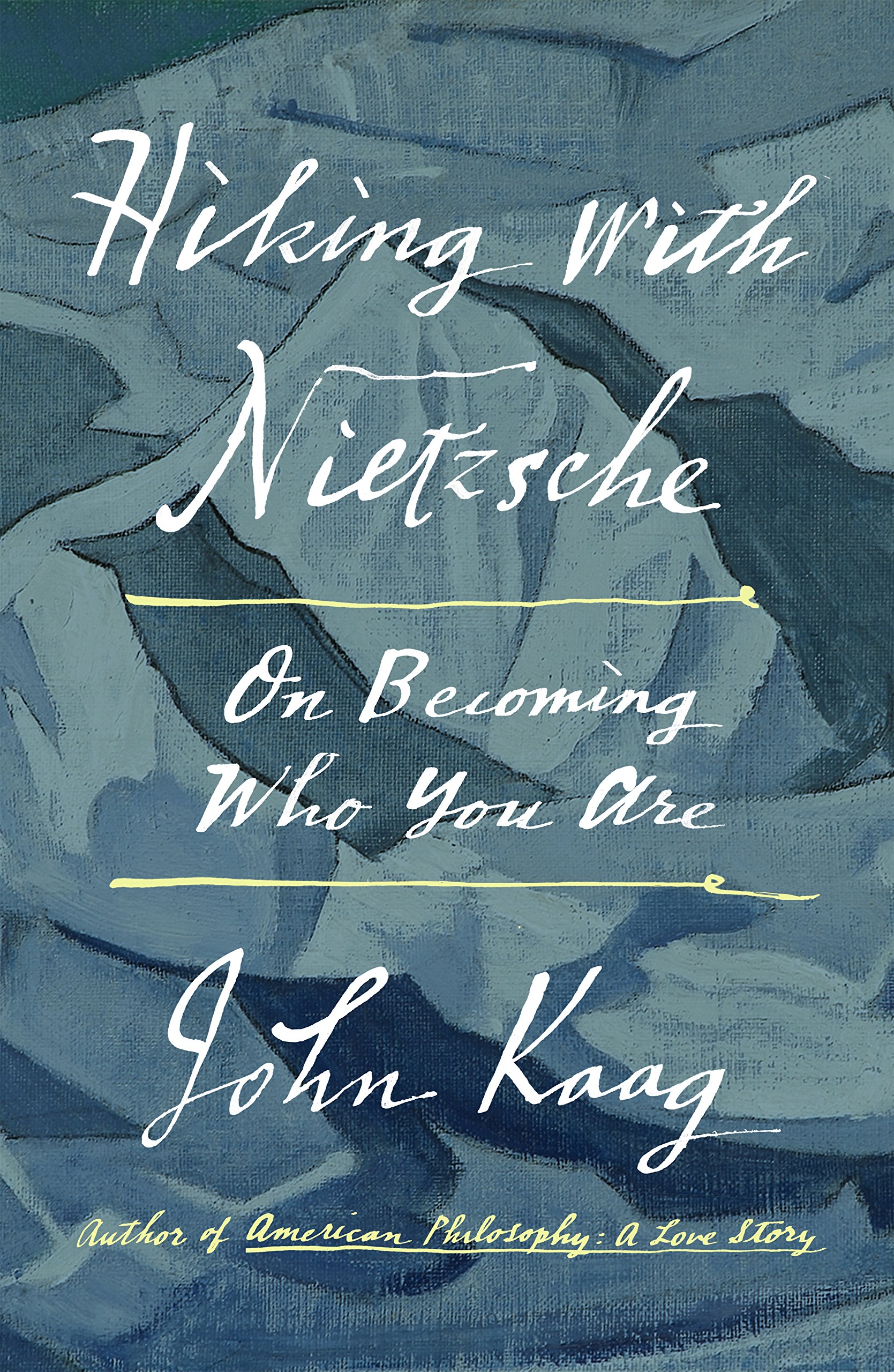
In Hiking with Nietzsche: On Becoming Who You Are, American professor of philosophy John Kaag shows how important and salient philosophy’s role in everyday life is. By hiking through mountains and experiencing what the Swiss Alps have to offer, Kaag illustrates a view of Nietzsche’s life that provides an intimate understanding of the challenges for which the German philosopher sought answers. Comparing himself to Zarathustra and Dionysus, Nietzsche actualizes his true potential in a way that other philosophers struggle with. He’s overcomes the limits and disadvantages of discourse and rumination and, instead, writes about the urgency of addressing issues of his time – many of which persist in the present day.
“As it turns out, to ‘become who you are’ is not about finding a ‘who’ you have always been looking for. It is not about separating ‘you’ off from everything else. And it is not about existing as you truly ‘are’ for all time. The self does not lie passively in wait for us to discover it.” I was incredibly satisfied by the immense level of reflection and thought put forward in analyzing and taking apart these arguments. It was a way of treating our thoughts and ideas as truthfully and justifiably as possible while still leaving room for the reader to maintain their own view of the issues Nietzsche brought up. It takes a tremendous amount of courage to address these issues, and, without the persistent and relentless work of both Nietzsche and Kaag, I’d struggle to even put these issues in words. I found the experience of reading the book absolutely insightful and eye-opening not only in the way Kaag depicted Nietzsche and the struggles he faced, but the way I related to them within myself. As I studied science and philosophy at Indiana University-Bloomington during my undergraduate years, I faced a tremendous amount of psychological and existential struggles. Things would get so worse with my mental health, social situations, academic performance, and even the thoughts I had about myself that, throughout senior year, I was just trying to leave my university as quickly and shamelessly as possible. I lost sight of the purpose in everything. My courses became tremendously more difficult, and I couldn’t ever figure out what to do. This book provides me with the ideals and arguments by which I can address those issues with far greater precision and clarity. I look forward to reading more Nietzsche in this thought-provoking and self-healing way such that I can continue to address these issues wherever I find them.
Even the pain and suffering that the individual experiences in society have home in Nietzsche’s work. By this, I mean that the way we react and deal with conflicts that cause us to suffer are taken with serious inquiry such that the individual can discover the true causes of what they are and the best ways to address them. As I read the book, I couldn’t help but compare the work and methods of the philosophers to how therapists approach individuals suffering from existential crises. A patient seeking help from an educated, wise therapist will often find him/herself at a loss of words and dumbfounded in terms of how to address his/her issues. It leaves the soul to suffer at the hands of a world that is wrathful, intimidating, and merciless. In concrete terms, this may include mental health issues such as depression or anxiety but also severe physical ailments such as cancer. Medicine and doctors should adhere to these truths and wrestle with them in their work in ways to treat patients and make the world a safer, healthier place by all means of measurement. Amazing work by physicians such as Richard Gunderman, Rita Charon, and Atul Gawande all hold the potential for making these changes happen. The way we internalize our suffering as part of a greater understanding of suffering that society has given us can let us internalize the reality of how and why we are meant to suffer. What might seem pessimistic and gloomy in our methods to understand the world turns out more encouraging and resilient to face whatever issues we experience in life.
Among the several lessons that Kaag and Nietzsche share discourse over include Nietzsche’s argument that self-discovery requires and undoing of the self-knowledge you assume you already have. This means that becoming yourself is a constant cycle between finding the self and also losing all sight of it. We can only truly become who we are as we overturn the fundamental truths and ideals that we believe make us who we are. This means there should be a level of trust and security as we perform these actions and do these things in life to become who we are. Nietzsche also elaborates that modern life distracts and deadens us in ways that prevent us from becoming who we are. The pleasures and fleeting desires of this world are nothing to compared to the near-unsurmountable challenge that is becoming who you are.
Kaag provides a clear example of these statements: “I remember too vividly an argument with my ex-wife that terminated with three words that I screamed before slamming our front door: ‘Let. Me. Be!’ I now know what I actually meant: ‘Get out of my way.’ Let me find my immutable essence. Unfortunately, there is no such thing as an immutable essence, at least not in my world. And so I left, but I never found what I was looking for, not even with (my new family) Carol and Becca. I found something else.” Carol is Kaag’s wife and Becca is his daughter.
Kaag can mention life story lessons as he ventures with his wife and daughter, and he draws upon his own personal experience in describing what Nietzsche himself sought to describe. The decadence, or decay, of the society around him, as Nietzsche noted, provides a careful, yet effective way of internalizing and dealing with the existential woes of today. As any philosopher dabbing in existentialism might come to realize, these concrete, realistic situations of philosophical truths come together in a neatly woven story. And the power which Nietzsche provided for his arguments has allowed them to resonate for decades.
As Nietzsche himself, said “It is an excellent thing to express a thing consecutively in two ways, and thus provide it with a right and a left foot. Truth can stand indeed on one leg, but with two she will walk and complete her journey.” (The Wanderer and His Shadow, 1880
Near the end of the book, Kaag explains how “‘Become what you are’ has been described as ‘the most haunting of Nietzsche’s haunting aphorisms.’” Indeed, it’s troubling to hear how who we are is something which we have to become, but that the thesis what we need to be is ourselves is all the more encouraging and reassuring for the reader.
Meandering through information from different disciplines is difficult for anyone – be them a scientist, philosopher, or anything else. On his website and in this interview, we’ll take a look at how Adam Kruchten learned to figure out what guided him in his passions and how he applies both scientific and philosophical thinking to understanding statistics. HA: Adam, as an undergraduate, you studied mathematics and philosophy. Now you’re going to enroll at University of Pittsburgh to study biostatistics. How did you go from being interested in mathematics and philosophy to biostatistics? Adam: Statistics, and inference more generally, in some form has always been of interest to me, it just took me quite some time to learn that about myself. Early in my undergraduate career I worked in research in statistical mechanics, and I was always fascinated by the probabilistic models. Idealizations could capture tremendous amounts of useful information about extraordinarily complex phenomena. Further, the same underlying notions of probabilistic modeling could be used to understand and cope with both true randomness and epistemological uncertainties without any difference in mathematics. Originally I thought I was mostly drawn in by the physics. I realized later that the physics, while interesting, was not what drew me in. It was really the methodology. I hopped around different fields, but had the same problem. Eventually I settled on math and philosophy, and there I found fields where I could study and understand fundamental issues underlying robust scientific inferences. In math I was drawn to logic, and in philosophy I was drawn broadly to issues addressing philosophy of science: philosophy of science proper, but also language, epistemology, and metaphysics.
After graduation I took a job in applied mathematics, but my role was really mostly an applied statistician. Here I worked closely with a professor of statistics and found the underlying study of inferences that had really drawn me to numerous fields prior.
As for biostatistics specifically rather than statistics more generally? Biostatistics occupies its place inside public health programs. I think applying statistics to public health issues is a great way to make a meaningful impact through the study and application of my underlying passions.
HA: What role does (or will) philosophy play in your research? How do you hope to study science and philosophy hand in hand? Adam: Beyond philosophy directly informing my statistical work, I would also like to eventually research questions that are fundamental to inference itself. When doing this kind of research you are not just relying on philosophy, you are directly doing philosophy.
HA: On your blog you’ve written about the philosophical thesis of physicalism in a way that people without a strong background in philosophy can understand (https://adamkruchten.wordpress.com/2018/05/07/you-are-not-your-brain/). What sort of understanding do you think this general audience should have of philosophy? Adam: I try to write in an accessible way that doesn’t require much philosophical understanding, but I think I do expect readers to at the very least think “like a philosopher.” By “think like a philosopher,” I really mean several things. You should read with curiosity and openness: reading while prepared to dig deeper into elements you may not understand and with a willingness to change your own views as necessary. At the same time I think you should read with a critical but charitable mind. Critical, meaning you look for implicit assumptions, look for leaps in logic, and rigorously assess the foundations of any premises. Charitably, meaning you only attempt to criticize the best possible version of the argument: don’t set up straw men, see if small errors in argument and prose can be easily corrected, and engage with the mindset that an argument was made in good faith.
HA: A bit more specific, what can scientists do to appreciate philosophy better? Adam: There’s an obvious answer here which is just “read more philosophy.” This is an honest answer, but it only goes so far. I think reading more philosophy is always useful, but there is far more philosophy than even a professional philosopher could read and understand, let alone someone with a career outside of the field.
For a more practical answer I think scientists should engage in science the same way I answered the previous question. Think like a philosopher by acknowledging and assessing underlying premises and methodological assumptions in doing science. HA: Before we finish, what’s one book everyone should read? Adam: This is a tough one. I have a hard time suggesting one book for a variety of reasons. I think I will answer with the book I feel most influenced my thought, Immanuel Kant’s Prolegomena to any Future Metaphysics. This book is Kant’s own summary of the much longer Critique of Pure Reason. I think that reading this book shed a great deal of light on various ways of thinking I had taken for granted, and helped me come to terms with a lot of what I had, at times erroneously, assumed implicitly to be true about the world. Just as Hume awoke Kant from his dogmatic slumber, so did this book for me.
I’m proud to announce the launch of SeqAcademy.org, a website to teach others RNA-Seq and ChIP-Seq analysis even with no prior programming experience.
This project was the result of the NIH April Data Science Hackathon, at which researchers from across the globe met to work on projects here at the NIH. Our group created SeqAcademy, an educational pipeline for RNA-Seq and ChIP-Seq designed to teach others the basics of bioinformatics. I hope to use this website to teach myself html/css, reach out to others, and provide for the greater bioinformatics community. I could see this project gaining momentum and becoming something greater – even with letting users login to the website, follow tutorials at their own pace, and earn certificates of completion. I would love to take SeqAcademy the step further and develop it into whatever the bioinformatics community needs as far as tutorials are concerned. It would require a lot of work creating a website from scratch, but it has the potential to help a lot of people.




 Heuristic