Tag: Medicine

  • The (Wrong) Reasons to Become a Doctor: A Medical Ethicist’s Perspective

    This post is written from the point-of-view of pre-medical students, but I believe the issues and topics that I discuss can be applied to any undergraduate student who has a desire to learn. 

    As we search for meaning in our lives, we worry most about “Why do we want to become a doctor?” Indeed, as our fragile souls are knocked and swayed by existential crises and moments of doubt and insecurity by the overture of every Chemistry exam or weekend of volunteering, our searches for meaning and satisfaction ultimately leave us with only our constructed answers. Though it would be ridiculous to make decisions of the rest of our life in response to the temporary moodiness that mark any neophyte, whether we like it or not we, undergraduates, are forced to ask ourselves what we want to do with our lives and why. It’s important to put things into a bigger perspective that, while we are here to learn about ourselves and the rest of the world, we should not feel pressured to forget about our purpose.

    You’ve probably heard the far too-oft repeated buzz-purpose “to work with people” or “help people.” I mean, it seems like an easy option, right? Despite its banal general feeling, wouldn’t want to work with other people or help others? It seems to be the prime quality of an empathetic, righteous human being. Throughout volunteering, extracurriculars, research, and whatever else we do, we find ourselves doing things out of a love of helping others and working with people. Digging deeper, we ask ourselves what it really means to “work with people.”

    Yesterday, I had the wonderful opportunity to speak with Dr. Daniel Sulmasy, Medical Ethics Professor at the University of Chicago Pritzker School of Medicine, and ask him if he had made any observations about the motives and purposes of medical students in their work. I explained to him how I have already spoken with several different professors about how our motivations for why we learn and behave may have significant implications. Specifically, I asked Dr. Sulmasy about our pressure to act and do things for “utilitarian” purposes, rather than finding a “truer” meaning behind the things we do.  He responded that there was indeed a difference between students pursuing actions for “Intrinsic”, rather than “Instrumental” purposes. One can imagine that studying for an exam because learning organic chemistry reactions has an intrinsic value that chemists and scientists truly appreciate may be more helpful and successful than students studying for the sake of obtaining a decent grade on an exam. Perhaps we, pre-medical students, should use these intrinsic values of our academics to find deeper meanings beyond “a desire to work with people.” As another example, we find students who want to study poetry for the sake of satiating a desire to understand the human condition and the beauty of art at odds with students who study how to program software that can detect viruses in human DNA. Sulmasy continued that the battle at the hands of our motives and purposes is a test of sincerity that is very often showed in graduate & medical school applications. And one does not need to throw away the motive of “utilitarianism” altogether. We could argue that, if students approach their studies for more “intrinsic” purposes, then society will have more motivated and mindful scientists & doctors that would provide a greater practical benefit for everyone. And, of course, these issues are exhibited among all students, not just pre-medical students. Aside from the amusing alliteration, his comparison drew from examples of doing things for the purpose obtaining a reward out of their pre-medical/medical experience exhibited by his students.

    Back to the troubling idea of the proper reasons for becoming a doctor, we could choose to say that “we want to solve the problems of the world.” No matter whether you’re studying theoretical mathematics or creating irrigation systems in Sudan, the world has a lot of problems. And the “problem-solving” rhetoric has pervaded through all of society, especially in STEM fields. But what is “problem-solving”? This seems clear enough on the surface. The college education allow students to approach different types of problems. Who wouldn’t want someone to be able to think through problems for them? We hear about this a lot, especially in mathematics. We talk about how the U.S. needs more problem-solvers, how STEM is going to gift us with these important skills, and even how our medical schools place a huge emphasis on it. But what does “problem-solving” really mean? 

    While it is true that the pre-medical career and STEM courses give us amazing problem-solving abilities, the rhetoric for pursuing these opportunities is written with a solid practical underline. But let’s not write this off so quickly as a meaningless materialism. After all, we do want students to become scientists, engineers, and doctors so that they will help solve the problems of society. And this desire to help society may stem from humane virtues of empathy and love of what humans do. But, in reality, I do not believe it is even possible for students to learn how to solve the problems of society during our four years of sitting through lectures and laboratory discussions. Even for the most professional jobs, the administration of academia can’t reasonably give us the specific skills to solve problems that the world will face tomorrow. And I do worry, though, that our overemphasis in the rhetoric of these values of a STEM education causes us to lose sight of the similar values that can be obtained from studying the Arts & Humanities (similar to my previous comparison of a student studying poetry vs. a study studying software engineering). After all, while a Computer Science major may know how to write lines of code that can develop the next Uber, the English major will understand the complicated “expectations vs. reality” of Silicon Valley that will tell us what the good ideas are. It is still unclear how we should look at our education as a way of developing problem-solving skills because we don’t have a good idea of where those problems will lie now or in the future. With any doubt, we know that the liberal arts education must be protected to ensure students can obtain the full value of the disciplines and material that we choose to study.

    Is our notion of “problem-solving” too broadly defined? If we look at our college education as a way to learn how to solve problems, then this certainly seems to satisfy both a utilitarian purpose that will help us in future careers and a more “scholastic” purpose that will do justice to the reasons why we should learn. Is this why we struggle to find meaning in our college education? All we know is that we must go beyond the superficial feelings of desires to “work with people” and “help others” of the American education system to know what we really want to know.


  • The Unspoken Harm in the (Pre)-Medical Experience: On History and Education

    When the United States established its medical school system, we could have easily chosen to mimic Europe and create an alternative to the undergraduate degree for students who specifically wanted to become doctors. Instead, we created an idea of a “pre-medical student” who would finish a four-year bachelor’s degree in addition to pre-medical requirements before entering medical school. This would allow a unique, liberating approach in which we embrace the fruits of a liberal arts education while simultaneously preparing for professional school.

    The pre-medical requirements include required coursework, volunteering, extracurriculars, shadowing experience, a good GPA & MCAT score, recommendation letters, and maybe a hobby or two. As the information of these requirements disseminates through the advisors, organizations, faculty, and students of college campuses, we perceive strict, superficial standards on what pre-medical students should do that are, actually, quite arbitrary and variable. By “arbitrary,” I mean, we aim for illusory goals and set standards to ensure we complete X, Y, and Z before we apply for medical school. We follow the footsteps of students above us, never stopping to question the effects this dogmatic approach to our education has on us. I will explore what effect pre-medical requirements have on our education, but, since there is very little literature and research done on the issues pre-medical students face, it would be more helpful for us to first understand the problems of education in medical school to see if they reflect among our behavior. Through a study of the history of medical education, we can understand how we, pre-medical students, can forward in the uncertain 21st century.

    Before medical schools were firmly established in the States, soon-to-be doctors would serve menial duties under experienced physicians for a required term that would culminate in clinical activities. By the late 1800’s, the first medical schools, constructed to be intertwined with hospitals, gave a breath of education of the classics alongside clinical training. After completing a bachelor’s degree (including knowledge of philosophy, mathematics, and Latin), students completed a year of training before an apprenticeship and lectures. The overall structure of this seems similar to the way a pre-medical student must complete required coursework before entering medical school, residency, and securing a career.

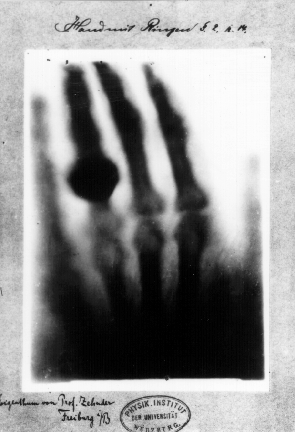
    The ominous, exciting turn of the 20th century into the darkness that was “Hand mit Ringen” (Hand with Rings), the first medical X-ray.

    But how has the medical education changed over time? With advances in technology, science, and epistemology, medical education has always struggled to keep up with preparing students to approach the biggest problems of the future while retaining the human values that we cherish. Through progress and breakthrough in science, medical schools emphasized new technology and research-driven approaches in their education. This has forced medical schools to embrace confusing tendencies that attempt to balance the art and science of medicine with one another. realized we needed a professional ethos to guide us, and students and physicians would reflect on the changes that flew before their eyes. Maybe the course of history in the education of medicine guided through nostalgia. Even as far back as 1953, we find those who “lament the fact that the personal tie between teacher and pupil no longer plays so vital a part in medical education, and they would urge a return to the earlier mode of teaching.” But why stop there? In 1910, years after the establishment of a science-driven Medical School at Johns Hopkins, educator Abraham Flexner reminisced the thoughts of one student,

    “Our teachers were men of fine character, devoted to the duties of their chairs; they inspired us to enthusiasm, interest in our studies, and hard work, and they imparted to us sound traditions of our profession; nor did they send us forth so utterly ignorant and unfitted for professional work as those born of the present greatly improved methods of training and opportunities for practical studies are sometimes wont to suppose.” 

    Despite the progressively aggregating amounts of knowledge and its effects on human health, Flexner recognizes that the educators of the past were never as useless as the present students might think. Although Flexner does not suggest that medical students of his time were succumbing to an ominous, self-obsessed era of scientism and it would be ridiculous to assume that amazing advances in the sciences are driving students of medicine amok, there is still a balance of the sciences and humanities to be ascertained in order to completely realize Flexner’s vision of the American Medical Educaiton. For example, as the United States embraced the advancements of a science-driven era, some had hoped that the study of history of medicine would create a “counterbalance” to the “reductionist hubris” that plagued a physician’s knowledge in the science-dominated era.

    I would occasionally browse Reddit on my phone as I sat in the crowded lecture hall during my Organic Chemistry II course this past semester. I would only look up to the notes on the projector when the professor had finished writing something new for me to copy into my notebook. Despite my distraction, I would try to review my notes over and over again until the professor would un-pause the streaming on his feature length film “Organic Chemistry II Notes.” We glazed at the information, soaking in anything and everything in the comfort that the professor would “only teach the things that would be on the test”, “this is how you solve the problem,” complete with practice exams and sample problems identical to those on the exam. I paid attention, though, as I believe understanding the puzzles and forces that governed chemical reactions was incredibly interesting. But, I lamented that the joy of learning science was reduced to a requirement that we were forced to suck-up.

    I dropped that course later on in the semester.

    Luciano Nezzo, 1856, A tooth-drawer concealing the dental key from the patient

    Studies as recent as 2004 have examined the role that our modern economy has played on the medical education. “Habits of thoroughness, attentiveness to detail, questioning, and listening are difficult to instill when learning occurs in a clinical environment more strongly committed to patient throughput than to patient satisfaction. In addition, it is difficult to imagine how caring attitudes can be developed when medical education is done in a highly commercial atmosphere.” Necessities such as “questioning” and “thoroughness” are similar to the skills that I believe undergraduates need. I believe these issues of a “commercial atmosphere” among medical students parallel those that undergraduates face. Our business-like emphasis on fulfilling pre-medical’s requirements to please admissions officers causes issues of inhumane utilitarianism and dogmatic groupthink. 

    Viewing the the undergraduate education as a means of gaining something (whether that fools’ gold is skill, experience, recommendation letters, grades, or even the ambiguous buzzword “professional experience”) moves us towards utilitarianism, a motive with harmful consequences. We would have a materialistic view that loses the humanistic value given by an education. This materialism is both marked by a lack of interest in wonder and awe of scientific phenomena (similar to Flexner’s emphasis on the combined role of humanism with science) and greedy reward-driven pre-medical requirements (similar to mindset of medical education in a modern economy). While it is ridiculous to say all pre-medical students engage in extracurriculars solely for the purpose of becoming a better medical school applicant, there is no doubt that many pre-medical students are motivated by the idea there is a practical benefit in what they do. This practicality-driven view of our education also gives rise to anxiety and envy. These characteristics of a utilitarian approach to our pre-medical career may cause issues if we are ever to fulfill Flexner’s dream of finding a human value in medicine.

    Most importantly, if students are given a list of requirements that they must complete and achieve, then we will begin to see the fulfillment of those requirements as the purpose of our education. This, as I’ve explained with evidence from Harvard Medical School, should not be the case.  Similar to the reductionist attitudes that Flexner criticized over a century ago, we cannot simply view our activities as means of gaining a practical benefit. And it forces us to aim towards the “end goal” of gaining experience in these requirements before we have given enough thought to the meaning and challenges of those “goals. Learning how to ace an interview and approach ethical issues in medicine become means of preparing students for the future rather than methods of discovering the true purposes in those activities. By this, I mean that pre-medical students are often encouraged to approach the requirements directly without adequate and appropriate training or discussion of those subjects. 

    All in all, we need more discourse among students. The lack of discussion, debate, and criticism about these issues demonstrate the groupthink that cause us to lose sight of what the value of an education should truly be. We mustn’t reject all the things pre-medical students have done nor devalue any benefit that we have already obtained from those activities. Rather, we should build upon what we’ve done and ask what the true meaning of a medical education should be.

    As the old saying goes: Those who fail to learn from history will probably become doctors.


  • Myths in Medicine: The Epistemology behind so-called “Conflicts-of-Interest”

    As tempting as it may be for one to believe that the medical products industry is free of corruption and that there are no people acting for heinous purposes, it’s difficult for anyone to take a position on issues in the health care industry without extensive knowledge. With the negativity of the discourse and multitude of issues surrounding making sure that we can provide for the health of everyone, it would be very refreshing and relieving for one to believe that all of those are simply results of misinformation and bad statistics.

    In “Pharmaphobia” Dr. Thomas Stossel delineates his decades of research and work on studying the so-called “conflict-of-interest” issues in the medical industry. Stossel begins with general statements about how the health care that we receive today is, for better or for worse, much better than it has ever been in the history of forever. The modern medicine Dr. Stossel packs his book full of scientific studies, anecdotes, and policy analysis in his journey through the history of medicine up to the problems we face today. He makes the contrarian claim that there has been a “conflict-of-interest” movement founded on unjustified claims about responsibility of results, exploitation of research, flawed policies, and a number of other lofty subjects. As a result, we end up with unnecessary taxes on products, price controls, misconstrued research data and other causes that thwart medical innovation and progress.

    Before we continue to explore these giants problems facing the medical industry, I’d like to take an aside and discuss certain epistemological approaches We tell ourselves to believe what is right and avoid what is wrong. What exactly does this mean though? As the moral value of knowledge lies on the foundation of what is true and what is false, it would be reasonable for us to ask ourselves what right we have to believe things that are true. Taking this a step further, we may posit that, by believing the truth, we are attempting to avoid believing things that are false and to have the most comprehensive set of beliefs as possible.

    “The ‘flat earth’ vs. ’round earth’ is not a difference in opinion. It’s a matter of right & wrong.”

    Consider two different approaches to solving a murder case. In the first approach, we choose to only use information given to us by evidence. In the second approach, we regard information by evidence as well as that information which we theorize. Which approach should we use? The former gives us a lesser chance of being wrong, as we take fewer risks with what could be true or false. The latter gives a greater chance of knowing more information. One might argue that you should believe something it  true to a certain degree of probability. Maybe there is a certain risk that we can take with the possibility of believing something that is false. But before we can confront knowledge as a microeconomics problem, things get more confusing when we confront paradoxes such as the preface and the lottery. Hopefully it should be more apparent why our right to have knowledge brings about issues upon close inspection. The epistemology in our approach must align with the appropriate rights to knowledge in research, industry, practice, or any other part.

    These challenges to our knowledge seem devastating (and they’re only the tip of the iceberg of epistemology), but there are ways for us to try to make sense of things. One may suggest that beliefs about which we confidently believe to be true are different from those beliefs that we believe true during inquiry. This way, there is a certain context to the truth of beliefs that we determine to be true. In other words, when we take for granted that a certain thing is true, then it doesn’t matter whether or not we regard it as true in the context of inquiry. Does it truly make sense to regard a certain belief as true in one context yet false in another? Well, throughout the history of science and medicine we see theories that change time and time again through the self-amending scientific method. Our current models always match existing data and information, and our theories make sense to us at the moment of what is available of scientific research. But, since most theories and models eventually are replaced by bigger, better ones, then it is reasonable to assert that our beliefs are false in the context of inquiry (since there is a very high chance that, someday, they will be disproved), but, as we are confident with the knowledge of those beliefs, we can believe they are true for now.

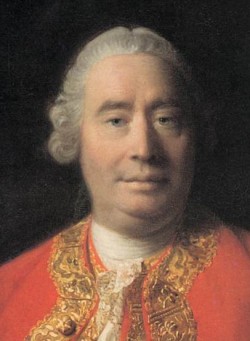
    “principle, that instances, of which we have had no experience, must resemble those, of which we have had experience, and that the course of nature continues always uniformly the same. (Hume “A Treatise of Human Nature” I.III.VI)

    Evidence-based approaches to medicine have been criticism by scientists and philosophers, or both, such as Mario Bunge. Bunge would remark that evidence-based medicine “has only strengthened the empiricist tendency to accumulate undigested data and mistrust all theory.” Why should we throw away theory and hypothesis to only limit ourselves to the what may appear more “truthful” as empirical science? It may be appropriate to use the word “skepticism” here not in the sense that we are trying to believe as little information as possible to avoid the risk of believing something that is false, but applying skepticism to our theories of research and regulation in medicine to get a better understanding of the underlying assumptions that govern our lives. Any attempt to circumvent possible motives and purposes by mankind by putting our entire faith into the numbers and graphs given by scientific experiments does not allow the theoretical lead that should guide medical research. And, the more faith we put into developing models that we can use for developing medical products, the greater room we have for skepticism. We need to ask ourselves what are the true causes of the issues we face in medicine. If we don’t correctly identify the proper causes and effects of the issues, then, as Stossel explains, the conflict-of-interest myth will continue like a foggy, intimidating machine that envelopes various sectors of the American public.

    Whether or not we call them “conflicts of interest” it is true that there have been dreadful instances in which the truth of science has been shrouded for other motives. When internist Barry Marshall and pathologist Robin Warren were working on a treatment for stomach ulcers, the cure, antibiotics, were cheap and easy to find. But the gastroenterologists had other ideas of the 1980’s had other ideas.

    During that year Robin and I wrote the full paper. But everything was rejected. Whenever we presented our stuff to gastroenterologists, we got the same campaign of negativism. I had this discovery that could undermine a $3 billion industry, not just the drugs but the entire field of endoscopy. Every gastroenterologist was doing 20 or 30 patients a week who might have ulcers, and 25 percent of them would. Because it was a recurring disease that you could never cure, the patients kept coming back. And here I was handing it on a platter to the infectious-disease guys.  (source)

    Ultimately, the two ended up experimenting on themselves to prove to the world that H. pylori, not stress, spicy foods, or anything else, caused stomach ulcers. More importantly, we see that, even as recent as the 1980’s, there were still causes for disease that we are unable to completely “rule out.” There are also issues between medical journals and doctors themselves in asserting what is actually true and false about diseases and treatments.

    What are the best ways for us to dispel the Conflict-of-Interest myth? Maybe it is more appropriate for us to search for evidence of collusion or similar ethical issues in the actions among researchers and practitioners before taking for granted what we may imagine to be the case. But, before we can do that, we must ask ourselves, do we really know anything?


  • Myths in Medicine: The Epistemology behind so-called "Conflicts-of-Interest"

    As tempting as it may be for one to believe that the medical products industry is free of corruption and that there are no people acting for heinous purposes, it’s difficult for anyone to take a position on issues in the health care industry without extensive knowledge. With the negativity of the discourse and multitude of issues surrounding making sure that we can provide for the health of everyone, it would be very refreshing and relieving for one to believe that all of those are simply results of misinformation and bad statistics.

    In “Pharmaphobia” Dr. Thomas Stossel delineates his decades of research and work on studying the so-called “conflict-of-interest” issues in the medical industry. Stossel begins with general statements about how the health care that we receive today is, for better or for worse, much better than it has ever been in the history of forever. The modern medicine Dr. Stossel packs his book full of scientific studies, anecdotes, and policy analysis in his journey through the history of medicine up to the problems we face today. He makes the contrarian claim that there has been a “conflict-of-interest” movement founded on unjustified claims about responsibility of results, exploitation of research, flawed policies, and a number of other lofty subjects. As a result, we end up with unnecessary taxes on products, price controls, misconstrued research data and other causes that thwart medical innovation and progress.

    Before we continue to explore these giants problems facing the medical industry, I’d like to take an aside and discuss certain epistemological approaches We tell ourselves to believe what is right and avoid what is wrong. What exactly does this mean though? As the moral value of knowledge lies on the foundation of what is true and what is false, it would be reasonable for us to ask ourselves what right we have to believe things that are true. Taking this a step further, we may posit that, by believing the truth, we are attempting to avoid believing things that are false and to have the most comprehensive set of beliefs as possible.

    “The ‘flat earth’ vs. ’round earth’ is not a difference in opinion. It’s a matter of right & wrong.”

    Consider two different approaches to solving a murder case. In the first approach, we choose to only use information given to us by evidence. In the second approach, we regard information by evidence as well as that information which we theorize. Which approach should we use? The former gives us a lesser chance of being wrong, as we take fewer risks with what could be true or false. The latter gives a greater chance of knowing more information. One might argue that you should believe something it  true to a certain degree of probability. Maybe there is a certain risk that we can take with the possibility of believing something that is false. But before we can confront knowledge as a microeconomics problem, things get more confusing when we confront paradoxes such as the preface and the lottery. Hopefully it should be more apparent why our right to have knowledge brings about issues upon close inspection. The epistemology in our approach must align with the appropriate rights to knowledge in research, industry, practice, or any other part.

    These challenges to our knowledge seem devastating (and they’re only the tip of the iceberg of epistemology), but there are ways for us to try to make sense of things. One may suggest that beliefs about which we confidently believe to be true are different from those beliefs that we believe true during inquiry. This way, there is a certain context to the truth of beliefs that we determine to be true. In other words, when we take for granted that a certain thing is true, then it doesn’t matter whether or not we regard it as true in the context of inquiry. Does it truly make sense to regard a certain belief as true in one context yet false in another? Well, throughout the history of science and medicine we see theories that change time and time again through the self-amending scientific method. Our current models always match existing data and information, and our theories make sense to us at the moment of what is available of scientific research. But, since most theories and models eventually are replaced by bigger, better ones, then it is reasonable to assert that our beliefs are false in the context of inquiry (since there is a very high chance that, someday, they will be disproved), but, as we are confident with the knowledge of those beliefs, we can believe they are true for now.

    “principle, that instances, of which we have had no experience, must resemble those, of which we have had experience, and that the course of nature continues always uniformly the same. (Hume “A Treatise of Human Nature” I.III.VI)

    Evidence-based approaches to medicine have been criticism by scientists and philosophers, or both, such as Mario Bunge. Bunge would remark that evidence-based medicine “has only strengthened the empiricist tendency to accumulate undigested data and mistrust all theory.” Why should we throw away theory and hypothesis to only limit ourselves to the what may appear more “truthful” as empirical science? It may be appropriate to use the word “skepticism” here not in the sense that we are trying to believe as little information as possible to avoid the risk of believing something that is false, but applying skepticism to our theories of research and regulation in medicine to get a better understanding of the underlying assumptions that govern our lives. Any attempt to circumvent possible motives and purposes by mankind by putting our entire faith into the numbers and graphs given by scientific experiments does not allow the theoretical lead that should guide medical research. And, the more faith we put into developing models that we can use for developing medical products, the greater room we have for skepticism. We need to ask ourselves what are the true causes of the issues we face in medicine. If we don’t correctly identify the proper causes and effects of the issues, then, as Stossel explains, the conflict-of-interest myth will continue like a foggy, intimidating machine that envelopes various sectors of the American public.

    Whether or not we call them “conflicts of interest” it is true that there have been dreadful instances in which the truth of science has been shrouded for other motives. When internist Barry Marshall and pathologist Robin Warren were working on a treatment for stomach ulcers, the cure, antibiotics, were cheap and easy to find. But the gastroenterologists had other ideas of the 1980’s had other ideas.

    During that year Robin and I wrote the full paper. But everything was rejected. Whenever we presented our stuff to gastroenterologists, we got the same campaign of negativism. I had this discovery that could undermine a $3 billion industry, not just the drugs but the entire field of endoscopy. Every gastroenterologist was doing 20 or 30 patients a week who might have ulcers, and 25 percent of them would. Because it was a recurring disease that you could never cure, the patients kept coming back. And here I was handing it on a platter to the infectious-disease guys.  (source)

    Ultimately, the two ended up experimenting on themselves to prove to the world that H. pylori, not stress, spicy foods, or anything else, caused stomach ulcers. More importantly, we see that, even as recent as the 1980’s, there were still causes for disease that we are unable to completely “rule out.” There are also issues between medical journals and doctors themselves in asserting what is actually true and false about diseases and treatments.

    What are the best ways for us to dispel the Conflict-of-Interest myth? Maybe it is more appropriate for us to search for evidence of collusion or similar ethical issues in the actions among researchers and practitioners before taking for granted what we may imagine to be the case. But, before we can do that, we must ask ourselves, do we really know anything?


  • What pre-medical students can learn from the humanities

    As I finish writing my final lab report for my Intermediate Physics Lab, the fall semester of my sophomore year comes to a slow, much-needed end. I’ve taken some time to reflect on the impact my classes have had since the beginning of the year. This semester, unlike those of my freshman year, has been markedly different in several ways. For one thing, all my classes were either directed towards my physics or my philosophy degree; none of them were pre-medical requirements. This was a huge breather for me, not because it was less work or I had the chance to be lazy, but because I had more time to develop as a person.

    When I took an Introductory Logic course last spring, I leveled up in “Hipster skills” by declaring my second major in Philosophy. Bear in mind that I didn’t know a thing about philosophy. I didn’t know a thing about fancy buzzwords like “existentialism”, “objectivity”, and “postmodernism” that the layman will throw around, and I had never read any philosophy text in my life.

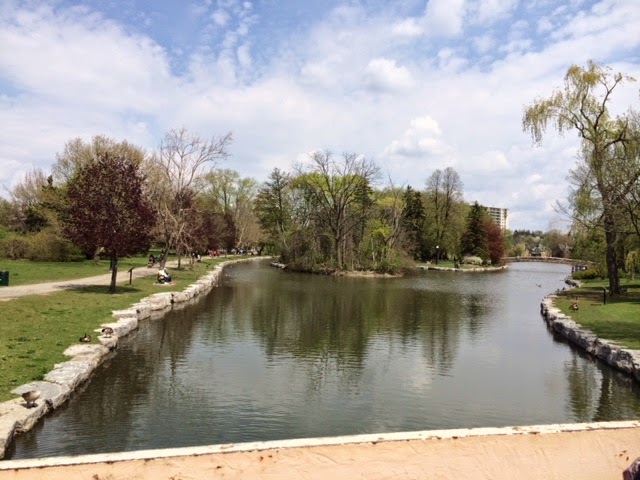
    Some park I visited while I was in Waterloo last summer or something.

    Fast-forward to the present moment: the end of the fall semester after I had finished my Ethics course. Since the beginning of this class, I have created skills for myself in communication, resourcefulness, and an ever-increasing insight in human behavior and thought. I have started a Medical Ethics Committee and a Bioethics Society to promote the curiosity of ethics. These groups feature (or will feature) student-led discussions, lectures from faculty, opportunities to attend ethics conferences across the country, high school outreach, and a debate-style team to compete in bioethics competitions. I’ve developed a purpose for myself and helped others do the same for themselves through understanding the values of research, ethics, and curiosity in the world. All of this was only possible through my work in philosophy. It’s amazing how much you can learn when you step out of your comfort zone and, in my case, I did so by diving off the deep-end into philosophy.

    Unlike the hypothesis-driven, progressive world of science, the humanities help us see each other as human beings capable of morals, emotions, judgements, and values. By understanding how society works from a non-scientific point of view, we are reminded that human beings are not guided by psychological or social phenomena. We are not physical or biochemical problems that are waiting to be solved. We are rational creatures who desire justice and purpose. Some might say that, unlike the sciences, the humanities make you feel more “humane.” I can agree with that.

    (Physics equations on the wall from my visit to the Perimeter Institute.)

    Though I would advise that humanities courses (like philosophy, history, art, or literature) are very helpful, their effectiveness ultimately depends on whether or not a student can find courses with a meaningful and welcoming atmosphere. I have no desire to sit through a humanities course that is a giant-lecture hall of watching lectures as though you were sitting through a movie with zero interaction.

    When I was a freshman, I was incredibly unsure of myself for double-majoring in Physics and Philosophy with a pre-medical track. Though I loved those subjects, I thought it was too unfocused and doubted how they would ever be helpful for a career in medicine. Now, I think my choices have given me more than any other degree program would have, and I’m certainly glad I chose to make those decisions.