Tunga, Untitled, 2011, ink on paper, 29 7⁄8 × 20″. From the series “La voie humide,” 2011–16.
In approaching the topic of symmetry (in its many forms through nature, philosophy, music, and even logic), we find many different expressions of beauty. Symmetry itself becomes a feature that almost defines beauty in the way we can craft elegant equations in mathematics and physics to our own perceptions of facial features. In symmetry, we find a similarity among all these myriad forms of beauty, and, within symmetry itself, the repetition of a feature creates a sort of rhythm that invokes aesthetic pleasure. In searching for unifying principles among several different perceptions, subjective experiences, and even more objective forms of reasoning, we can view this sort of unity as something that creates defined, certain meaning among many forms. Symmetry becomes a rhythm, like the equality on both sides of an equals sign in a mathematical equation. And, in creating these uniformities among observations, judgements, and perceptions we can deepen our senses of the world and create discoveries in science and philosophy that we couldn’t have done before. Unity would seem to be a moment’s reflection will show us that unity cannot be absolute and be a form; a form is an aggregation, it must have elements, and the manner in which the elements are combined constitutes the character of the form. A perfectly simple perception, in which there was no consciousness of the distinction and relation of parts, would not be a perception of form; it would be a sensation. This sensation is the key to understanding the relation between moral value and aesthetic pleasure that the arts and sciences invoke within us.
Beauty in all forms, as aesthetic philosophers may pronounce, invoke physiological sensations with ourselves. Knowing and determining the nature of these sensations through our appreciation of art (and other aesthetic pleasures). We create them in ways we observe everyday and in anything. A pixel on a computer screen, the beat of a percussive instrument during a song, or even a vibration that travels through space and approaches our ears create patterns as they aggregate, combine, and form with one another. Whatever bodily change or effect of a nervous process that we experience as a result of that is our bodies method of interpreting and analyzing these aesthetic forms. Those who pay close attention to these sensations of their bodies and use that to discover new meaning, purpose, value, and other forms of wisdom can reap the benefits of these methods of reflection. But only through this close, careful introspection and reflection upon meaning and value through these aesthetic means (not only symmetry but other methods as well) can we begin to understand the nature of beauty. The form, brought upon by art and, especially symmetry, makes us more aware and sensitive to thought, ideas, principles, and means of imparting knowledge in making us human.
The part of aesthetic nature we find appealing is beauty of form. In this sense, form is these objects of beauty are expressed. In aesthetic terms, the rudimentary nature of formless stimulation is removed and from the emotional looseness of remaining lost in senseless thought.
Borrowing from the work of George Santayana, I believe there can be a coming together of beauty and form that a human being performs in the mind. We create inferences and insights about what we observe aesthetically and sense the unity as discussed earlier. Beyond the sensation itself and deep within the insights offered by works of art, we can detect the elements that underly beauty.
This is the story of how I won. This is the story of how I spoke out against wrongdoing that sought to hurt me fundamentally as a human being. I overcame these struggles with the fearlessness that has been given to me. The world is full of moral ambiguities and existential horrors. Yet I made the right decisions at the right time in such a way that I found success and happiness.
I’m an Indian American Muslim male. During my junior year of college at Indiana University-Bloomington, I was also a physics-philosophy double-major with a pre-med track. I became interested in the purpose of a college education and doing research on the history/philosophy of education to find answers to questions I pondered such as: What is the purpose of volunteering/grades/extracurriculars/etc? Why do we learn the way we do? How do we use these classes to help us realize those things? I spoke w/philosophers, scientists, professors, and other professionals to gather information about these issues from them, too. I’ve written these topics on complacency, academic freedom, advice for incoming freshmen, and rhetoric in our models of learning.
I tried starting a conversation among a premed club I was part of, but they retaliated against me. They isolated me, manipulated me, made lies about me, and reported me to the Dean that I was harassing them. They mostly did this out of their insecurities for those questions I was suggesting, but it was also because I was presenting well-researched, justified beliefs that contradicted theirs. Through months of them ignoring the issues I wanted to raise and the discussions I wanted to have, I felt even more disillusioned. The Dean proceeded to criticize, interrupt, mock, and interrogate me with force. She said I was acting “bizarre” and called my story “twisted.” She didn’t give me a chance to defend myself. She’d laugh at me when I tried explaining how my friends were making up lies about me to silence me. She interrupted me in ways that I couldn’t even finish what I was saying. She continued this behavior for months through email and in-person. I was traumatized. The university charged me with harassment and stalking. They left me off with a warning, but they required that I’d start therapy with a social worker who had no graduate training so I could better myself. I had no choice but to blame myself for everything and agree with whatever the Dean told me. Throughout all of this, I had no chance to defend myself on any claim others made against me.
That’s when things got worse. I felt the pain, fear, anxiety, and distrust spreading into other parts of my life. Even when I tried doing positive things (like exercising and meditating) I felt the mocking voice of the Dean resonating in my head. I began sleeping 10-12 hours a day, stopped praying and exercising, eating less healthy, going to class less, and lost sight in the purpose of my classes. It got to the point where I wasn’t doing any studying and felt my blood boiling in my lectures. I had no idea what I was suffering from.
I couldn’t do anything to defend myself because I feared repercussions and abuse from the Dean of Students. My friends didn’t know how to help me so they isolated themselves from me. My professors watched as my grades dropped and I could barely will myself out of bed for the last two years of college. Not having answers to my questions of the purpose of a college education started taking its toll on me. And the toxicity of the environment around me towards me just made me scared of myself. In hindsight, my therapist didn’t help much. He mostly talked about superficial things like social skills, didn’t take notes, gave me a blank stare most of the time, and only tried to keep me out of trouble instead of understanding me. He’d say things like “Oh, people are idiots,” and he even believed in astrology.
It’s now been over a year since I graduated. I’ve been working at the National Institutes of Health while taking weekly therapy sessions with a therapist with a PhD and decades of experience out of my own will. This therapist is amazing like a modern day Sigmund Freud in how he gives detailed answers, speaks truthfully and with justification, and has amazing skills in rhetoric.
After I graduated, I struggled with coming to terms with difficult events in my past, figuring out what my purpose is, and trying my best to prepare for a successful career as a scientist. My doubts lingered. What am I looking for? I was tired of asking that question. I was tired of all the crazy things it lead to in my life. How could I trust anyone truly wanted to support me? During this time, I opened up. I began speaking to officials from Indiana University-Bloomington about my experience. I told them about how I had tried to answer questions related to the purpose of college education and my pre-medical friends retaliated against me. I told them how the questions I wanted to talk about weren’t some kind of side hobby or interest of mine but actual fundamental pieces of any student’s essential education. It was so much so that I needed that opportunity or right to ask them so that I could further my education, seeing as how negatively they were affecting my life. Every time I wrote out my story or spoke to someone about it, I felt like I needed a glass of water or needed to take a walk. I also told them I wasn’t trying to do anything in particular. My sole intention was to share the story because it was the right thing to do.
In August I got off the phone with a senior investigator from the university. I had explained to her everything that happened. She said what I went through was egregiously wrong and should have never happened to anyone. She said they’re going to require racial and religious bias training from the Dean and other staff members that were involved. She said this because the Dean and the pre-medical student who bullied me were both white women. They said they were going to keep close check on all of the Dean’s communication of all forms. I told the investigator I didn’t want anymore input.
It took 3 years. But I finally got my voice heard and taken seriously from the university. That’s all I needed to know that I won. I began to realize the university would probably handle issues related to the purpose of a college education much differently from now and onward. They would recognize the struggle of students who don’t see a purpose in anything anymore and recognize that as a valid, vulnerable position that needs to be defended and protected such that students could make the world a better place and achieve their goals. That was the proof the university could act in the way I wanted it to, and that my goals could be achieved. The university took my side in making the future a brighter place not just for me but for anyone who wishes to learn. I never knew whether I was truly a victim of racism or Islamophobia, either, but the university’s action in taking the issue of a racial or religious bias seriously at least satisfied me.
I want to take a sigh of relief and say I’m fine now, but it’s still going to take me a while to figure myself out. It’s gonna take some visits to coffee shops and long walks. It took me a while to get back on my feet, though. I began eating well, exercising, studying and performing research spanning science to philosophy, I won. Let this be a victory for everything a university should stand for. Let the future be brighter for students who wish to learn and grow. The past is heavy, but the future is greater. And I will no longer be shackled by fear. I want to extend my gratitude to everyone who supported me along the way. I want to thank my current therapist most of all. And thank you for reading this. It really means a lot to me.
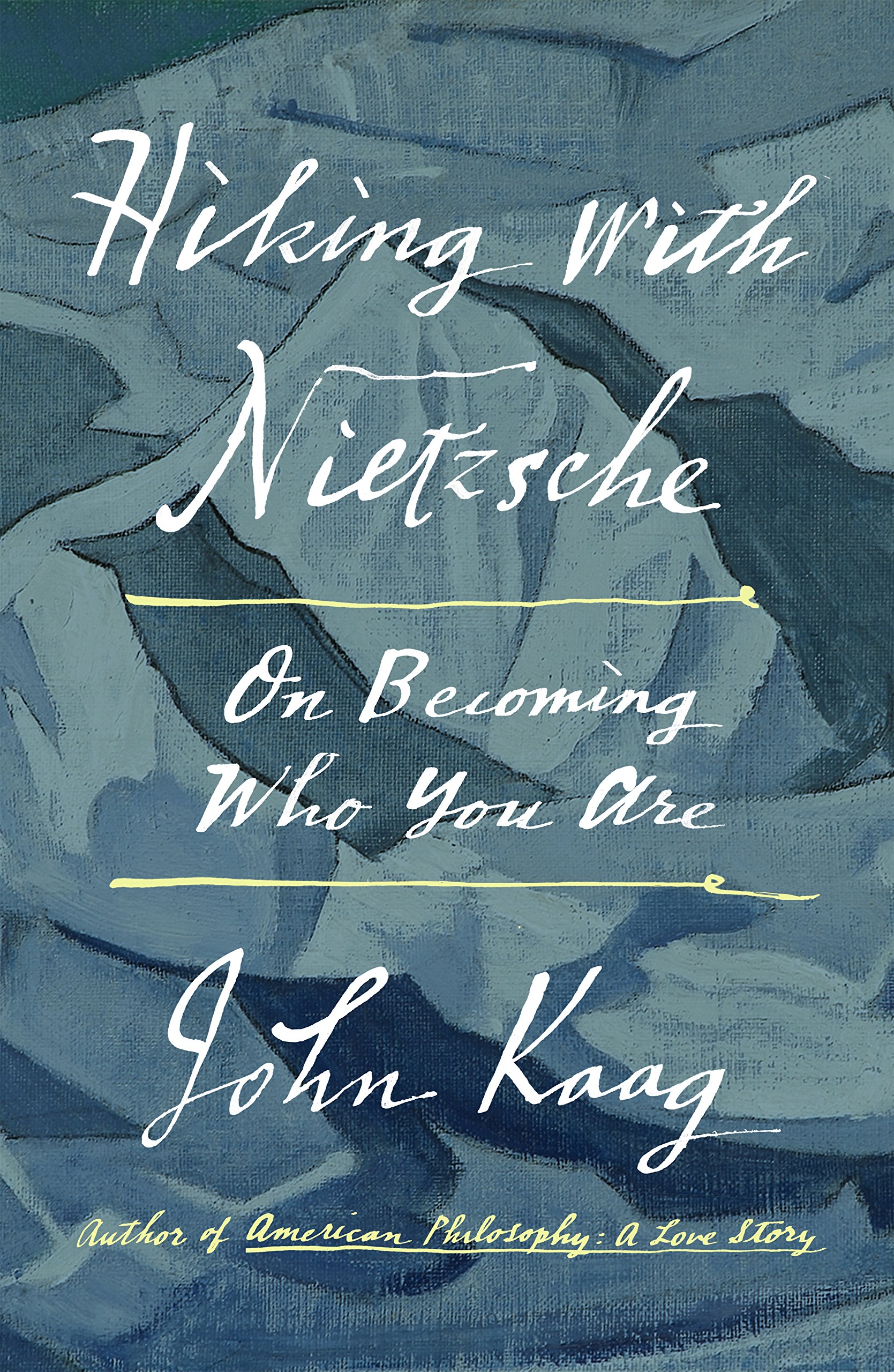
In Hiking with Nietzsche: On Becoming Who You Are, American professor of philosophy John Kaag shows how important and salient philosophy’s role in everyday life is. By hiking through mountains and experiencing what the Swiss Alps have to offer, Kaag illustrates a view of Nietzsche’s life that provides an intimate understanding of the challenges for which the German philosopher sought answers. Comparing himself to Zarathustra and Dionysus, Nietzsche actualizes his true potential in a way that other philosophers struggle with. He’s overcomes the limits and disadvantages of discourse and rumination and, instead, writes about the urgency of addressing issues of his time – many of which persist in the present day.
“As it turns out, to ‘become who you are’ is not about finding a ‘who’ you have always been looking for. It is not about separating ‘you’ off from everything else. And it is not about existing as you truly ‘are’ for all time. The self does not lie passively in wait for us to discover it.” I was incredibly satisfied by the immense level of reflection and thought put forward in analyzing and taking apart these arguments. It was a way of treating our thoughts and ideas as truthfully and justifiably as possible while still leaving room for the reader to maintain their own view of the issues Nietzsche brought up. It takes a tremendous amount of courage to address these issues, and, without the persistent and relentless work of both Nietzsche and Kaag, I’d struggle to even put these issues in words. I found the experience of reading the book absolutely insightful and eye-opening not only in the way Kaag depicted Nietzsche and the struggles he faced, but the way I related to them within myself. As I studied science and philosophy at Indiana University-Bloomington during my undergraduate years, I faced a tremendous amount of psychological and existential struggles. Things would get so worse with my mental health, social situations, academic performance, and even the thoughts I had about myself that, throughout senior year, I was just trying to leave my university as quickly and shamelessly as possible. I lost sight of the purpose in everything. My courses became tremendously more difficult, and I couldn’t ever figure out what to do. This book provides me with the ideals and arguments by which I can address those issues with far greater precision and clarity. I look forward to reading more Nietzsche in this thought-provoking and self-healing way such that I can continue to address these issues wherever I find them.
Even the pain and suffering that the individual experiences in society have home in Nietzsche’s work. By this, I mean that the way we react and deal with conflicts that cause us to suffer are taken with serious inquiry such that the individual can discover the true causes of what they are and the best ways to address them. As I read the book, I couldn’t help but compare the work and methods of the philosophers to how therapists approach individuals suffering from existential crises. A patient seeking help from an educated, wise therapist will often find him/herself at a loss of words and dumbfounded in terms of how to address his/her issues. It leaves the soul to suffer at the hands of a world that is wrathful, intimidating, and merciless. In concrete terms, this may include mental health issues such as depression or anxiety but also severe physical ailments such as cancer. Medicine and doctors should adhere to these truths and wrestle with them in their work in ways to treat patients and make the world a safer, healthier place by all means of measurement. Amazing work by physicians such as Richard Gunderman, Rita Charon, and Atul Gawande all hold the potential for making these changes happen. The way we internalize our suffering as part of a greater understanding of suffering that society has given us can let us internalize the reality of how and why we are meant to suffer. What might seem pessimistic and gloomy in our methods to understand the world turns out more encouraging and resilient to face whatever issues we experience in life.
Among the several lessons that Kaag and Nietzsche share discourse over include Nietzsche’s argument that self-discovery requires and undoing of the self-knowledge you assume you already have. This means that becoming yourself is a constant cycle between finding the self and also losing all sight of it. We can only truly become who we are as we overturn the fundamental truths and ideals that we believe make us who we are. This means there should be a level of trust and security as we perform these actions and do these things in life to become who we are. Nietzsche also elaborates that modern life distracts and deadens us in ways that prevent us from becoming who we are. The pleasures and fleeting desires of this world are nothing to compared to the near-unsurmountable challenge that is becoming who you are.
Kaag provides a clear example of these statements: “I remember too vividly an argument with my ex-wife that terminated with three words that I screamed before slamming our front door: ‘Let. Me. Be!’ I now know what I actually meant: ‘Get out of my way.’ Let me find my immutable essence. Unfortunately, there is no such thing as an immutable essence, at least not in my world. And so I left, but I never found what I was looking for, not even with (my new family) Carol and Becca. I found something else.” Carol is Kaag’s wife and Becca is his daughter.
Kaag can mention life story lessons as he ventures with his wife and daughter, and he draws upon his own personal experience in describing what Nietzsche himself sought to describe. The decadence, or decay, of the society around him, as Nietzsche noted, provides a careful, yet effective way of internalizing and dealing with the existential woes of today. As any philosopher dabbing in existentialism might come to realize, these concrete, realistic situations of philosophical truths come together in a neatly woven story. And the power which Nietzsche provided for his arguments has allowed them to resonate for decades.
As Nietzsche himself, said “It is an excellent thing to express a thing consecutively in two ways, and thus provide it with a right and a left foot. Truth can stand indeed on one leg, but with two she will walk and complete her journey.” (The Wanderer and His Shadow, 1880
Near the end of the book, Kaag explains how “‘Become what you are’ has been described as ‘the most haunting of Nietzsche’s haunting aphorisms.’” Indeed, it’s troubling to hear how who we are is something which we have to become, but that the thesis what we need to be is ourselves is all the more encouraging and reassuring for the reader.
In my current research on the zebrafish brain, I’m creating a mapping of parts of the brain to the genes which are expressed using mathematics and statistics. This method of devising theoretical models carries difficulties and issues in the way the accuracy and precision of these models. This model of the zebrafish neuroscience holds insight for our methods of using the organism for studying psychiatric disorders. In understanding phenomena of the brain, neuroscientists have various methods of referring to how to both explain and describe the causal mechanisms of the brain. The way our brain interacts with things like stimuli (such as visual imagery or sounds) and creates its own effects (such as neuronal responses in the brain) need to be precise to determine the nature of those phenomena we empirically observe. The 3M (model-mechanist-mapping) constraint is one such method.
In this post I will show plausibility that satisfying the 3M constraint gives us predictive, explanatory power in neuroscience that can be extended to cognitive science, psychology, and (pose the question for) consciousness. I’ll use various examples of neuroscience in proving its predictive power. I’ll also like to relate this predictive power to, at the very least, a basic form of consciousness. I hope to elucidate current findings in both science and philosophy as they relate to consciousness itself. We can begin this sort of inquiry with an overview of these neuroscientific explanations, then proceed to basic questions of how neuroscience relates to consciousness and what sort of empirical evidence has been shown towards this problem. Finally, we conclude with what limits scientists and philosophers currently face, and what anyone can do to meet those problems.
Alchemical Illustration from the Emerald Tablet of Hermes.
The Tablet had such an impact on the minds of histories greatest philosophers, esotericists and mystical thinkers, that it became the esoteric industry standard for every medieval and later renaissance system of alchemy.
The 3M has two claims. The first is that the variables in the model correspond to identifiable components, activities and organizational features that produces maintains or underlie the phenomena. The second is that the mathematical dependencies that are posited among the these perhaps mathematical variables within that model correspond to causal relations among the components of that mechanism. This mechanism-model-mapping (3M) constraint embodies widely held commitments about the requirements on mechanistic explanations and provides more precision about those commitments.
3M is much more than imposing an arbitrary rule on scientific theory, as David Kaplan, Lecturer in the Department of Cognitive Science at Washington University in St. Louis, explains. The demand follows from the many limitations of how predictions are formed and the conspicuous absence of an alternative model of explanation that satisfies scientific-commonsense judgments about the adequacy of explanations and does not ultimately collapse into the mechanistic alternative. The idea of being in compliance with the 3M constraint is shown to have considerable utility for understanding the explanatory force of models in computational neuroscience, and for distinguishing models that explain from those merely playing descriptive and/or predictive roles. Conceiving computational explanation in neuroscience as a species of mechanistic explanation also serves to highlight and clarify the pattern of model refinement and elaboration undertaken by computational neuroscientists. Under 3M, we can generally believe that the more accurate and detailed models are for target systems, the greater effectiveness they explain the phenomena.
One of the biggest setbacks of machine learning, as I’ve explained, is that models are far too descriptive of sets of data, yet not explanatory that they can be used for prediction. Scientist and philosophers debate whether 3M can explain phenomena in addition to describing them. I believe that dynamical and mathematical models in systems and cognitive neuroscience can generally explain a phenomenon only if there is a plausible mapping between elements in the model and elements in the mechanism for the phenomenon. In 1983 Professor of Psychology Philip Johnson-Laird expressed what was then a mainstream perspective on computational explanation in cognitive science: “The mind can be studied independently from the brain.” The extent to which this is true (which we call computational chauvinism, as did Piccinini in 2006) can be confirmed with our theoretical models of genetic mapping in the brain. However, we can argue forms of this computational chauvinism hold true as we bridge the gap between computational explanations and cognitive science. Our human cognitive capacities can be confirmed independently of how they are implemented in the brain. Delineating this computational chauvinism and predictive power of the 3M model, neuroscientists can have more power in their explanations of the brain.
Computational chauvinism is three claims: (1) computational explanation in psychology is independent from neuroscience, (2) computational notions are uniquely appropriate to psychological theory, and (3) computational explanations of cognitive capacities in psychology embody a distinct form of explanation. The neuroscientific and biological explanations and mechanistic explanations are covered by this form of explanation. These neuroscientific forms of explanation should prove insightful to the the two questions of consciousness, as explained by philosopher David Chalmers: generic and specific. Generic consciousness relies on the question of how neural properties explain the conscious state and the specific form, how they explain the content of the conscious state itself. To show that a computational analysis of neuroscience is possible, especially in the realm of consciousness, we need to refute the challenge fo computational chauvinism.
Computational chauvinism shares connections with functionalism, once the dominant position among philosophers of the mind (Putnam 1960). Functionalism, that the way a mental state functions determines what makes the mental state what it is, can be used to support the conclusion to abandon neuroscientific data. Canadian philosopher
Zenon Pylyshyn also argues these connections between computational chauvinism and functionalism.This comes as a result of the functionalist belief that psychology can explain phenomena independently of neuroscientific evidence. Drawing the analogy that the brain is similar to a computer, we imagine the functions of the mind as similar to running software. The computationalist neuroscientists believe the brain can be modeled as a computer. That the psychological phenomena can proceed without respect to the neuroscience means the brain is only the hardware of the computer and nothing else. Cognitive science would be the software that emerges. With this computer analogy, the functionalist would argue that the finding neural and computational explanations would be mostly irrelevant to psychology and cognitive science. At best, they may play a minor role in extreme examples of brain physiology. I will argue to refute functionalism to show the potential for the explanatory power of computational neuroscience.
More difficulties arise in our notions of objectivity with consciousness. At best, we can only observe behavior that tracks consciousness. We must use introspective forms of reasoning and thinking relate these subjective experiences to objective ideas and models of consciousness while appropriately measuring a subjective responses of consciousness. If I were to continue to stand by the explanatory power of computational neuroscience, it should hold the potential for this gap between the subjective and objective. The breadth of neuroscience, as it covers all forms of studying the brain and nervous system the constituents that make them up, we can look at the physical and mechanistic properties of the cerebral cortex for evidence of perceptual consciousness. My previous work on stochastic models of the brain should serve as a worthy example of this with the sense of vision. Looking at the general state of empirical work, especially as it relates to vision, give us a starting point for describing this consciousness.
believe I can argue that the constraint of 3M on explanatory mechanistic models because it can create the difference between phenomenological and mechanistic models as well as distinguishing between the possibility and actuality of the models. Phenomenological models provide descriptions of phenomena, and, as philosopher Mario Bunge argues, they describe the behavior of a target system without any unobservable variables (similar to the hidden variables I’ve described with causal models). In computational neuroscience, descriptive models (that summarize data effectively) differ from mechanistic models (that explain how neuroscientific systems work).
I cite the 1999 textbook Spikes: Exploring Computational Neuroscience as a seminal book in the scientific theories of computational neuroscience. The book sought to measure signals and responses from the nervous system and analyze those spike trains that followed. It uses several examples such as Gaussian waveform patterns and variations of the Hodgkin-Huxley models of firing neuron potentials. The latter model uses mathematics and conductance to explain how action potentials can be fired from neurons. These scientists, winning the Nobel Prize in 1963, performed that was very closely related to Biophysicist Richard Fitzhugh’s work in the 1960’s. Fitzhugh reduced the Hodgkin-Huxley model so that it could be visualized in phase-space and, therefore, use all variables at once, and, from this, be used for more accurate detailed predictions. I also believe this work distinguished the qualitative features of neurons on the topological properties of their corresponding phase space.
Kaplan explains that the model’s predictive power is weak. While it may generate accurate predictions about the action potential in the axonal membrane of the squid giant axon (their experimental system) to within roughly ten percent of its experimentally measured value, the critical question is whether it explains. Despite these features of the Hodgkin-Huxley models, these equations don’t explain how voltage changes membrane conductance. Scientists and philosophers who wish to use the predictive power of models in neuroscience require models to reveal the causal structures responsible for the phenomena themselves. Still, the Hodgkin-Huxley equations continue to provide the inspiration for interesting mathematics and physics problems.
The electrical activity can be physically measured from neuron cells and the scientists needed a way of determining the “spikes” (as the title suggests) that result from the data. At the time the book was written, there were many many other features of neurons, neural networks and brains that one would need to understand as well, no question about that. But the book sought to explain the spike (or action potentials) timing with as much accuracy and precision as possible. As neurons fire and send signals, they produce an action potential that’s created by the difference in charge along the neuron. From, using mathematical descriptions such as Bayesian formalism, the authors argue how to make sense of the neural data using probabilistic approaches to explain how stimuli may be predicted. Sensory neurons govern vision and we can gauge information processing by observing the potential of these receptive fields. The various electrical properties discussed in the book, such as spike rates, local field potential, and blood oxygen level dependent signal (BOLD), especially from groups of neurons and how they relate to one another provide the basis for these explanations of consciousness. Though “Spikes” was published in 1999, even as far back as 1990 were the biologist Francis Crick and neuroscientist Christof Koch describing how groups of neurons functioned together. Though they can be quantified mathematically, the exact nature of how they together relate to consciousness is not completely understood.
However, these neural sensory systems (the groups of neurons, pathways, and the parts involved in perception) do have potential about the subject’s environment. From this information we can create neural representations, which are the ways neural activity form to correspond to represent external stimuli that we readily observe. The closeness of this relationship, though, is hotly debated. Philosopher Rosa Cao argued that neurons will have little or no access to semantic information about the world, for example. Cao has also raised questions of what sort of functional units arise in describing neural representation. A very simple example I put forward is that information (in this case, representation of the relevant aspect of the stimulus that causes a neural response) is carried through series of spike potentials in the brain. Certain models that have been created from these data include the Dehaene-Changeux model which has been shown to create a global workspace for consciousness. By this explanation, a state must be accessible to be considered a consciousness state. A system X accesses content from system Y if (and only if) X uses that content in its computations/processing. It must be “globally” accessible to multiple systems including long-term memory, motor, evaluational, attentional and perceptual systems (Dehaene, Kerszberg, & Changeux 1998; Dehaene & Naccache 2001; Dehaene et al. 2006). This is irrelevant of whether the access is phenomenal.
Though I can’t make any statements of 3M directly in its relation to models of consciousness, I believe scientists and philosophers should begin observing the 3M criteria in their studies of consciousness. Researchers of any kind can raise questions of the explanatory power of these methods of describing physiological phenomena. We need a deep, precise explanation for our theory as they relate to forming predictions. Then, we can venture into the domain of consciousness with much more insight than without. The debates among mechanistic, dynamic, and predictivist explanations among functional and structural taxonomies. For all its flaws and limitations, mechanistic models of the brain still provide beneficial results to the answers at the core issues in philosophy of neuroscience, including explanation, methodology, computation, and reduction.
Sources
Bunge, M. (1964). Phenomenological Theories. In (Ed.) M. Bunge, The Critical Approach: In Honor of Karl Popper. New York: Free Press
Cao, Rosa. (2012). “A Teleosemantic Approach to Information in the Brain”, Biology and Philosophy, 27(1): 49–71. doi:10.1007/s10539-011-9292-0 ––– (2014). “Signaling in the Brain: In Search of Functional Units”, Philosophy of Science, 81(5): 891–901. doi:10.1086/677688
“A Neuronal Model of a Global Workspace in Effortful Cognitive Tasks”, Proceedings of the National Academy of Sciences of the United States of America, 95(24): 14529–14534. doi:10.1073/pnas.95.24.14529
Chalmers, David J. (1995). “Facing up to the Problem of Consciousness”, Journal of Consciousness Studies, 2(3): 200–219.
Crick, Francis and Christof Koch. (1990). “Toward a Neurobiological Theory of Consciousness”, Seminars in the Neurosciences, 2: 263–275.
Dehaene, Stanislas and Jean-Pierre Changeux. (2011). “Experimental and Theoretical Approaches to Conscious Processing”, Neuron, 70(2): 200–227. doi:10.1016/j.neuron.2011.03.018
Dehaene, Stanislas, Jean-Pierre Changeux, Lionel Naccache, Jérôme Sackur, and Claire Sergent. (2006). “Conscious, Preconscious, and Subliminal Processing: A Testable Taxonomy”, Trends in Cognitive Sciences, 10(5): 204–211. doi:10.1016/j.tics.2006.03.007
Dehaene, Stanislas, Michel Kerszberg, and Jean-Pierre Changeux
Fitzhugh, R. (1960). Thresholds and plateaus in the Hodgkin-Huxley nerve equations. The Journal of General Physiology 43 (5), 867–896.
Fitzhugh, R. (1961). Impulses and physiological states in theoretical models of nerve membrane. Biophysical journal 1 (6), 445–466.
Haken, Hermann, J. A. Scott Kelso, and H. Bunz. (1985). “A Theoretical Model of Phase Transitions in Human Hand Movements.” Biological Cybernetics 51 (5): 347–56.
Johnson-Laird, P.N. (1983). Mental Models: Towards a Cognitive Science of Language, 47 Inference and Consciousness. New York: Cambridge University Press.
Kaplan, D. M. (2010) “The Explanatory Force of Dynamical and Mathematical Models in Neuroscience: A Mechanistic Perspective” Philosophy of Science Vol. 78, No. 4.
Piccinini, G. (2006). Computational explanation in neuroscience. Synthese 153:343–353.
—– (2007). Computing mechanisms. Philosophy of Science 74:501-526. Piccinini, G., and Craver, C.F. (forthcoming): Integrating psychology and neuroscience: functional analyses as mechanism sketches. Synthese.
Putnam, H. (1960). Minds and machines. Reprinted in Putnam, 1975, Mind, Language, and Reality. Cambridge: Cambridge University Press.
Pylyshyn, Z. W. (1984). Computation and Cognition. Cambridge, MA: MIT Press.
Meandering through information from different disciplines is difficult for anyone – be them a scientist, philosopher, or anything else. On his website and in this interview, we’ll take a look at how Adam Kruchten learned to figure out what guided him in his passions and how he applies both scientific and philosophical thinking to understanding statistics. HA: Adam, as an undergraduate, you studied mathematics and philosophy. Now you’re going to enroll at University of Pittsburgh to study biostatistics. How did you go from being interested in mathematics and philosophy to biostatistics? Adam: Statistics, and inference more generally, in some form has always been of interest to me, it just took me quite some time to learn that about myself. Early in my undergraduate career I worked in research in statistical mechanics, and I was always fascinated by the probabilistic models. Idealizations could capture tremendous amounts of useful information about extraordinarily complex phenomena. Further, the same underlying notions of probabilistic modeling could be used to understand and cope with both true randomness and epistemological uncertainties without any difference in mathematics. Originally I thought I was mostly drawn in by the physics. I realized later that the physics, while interesting, was not what drew me in. It was really the methodology. I hopped around different fields, but had the same problem. Eventually I settled on math and philosophy, and there I found fields where I could study and understand fundamental issues underlying robust scientific inferences. In math I was drawn to logic, and in philosophy I was drawn broadly to issues addressing philosophy of science: philosophy of science proper, but also language, epistemology, and metaphysics.
After graduation I took a job in applied mathematics, but my role was really mostly an applied statistician. Here I worked closely with a professor of statistics and found the underlying study of inferences that had really drawn me to numerous fields prior.
As for biostatistics specifically rather than statistics more generally? Biostatistics occupies its place inside public health programs. I think applying statistics to public health issues is a great way to make a meaningful impact through the study and application of my underlying passions.
HA: What role does (or will) philosophy play in your research? How do you hope to study science and philosophy hand in hand? Adam: Beyond philosophy directly informing my statistical work, I would also like to eventually research questions that are fundamental to inference itself. When doing this kind of research you are not just relying on philosophy, you are directly doing philosophy.
HA: On your blog you’ve written about the philosophical thesis of physicalism in a way that people without a strong background in philosophy can understand (https://adamkruchten.wordpress.com/2018/05/07/you-are-not-your-brain/). What sort of understanding do you think this general audience should have of philosophy? Adam: I try to write in an accessible way that doesn’t require much philosophical understanding, but I think I do expect readers to at the very least think “like a philosopher.” By “think like a philosopher,” I really mean several things. You should read with curiosity and openness: reading while prepared to dig deeper into elements you may not understand and with a willingness to change your own views as necessary. At the same time I think you should read with a critical but charitable mind. Critical, meaning you look for implicit assumptions, look for leaps in logic, and rigorously assess the foundations of any premises. Charitably, meaning you only attempt to criticize the best possible version of the argument: don’t set up straw men, see if small errors in argument and prose can be easily corrected, and engage with the mindset that an argument was made in good faith.
HA: A bit more specific, what can scientists do to appreciate philosophy better? Adam: There’s an obvious answer here which is just “read more philosophy.” This is an honest answer, but it only goes so far. I think reading more philosophy is always useful, but there is far more philosophy than even a professional philosopher could read and understand, let alone someone with a career outside of the field.
For a more practical answer I think scientists should engage in science the same way I answered the previous question. Think like a philosopher by acknowledging and assessing underlying premises and methodological assumptions in doing science. HA: Before we finish, what’s one book everyone should read? Adam: This is a tough one. I have a hard time suggesting one book for a variety of reasons. I think I will answer with the book I feel most influenced my thought, Immanuel Kant’s Prolegomena to any Future Metaphysics. This book is Kant’s own summary of the much longer Critique of Pure Reason. I think that reading this book shed a great deal of light on various ways of thinking I had taken for granted, and helped me come to terms with a lot of what I had, at times erroneously, assumed implicitly to be true about the world. Just as Hume awoke Kant from his dogmatic slumber, so did this book for me.
“Wanderer Above the Sea of Fog” – Caspar David Friedrich
When we take care of ourselves, we fight the good and the bad within us. Philosopher Friedrich Nietzsche warned that fighting monsters without care could cause you to become a monster. Fighting internal monsters – like psychological stress or personal obstacles – requires coming to terms with the reality of this darkness. Contemplation of nihilism and despair, whether its dwelling on the past, philosophizing, or addressing fear, anxiety, and hatred, can open up a dark place in oneself. But grappling with good and evil, as Nietzsche would suggest, of the darkness can bring personal transformation. Through a surrendering of the ego, vanity, and hubris to overcome psychological difficulties, humans can find a way to transcend the fears within themselves. This is the darkness we all fight.
Darkness can be seen as a passion, a tendency to search for answers in places others fear. This absence of light gives perspectives, contrast, and dimension to everything else we see in the world. It can warn us of feared fascinations with power (such as the shadowy lair of Scar in “The Lion King,” where Simba was instructed to not go) to the balance of good and evil (such as the balance of light and dark in Shakespeare’s “Macbeth.”) People find themselves at battles between angels and devils internally. In these psychological places that invoke fear and shock inside of us, darkness offers humans the insight into what makes our skin crawl. But, after acknowledging that humans are capable of great evil and destruction, humans find sacred truths corrupted or lost within ourselves.
Recognizing the dark tendencies within themselves, people can engage in a deliberate self-reflection of morality. They figure out what’s right and what’s wrong within themselves. What might seem like hideous qualities – denial, projection, and other monstrous aspects of human behavior infect our intimacy, socialization, commerce, politics, and spirituality. This psychotherapy reveals deep problems many people ignore – symbolized by darkness itself. And the ignored darkness of human beings become apparent through this corruption. Remaining silent to not displease others, subtle government propaganda, or the rise of religious extremism that have marked a post-truth, postmodern era have these roots in darkest parts of the human psyche.
Grappling with this darkness can show us what we truly find aesthetically beautiful. Philosopher Edmund Burke described the heightened sense of threats that lie outside our control or understanding as a key feature of the sublime. Our senses heighten through the mystery of the unknown, as brought upon by darkness. And beauty may be accentuated by light, but either intense light or darkness is sublime to the degree that it can obliterate the sight of an object. The imagination is moved to awe and instilled with a degree of horror by what is “dark, uncertain, confused.” This beauty, captured through art, shows this struggle we have within ourselves to understand darkness.
Caspar David Friedrich’s painting “Wanderer Above the Sea of Fog” depicts a man on a rocky precipice that pierces the landscape. It’s often associated with Friedrich Nietzsche’s quote “He who fights with monsters might take care lest he thereby become a monster. And if you gaze for long into an abyss, the abyss gazes also into you,” from the philosopher’s book “Beyond Good and Evil.”
In Friedrich’s piece, there is an apparent contrast shown through the combination of light and dark colors. The eye is drawn to the figure and the cliff below it, since they are painted darker than their surrounding. The shades of dark green and brown contribute to the mysterious and heavy emotions of self-reflection, while the light blue-pink fog in the background produces a sense of nothingness or isolation. It seems unfitting, though, that Caspar David Friedrich captured a painterly version of the sublime while Nietzsche himself declared the sublime out of date in 1886. Aside from movie posters, the painting’s influence captures the self-reflection of an unknown, foggy future and the mysterious search for meaning in a world of isolation. Finding these threats that are shrouded in darkness, the onlooker in the painting can find truth.
“Untitled (Text For Some Place Other Than This)” – Douglas Gordon
Through the sublime, we can find ourselves attracted to areas and things we normally fear. Things that pique our curiosity and fascinate by questioning our subjective experiences. Douglas Gordon’s “Untitled (Text For Some Place Other Than This)” lures viewers to an uncanny extreme. Its structureless, unsettling place that these sublime features expose what we repress within ourselves. It could be our own limits of understanding or some other inherent human insufficiency. Whatever the source of the anxiety is, it is a dark abyss we gaze into. These works of art bring about images of the dark side of human nature.
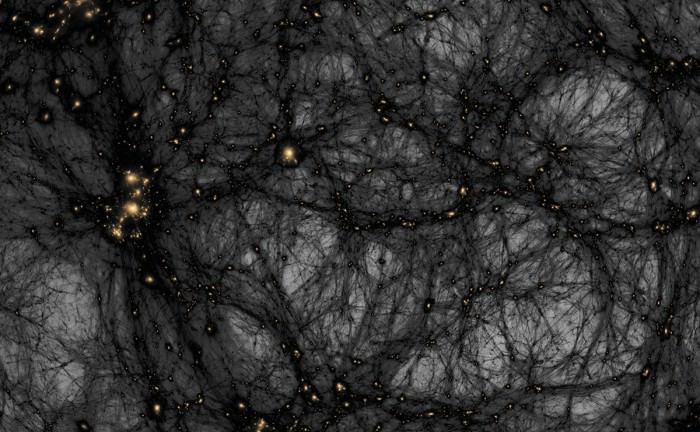
Outside of art and philosophy, physicists probing what matter is made of have struggled with darkness. In her book “Dark Matter and the Dinosaurs,” physicist Lisa Randall draws on the similarities of the universe’s transparency with human empathy. Dark matter, the substance that scientists find scattered throughout galaxies, is invisible. It makes up most of the universe, yet it doesn’t absorb or emit light. Randall argues that that the way humans can’t detect dark matter is similar to the way people have a gap between their perceptions and reality. And people need to understand this to understand the way humans empathize with one another.
“People’s attitude toward dark matter is bedeviled by the same instincts that influence their responses to different races, castes, or classes whom they might not truly see but who are nonetheless essential to society,” Randall wrote in the Boston Globe. The way we repeat quotes such as “It is only in the darkest of nights when the stars shine the brightest” might indicate that darkness is more than the absence of light, but, rather, what we don’t understand. These are the fears and psychological hurdles that plague our everyday moral decisions.
Image from Dark Universe, showing the distribution of dark matter in the universe. Credit: AMNH
Randall’s analogy seems stretched, and that might spell trouble for understanding darkness. It’s one thing to acknowledge limitations in understanding of the universe, but it’s another thing to say human beings don’t empathize with people from different races. The former deals with scientific methods of understanding while the latter relies on human morality.
Moreover, dark matter itself is an auxiliary hypothesis, not an empirically observed phenomena. It is added to theories to make things make sense – not in any deeply justifiable basis. The scientific discussion of dark matter has its own flaws, as professor of astrophysics Paul Kroupa writes, “Yet even within academic circles, there is a lot of confusion about dark matter, with evidence and interpretation often conflated in misleading and unproductive ways.” Kroupa himself published a paper in the 1990’s attacking the ways scientists used dark matter to explaining the structure of satellite galaxies. What the scientists called “dark matter” was explained with other phenomena.
People will find danger in ignoring the darkest parts of themselves. Repression of these internal monsters or even denying that they exist at all can result in more dangerous psychological problems. Nietzsche’s quote about fighting monsters spoke of humans as works of art. People view themselves through values that can range from elegance and harmony to cacophonous grotesque pieces. These presentations of ourselves – much like paintings, sculptures, or scientific theories – are built on the aesthetic principles we create. The darkness reveals this artistic power that we can use for good and evil.
If psychology were alchemy, then dreams might have the secrets people are looking for. At the back of everyone’s mind, it might be true dreams should be ignored. But the subconscious is ever-awake, and, as psychologists Carl Jung and Sigmund Freud would have suggested, dreams offer ways of interpretation and understanding one’s own subconscious. And when the mind shares these secrets, they could become ways we should view the world. They can lead to guilt, remorse, and other changes to responsibility that humans can probe. They can be a form of moral intuition for what we should do in life. How do dreams help us stay woke?
I’ve deliberated on the contents of my dreams on and off for maybe ten years now. Pondering symbols, colors, and sounds of the experience, I’ve felt an almost-psychic connection to them. Underwater volcanos, broken bridges, and still lakes provide settings, while images from previous experiences and ignored emotions flood them. While I slept, I would have dreams about film characters and close friends, seemingly random and chaotic. Most of the time, I couldn’t have thought more of what these visions meant. They were probably just the images that my subconscious could easily stir up while I slept. They didn’t proceed or behave the same way things in the waking world did. If I saw a man with three legs in my dream, I would have thought “Ah, this man is obviously from the three-legged race of people.” My own thoughts within my dreams seemed to at least have some tendency to make things make sense – even if everything would fall apart when I would all wake up. And I didn’t say nay clear way to prove to others the contents of my dreams – let alone what they meant.
In some versions of the the Greek mythology of the Death of Orion, Artemis might have killed the hunter Orion while in others, a scorpion directly stung it.
Another scene from a dream stung with intensity. Imagine that, in this dream, a scorpion twists its tail and plunges into the body of another one. As it does, the victim falls into shock with its body still. Though the dream involves two scorpions while the Greek myth of the Death of Orion did not, I reasoned that the dream must have used the images from this scene. I could probe the dream for the meaning behind its symbols. The scorpion could have represented themes of jealousy, obsessiveness, power, and passion that my mind had associated with its image. Artemis shooting Orion could have meant some sort of mixing of sexual energy a strategic aim towards a goal. Jung might have described a collective unconscious of these psychological symbols while Freud might have suggested something more secretive about these images. As I thought through these possibilities, the images of the dream itself would fade away. With such sharp, insightful messages about behavior, I had to listen to these symbols to figure out the ethical implications of such an existential issue. And I wondered how accurate my analysis was. I turned to science for more information.
Dreams have been studied with science and theory, like the one from psychologist Calvin Hall. Through a quantitative coding system that would lead to concepts of the self, others, and other experiences, Hall spent decades of work, from the 1940’s to the 1970’s, analyzing dream symbols from reports of individuals. Beginning with university students and processing to people from other walks of life, Hall collected over 50,000 dream reports that codified dreams by categories. Environments, objects, feelings, people, and other types of symbols were compared and contrasted with one another. With as many differences separating human beings, Hall found similarities in the ways dream symbols coincided with experiences in the waking world. These corresponded with conceptions of the the dreamer and other features of the dreamer’s life. The dreamer’s self, environment, and other people could be described in various situations and conceptions from the dreams. An employee being manipulated by his boss in waking life might have dream images depicted himself as ‘weak’ in the presence of his boss. Reactions such as fear or pain may be simple enough to show how an individual perceives the world, but more nuanced reactions, such as guilt or blame, involve concepts which give rise to moral decisions. An individual’s autonomy, responsibility, and other features of decision-making can be at stake with these seemingly random images.
But putting dreams in the perspective of ethics prompted another question. If dreams were only messages to be decoded and understood, how could they have any autonomy or ethical dimension of their own? In some ways of thinking, a dream can’t be held responsible for my behavior any more than my body would be responsible for heating up when it’s hot outside. Dream interpretation itself can give many possibilities of various images. A dream image an employee might see as a description of himself as ‘weak’ in a could also have sufficient reason to be observed as an internal weakness – completely irrelevant of the employee’s boss. It could even be a random image from the subconscious. Despite my own worries in these interpretations, other philosophers and writers might have their own answers.
Friedrich Nietzsche wrote that Greek artists found messages from their gods and goddesses through dreams. The deities came from these visions gave them the realistic pictures of these deities. René Descartes pondered how people could prove they weren’t dreaming. Plato believed all men lived in a dream while the philosopher tries to wake up. Blaise Pascal wrote that a pauper dreaming as a king for twelve hours a day is just as happy as a king dreaming as a pauper for twelve hours a day. While these philosophical problems present entertaining theoretical concepts and dilemmas, the real world (which, at this point, is also becoming more difficult to comprehend) is complicated. As we observe the world, in all its good and evil, the subconscious responds in a way that represents the way we would in our everyday autonomous self. Similarities between the objects we see in our waking lives and sensations we experience are evidence for German philosopher Arthur Schopenhauer to believe that the world we observe world is the world of our own reflection. We associate fire with heat because the evident heat emitted by a fire, and, with that association, the fire could be energy, emotion, or some vitalizing symbol. When someone looks into him/herself with reflection, just as someone analyzes his/her dreams, that person understands the nature of the universe. And, with the difficulty with discerning the point at which dreams ended and the waking state began, Schopenhauer conceded that life metaphorically might as well be all a dream. Understanding the limits on these patterns and forms of reasoning, the dreamer’s true nature comes about through dreams.
“Joseph Reveals His Dreams to His Brothers” Raphael
Through history and literature, we see dreams becoming a moral voice for others. Roman emperor Dionysius sentenced his servant Marsyas to death after a dream that Marsyas cut the emperor’s throat. One might think the interpretation of this dream might have been justified, though, because Marsyas was planning to assassinate Dionysius. The dream might have sent a message of the reaction that Dionysius would have around Marsyas through Dionysius’ waking thoughts. Yet, if Dionysius’ subconscious was picking up signals about Marsyas in the waking life, they could have easily taken the form of fading thoughts – easily dismissed, forgotten, or ignored consciously. These observations we make in our lives – maybe part of a Jungian collective unconscious – take forms in our dreams. While dreams themselves may seem uncontrollable and irrelevant to the moral basis of our character, Dionysius’ dream might have indicated some culpable aspect of Marsyas’ character.
It’s an uncomfortable idea – that dreams can be treated in such a similar way to reality. No one would ever dream of such an idea. The ambiguous boundaries of the unconscious and conscious blend into the absurdity and complicated nature of right and wrong. Schopenhauer said that the dreams are part of a continuing life experience. Much like going flipping rapidly through the pages of a book and finding parts you have read and parts you haven’t, dreams give this method of recreation. Waking up reminds us which parts are dreams.
“Orestes Pursued by the Furies”John Singer Sargent
The crises of tomorrow’s democracies come from the human aspect of ourselves. Beyond easily observable forces – scientific, political, or anything else – we seek to make connections with one another. Let’s turn to philosophy.
On May 1, Professor of Philosophy Martha Nussbaum will give the 2017 Jefferson Lecture in the Humanities at the John F. Kennedy Center for the Performing Arts in Washington D.C. Throughout her career Nussbaum has shone in the public sphere as an intellectual sharing wisdom on the role of philosophy in everyone’s life. In her speech, “Powerlessness and the Politics of Blame,” Nussbaum will do just that. Probing intuitions and experience of our daily lives, Nussbaum will shed light on our emotions and reactions – such as fear, anger, and envy – and how they function in today’s democracies. In her piece in Aeon, she elaborates on the different ways of looking at anger.
I will be attending the lecture next month to cover more of the story.
I’ve been greatly moved by Nussbaum’s work as a philosopher and public intellectual. Her ideas and arguments have helped me develop a respect for humanity and analytic thinking in a way that no other scholar has. As I read her book “Not for profit,” I explored the purpose of college education that has driven me through my intellectual pursuits.
In my career at Indiana University, I’ve sought to create a wonder and unfettered pursuit of knowledge, especially philosophy and ethics, among science and pre-medical students. I drew inspiration from Nussbaum’s method of intellectual discourse and leverage between ancient philosophy and the public sphere. With an analytic approach to these forms of discourse that draw connections between disciplines through history, I presented ethical issues in science and medicine to other students. My friends and I formed a groundwork for learning that goes beyond the classroom and into the heart of how people learn.
Nussbaum’s writing on virtues and emotions such as anger have helped me instilled values of empathy and wisdom in other students. It is pertinent the nation recognizes the importance of philosophy and other humanities now more than ever.
Urdu poet Faiz Ahmad Faiz rejected the notion of “art for art’s sake.” The leftist revolutionary used poetry for political influence toward Pakistani nationalism, humanism, and love poems.
What’s the point of science? Aesthetic, utility, personal fulfillment plague our rhetoric as we search for knowledge. But a purpose is just a purpose till its probed further. Then it becomes something deeper. It becomes something meaningful for people to make sense of their lives. With existential fears of artificial intelligence, biotechnology, and climate change on the rise, science becomes more and more an idea to be scrutinized, rather than left to the whim of desire. What does it become? An art.
Before coming to understand the use and purpose of science, there must be a way people derive meaning from their lives in any sort of context. And this wide context might be applied to a search for meaning in science. After all, meaning is everywhere. Urdu poet Faiz Ahmed Faiz faced the reality of this search for meaning. How could poetry, in words on a page, strike the souls of change in the world? Surely by reading the history and cultural context surrounding Faiz’s life, we choose various links in meaning here and there. In constructing a story, the links follow in time. We say X causes Y and Y causes Z. I am hungry because I have not eaten breakfast. I am 22 years old because I was 21 years old last year. And Faiz took on sociopolitical issues of his time as those were the ones that drove him. But, as Ken Chen of the New Republic argues, there are issues and limits in finding the use of poetry in politics. As Aristotle would have said, history is philosophy but with examples, so there must be a deeper purpose.
Art might have more to offer than pretty pictures and pleasant poems. In any poem, movie, or video game, the observer should ask what it is about that work of art that moves them. People should ask themselves what features cause them to have a certain experience, and what might be common between those features. When those works of art seem to exist in an alternate dimension, there must be some human connection with it.
With science, though, the world revolves so much around its utility and progressiveness that changing its direction would prove difficult. Even in art, work can often be commodified. Usurping its rational, rigid emphasis on having the right answers at the right time while art flourishes in the anti-reality. But even in the most far-fetched state of nature, there is a movement of the human soul from the aesthetic. “We are far too inclined to regard art as an ornament and to perceive taste as a fixed, narrow track along which each one of us travels, alone or in select, like-minded company,” said A. O. Scott in his book “Better Living Through Criticism: How to Think about Art, Pleasure, Beauty, and Truth.”
“Beauty is truth, truth beauty,—that is all Ye know on earth, and all ye need to know.” John Keats, “Ode to a Grecian Urn”
What does this mean for art today? The world of art should encompasses all aesthetic value, extending beyond the paintings of Andy Warhol or the tracks of Beyoncé’s new album, and into the the most remote and peculiar of places we would find artistic value. This would mean down to the filters of our Instagram photos. And the surreal state of art, in its malleable, superficial form with the advent of technology and globalization, has lost much of the way artists add style to their own work. We are only now coming to terms with what happens to the idea of art when images can be endlessly circulated, reproduced, and manipulated, we’ve prized the “look” as an instant style, said Ricky D’Ambrose of the Nation. This sort of “look” changes the way we look at the value of these images.
Philosopher John Dewey said that glorifying art and setting it on a pedestal separates it from community life. Such theories might do harm by preventing people from realizing the artistic value of their daily activities and the popular arts (movies, jazz, newspaper accounts of sensational exploits) that they most enjoy, and drives away the aesthetic perceptions which are a necessary ingredient of happiness.
Has science gone down the same path? Coming to appreciate the equations on the chalkboards of my courses in mechanics and differential equations, I’ve always been moved in much the same way an aficionado of an art museum would be. Finding the meaning and purpose of different sorts of theories and mechanisms, whether its about the structure of DNA or on a convoluted chemical reaction, there was always something more to understand than its utility for human progress. It becomes an art. Even the search for utility (in maximizing the practical value of a scientific phenomena) would provide me with a feeling of satisfaction only comparable to the happiness of listening to my favorite music. Everything becomes just right.
Through this understanding of the nature of art and its place in the world, scientists could develop their own ideas of the purpose of their own fields and disciplines. Not just for the sake of the fields themselves, but for the sake of finding that sake.
“Art for art’s sake is an empty phrase. Art for the sake of truth, art for the sake of the good and the beautiful, that is the faith I am searching for.” – George Sand
The relation between aesthetic and science should be explored. Throughout his work, cognitive science professor Douglas Hofstadter thoroughly examines how life can come out of the inanimate. Anything without a soul moves us in a certain way, whether its through a computer algorithm or an analogy. Hofstadter’s work on the relations between words, ideas, and anything else at the core of cognition sheds light on these answers. He could show that the decision of a computer might be the result of an aesthetic choice, not an algorithmic one.
Jonathan Jones asks if anyone cares about Van Gogh’s drawings in a post-truth world.
Post-truth, post-9/11, postmodern, post-industrial, post-everything in our post-society.
Who do we trust anymore? In a whirlwind of upsets, unpredictability, and unsettlement, the world is at edge in post-truth. At least Oxford Dictionary’s “post-truth” as the word of the year was no surprise. But the rise of populist rhetoric, distrust of anyone in power, and general heightened insecurity have drawn scrutiny from the philosophers for centuries. And the truth is nowhere to be found.
Through the democratic forces that give agency and a playing field for any soul who chooses to engage, the news drives discourse. The mass media, with all it offers to love and hate, has evolved from newspaper stands from writers to an amorphous, ever-consuming ghost which infects all parts of society. And, through Trump, Brexit, and everything else, the discourse has had a tough fight. The post-truth world might be less about figuring out right from wrong, but what right and wrong really mean anymore. It’s no longer the case that the right answers to problems will appear when we find solutions, but, rather, result from understanding the role of subjectivity, validity, justification, certainty, and other epistemic values that give color to the truth. With these shades and hues that taint the blacks and whites, the post-truth world becomes a bit more understandable. Or at least, a bit more entertaining.
Journalism might not be dead, but it’s tough to say where it’s going to go. The few who have turned to those who think about the big questions, it’s not so clear. But asking for answers from philosophy was never meant to be easy. Philosopher Charles Taylor hopes everyone can restore their faith in democracy. Diplomacy analyst Franz-Stefan Gady wants more philosophers in the Pentagon. One might also turn to the witty, easygoingness of Hume or the lighthearted disdain for mass media of Nietzsche for inspiration. Gady even goes so far to say, “In the post-truth world, victory is a delusional fancy, as was the case in Iraq, but the philosopher would have insisted on defining a military victory in war in clear and delimited terms predicated upon immediate and enduring peace as the only logical metric for defining success on the battlefield.” Such a thorough, deliberate course of thinking only brought upon by the philosophers would give the world a much-needed voice of reason or sigh of relief through whatever happens. And it’s more than just a simple matter of being trained in Hegel and Kant or doing well on philosophical essays and standardized tests, but a reflective and much-needed manner of intellectual growth that every soul desires.
And surely there’s a battle going on inside everyone and everything in the world to not only make sense of the world but to find truth in a post-truth world. In my time working at the Indiana Daily Student for the past three semesters, I’ve found myself at ends with meaning. As many members of our staff shared personal experiences with sexual assault over Twitter, we took a bold move but risked integrity and objectivity to expose a greater harm. The way a reporter decides what to call a story and breath life into his or her own experience. And this raises a concern. Breathing life into stories we can’t touch might just be what’s wrong with journalism. Reporting unprovable anecdotes in sob stories, especially in the trite, contextless realm of social media, presents these existential struggles. But there might be a better way to look at it. In communicating an experience with assault this way, the journalists do not ask the readers to weigh in on their personal moments. There are no vendettas, malice, or personal agendas to get revenge on nasty ex-boyfriends. Rather, the meaning of the story comes from virtue of the reader imagining the journalist’s scenario. The reader adds a truth in his or her personal subjectivity of what sexual assault is like (much like Kierkegaard’s “Truth as subjectivity” claim), and, through an understanding of the values and experience at play, we bring light to this greater problem. The sharing of sexual assault stories becomes a sentiment-based movement that avoids the pitfalls of the “court of social media” while giving enough detail to make a statement. While it doesn’t truly overthrow the ambiguity and distrust of post-truth stories, it shares a lesson to understand people have been through, reconciling uncertainty with experience.
This post-truth approach to something as fragile as a sexual assault story gives the reader, however detached and disillusioned he or she might be, a connection. One voice is a pebble in the ocean, but many become a crowd.
Søren Kierkegaard wrote in, “The Crowd is Untruth”,
The crowd is untruth. And I could weep, in every case I can learn to long for the eternal, whenever I think about our age’s misery, even compared with the ancient world’s greatest misery, in that the daily press and anonymity make our age even more insane with help from “the public,” which is really an abstraction, which makes a claim to be the court of last resort in relation to “the truth”; for assemblies which make this claim surely do not take place.
Where does the public go? The minority who speak to uphold the truth find themselves at odds with the crowd. Meandering through the messages of today require attention to these limits, lest we lose the battle on truth.







 Heuristic