Tag: Science
-
IU professor unifies science and philosophy to study disease

Rembrandt’s painting of a woman with breast cancer
-
Mental fatigue takes its toll on the soul

“As an ambitious executive, it’s important that you believe that you will deserve credit for everything you achieve. As a human being, it’s important for you to know that’s nonsense.” – David Brooks Burnout sucks. It’s easy to tell yourself you just need to work fewer hours or take more days off, but sometimes there’s a consistent loss of value in what you’re doing when you feel exhausted. Letting go might shake your understanding of reality.
Alloy, L., & Abramson, L. (1979). Judgment of contingency in depressed and nondepressed students: Sadder but wiser? Journal of Experimental Psychology: General, 108 (4), 441-485 DOI: 10.1037/0096-3445.108.4.441In high school, my track and field coach used to tell us, “If you’re sore, you’re not trying hard enough, and, if you’re not sore, you need to try harder.” It’s hard to deny that, in our meritocratic individualistic society, our work is our religion. It’s our measure of self-worth and success in the world. We tell ourselves to push ourselves to our limits, until we drop to our knees. For those of us who become exhausted from our work, this sort of tiredness can be flattering. Who wouldn’t want to tell themselves that they’re just working “too hard for themselves”? Working even harder might mean getting only enough sleep necessary to function, opting for a sandwich instead of a relaxing hour-lunch, or shaving while you’re in your car. But, aside from the physical demands of life, the burned out soul perceives his/her world differently. And this could lead to mental health issues.
Someone suffering from depression might feel their exhaustion as a symptom of weirdness. They just don’t fit in with society’s standards so they struggle with unique psychological pressures. The romanticized ideal of exhaustion comforts the depressed individual as a misunderstood genius or a drummer with a different beat. And, with this mental fatigue, their efforts may be a fragile, fruitless pursuit.

We come to question our own worth. We give ourselves excuses like we’ve been brought to where we are by sheer luck, opportunity, or some magical force that swayed us to where we are. We can barely find ourselves with much to say about ourselves when we constantly find out more and more about the world.In one extreme, imposter syndrome causes individuals to devalue their own efforts while, in the other, the Dunning-Krueger effect causes people to overestimate their own abilities. Under more commonplace circumstances, many underestimate luck when things go well for them while blaming poor results on external mishaps. This interpretation of randomness, though, makes decision-making difficult and causes us to forget about who we really are. Even for people who don’t value their own worth as much as they should, this sort of luck is better seen as something that affects everyone and the universe altogether, rather than simply a force that pushes and pulls on an individual’s efforts to success. If people can remember that hard work plays a significant role in success while still acknowledging the amazing fortunes that have brought them to where they are, they may kindle that fighting spirit that keeps them going.
As Professor of Economics Robert H. Frank explains, people who recognize the value of good fortune in their lives:
“are much more likely than others to contribute to their community and to support the kinds of public investments that created and maintained the environments that made their own success possible. They’re also substantially happier than others, and their gratitude itself appears to steer additional material prosperity their way.”
Psychologists L. B. Alloy and L. Y. Abramson showed self-assessments of depressed students were more accurate and realistic than the self-assessments of others. Their hypothesis remains controversial: not only does it lack a general consensus among the scientific community, but it raises thorny ethical questions about depression. While it’s commonsense that mental illness is more than just a physiological response, the extent to which a bodily response should account for humanistic traits of responsibility and autonomy are up for debate. And understanding the depressed mind, overwhelmed and unconfident, might partly explain how we’ve come to value exhaustion.
With this sort of depressive realism, those who are depressed might understand the world more accurately than other people. They can more readily understand how much of their life is due to their own efforts and how much is due to the hand of the universe. And, as a result of this misunderstanding between themselves and the rest of the world, they struggle.This isn’t to say we should value depression as a badge of honor, virtuous symbol, or goal to attain. Instead, it’s more about being more realistic about why and how we feel the way that we do.
This interpretation has its drawbacks, though. Contrary to the hypothesis by Alloy and Abramson, we commonly view depressed people as having a negative view on reality, not a more realistic one. They may be less willing to value their own efforts, and more likely to blame things as the result of fortune. And all human beings, depressed or not, have their biases in their interpretations of the world.
How do we understand our own exhaustion? Turning to literature is always there. Dr. Lydgate from Dante’s “Divine Comedy” loses sight of his ideals while Jay Gatsby of Fitzgerald’s novel supposedly represents the darker side of the American Dream. Individual accounts of mental illness, such as blogs and social media forums, give a personalized lens of how tiring life can be. The meticulous, slow-and-steady pace of psychotherapy may help us find us find our “pool of tranquility,” as psychoanalyst Josh Cohen puts it. These methods can help us make sense of things, but understanding the roles that luck, fortune, handwork, or whatever it is that has brought you to where you are in life can help you make sense of your exhaustion, be it due to an existential crisis or a few long shifts at work.
We’ll be grateful for everything else in life, too.
-
A Guide to Undergraduate Research and Internships (REU’s)
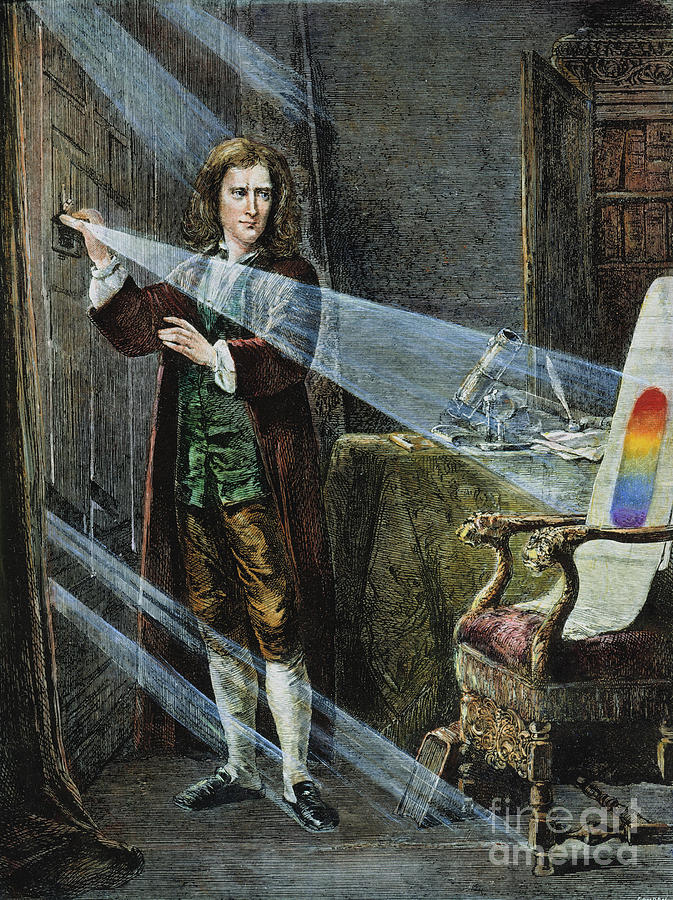
“I do not know what I may appear to the world, but to myself I seem to have been only like a boy playing on the sea-shore, and diverting myself in now and then finding a smoother pebble or a prettier shell than ordinary, whilst the great ocean of truth lay all undiscovered before me.” – Isaac Newton This guide is intended for college students looking for research opportunities at their own university or elsewhere and for students looking for ways to succeed in their research work.
-
Here’s looking at UK, from scientists across the pond

When I heard the news, I couldn’t believe it. It seemed like something out of a populist fantasy of protecting “the homeland” or an electorate overthrowing imperial control in an Ancient Athenian democracy. The UK voted to secede from the EU with the Brexit referendum. With that, my worldview was shaken again. Overcome with uncertainty and worries, different groups of people expressed their concerns about the UK leaving. Quite surreal, depressing, and anxious for everyone across the globe. Let’s hope the science will stay ablaze.
Scientists, one of the most opposed groups to the Brexit referendum, face issues with funding and research on international projects with the UK out of the EU. International students at UK universities could experience larger hurdles in gaining admission as EU nationals are up to 1 in 5 students at some universities, Times Higher Education reports. Their future is uncertain, said Theresa May. Nature, however, one of the most respected journals falsely reported that UK scientists would be put at the “back of the queue” for the International Thermonuclear Experimental Reactor (ITER). Still big names like Stephen Hawking warned, “we’ve become reliant on EU funding. We get back a little more than we put in, and associated status will need to address this. But the other thing we need to do, and what UK academia needs to do, is get much better at lobbying government.”
I sincerely hope the science community continues the way it should. While there’s a lot of worrying that can be done, there’s much more science to do. I’ll keep listening to the Sex Pistols and Stone Roses while hoping for the best for the future.
-
Ethics in cruise control: self-driving dilemmas

“Nietzsche, take the wheel.” Self-driving cars may take us wherever we want to go, but they won’t know where unless we tell them. And with the first death of a man riding autopilot in a self-driving car, we find ourselves with the same old questions we’ve always had. What should an autonomous car do when human life is at stake?
The ethical dilemma of whether a car should swerve out of the way to kill one person in order to save others is a form of the trolley problem. Now, engineers, scientists, and policymakers ask the big questions philosophers have debated for centuries.
The question is driven by our ethical concerns for the general public. We make these decisions with regards to the effects they have on our society as a whole. Self-interest usually takes the backseat, and our idealistic utopias emerge. We’d love to live in a world in which a car can simply calculate the risks and benefits of various decisions to which action to take. And, in this sense, the decisions of self-driving cars aren’t too different from our current methods of engineering. When we make airbags, we design them so that they would save as many people as possible while taking into account the costs of manufacturing.
The experimental ethics approach of Jean-François Bonnefon, researcher at the Toulouse School of Economics, probes the big questions for answers. By surveying the public and designing experiments that take into account various situations of self-driving cars, we can get a general idea of how people view them. The researchers ask questions to the public about different scenarios and how they would want their cars to act. This includes the general situations of swerving out of the way of a crowd of people in order to hit one person, but also more variable specific cases, such picturing yourself in the self-driving car, as opposed to someone else. It would take those opinions of the public into account so that the designers of self-driving cars can program their cars with their thoughts in mind.
It seems reasonable and straightforward. Cars would perform the actions which result in the fewest deaths. But let’s not let the idealism of utilitarian motives get the best of us. The same study showed that, though people preferred cars to drive this way, they wouldn’t want to buy cars or be the drivers of them. No one wants to be the driver of the car that makes the decision to swerve and kill a single person in order to save the lives of a greater number of people. The findings illustrate the conclusion quite well. When people have an overall goal for the public in mind, that is, protecting the lives of as many people as possible, they agree it should be pursued. But every individual person doesn’t find it in their own self-interests to do it.
What this means is we need a greater social change in our understanding of ethics before we can put our own solutions into action. Some sort of a collective understanding of individual decisions being part of a bigger picture would lessen the burden on the single consumer in buying a self-driving car. The experimental ethics work should also encompass what the outcomes of those automatic driving decisions are.
Jean-François Bonnefon, Azim Shariff, & Iyad Rahwan (2015). The social dilemma of autonomous vehicles Science, 352(6293), 1573-1576 (2016) arXiv: 1510.03346v2
-
Physics-based biology and blindness to the abstract
Biologists can have an uneasy relationship with math and theory. The field prioritizes pushing forward the conventional status quo at the expense of abstract theorizing and risky experiments. Bill Bialek, theoretical physicist at Princeton University, said, “we cannot expect that the biology community itself will create a genuinely receptive audience for theory.”
I’m criticizing the culture of biologists, but, in all fairness, other scientists, like physicists, suffer from their own issues as well. Physicists fear complexity and ambiguity in their work. But I can testify that these issues biologists suffer from harm research and can be solved with a greater understanding of the abstract.
From the first biology course I took in high school, I was bored. Everything was about memorizing vocabulary and information. It was easy to understand why I quickly ran to physics. But, even as much as some of the tests supposedly focused on “application” instead of “memorization,” the magic was never there. Even though some exams would emphasize “applying” certain concepts to answer questions, the rigor of the reasoning was never anything more than superficial knowledge of facts. Even when I entered university, the inquiry, creativity, logic, and other forms of critical thought were gone. Instead, the biology curriculum was always about knowing information and regurgitating it on exams. The consequences are that we’re setting ourselves up for siloed cultures, risk-averse research, and regressive thought.
Physics, on the other hand, gave me what I wanted. In my physics courses, I could understand how problems made sense from questions to answers without worrying about memorizing too much. I could use mathematical equations to explain phenomena, rather than accepting them for the way they were. Thankfully, my upper level biology course (AP Biology) shifted the focus away from memorization and towards more effective ways of learning, but physics always had that charm that other disciplines lacked. As Bialek explains, a theoretical physicist can sit at a computer with a pen and paper in order to perform research as much as he/she wants to. An experimental biologist requires all the equipment of a lab and stringent requirements of conducting research in order to get work done. These are generalizations and simplifications that don’t account for the nuances and differences in individual instances of both physics and biology, but the cultural distinction stands. The field of physics can allow for that exploration and creativity that biology needs to grasp. Physics research builds and re-builds upon theoretical premises much more easily than biology does.
I still find biology beautiful, with some areas even more interesting than physics. For me, the research on evolution and genetics is far more interesting to me than the high-energy particle collisions at CERN or the solid-state materials work. And the utility of biological research, from medicine to social sciences, is often viewed as more valuable than many areas of physics.
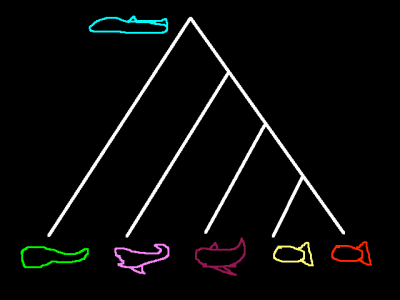
I don’t believe the field of biology is broken beyond repair, nor that it is in some sort of crisis. It’s more of an issue that is holding the discipline back that should be worked against. We need a universalist ethos that allows for greater cross-cultural transmission between the two biology and physics. Interdisciplinary fields such as bioinformatics and biophysics are a step in the right direction for both fields, but a more fundamental change in the way biologists approach problems is necessary. Biologists can think through problems the same way physicists do. This could mean using statistical techniques from thermodynamics in simulating genetic evolution. Or it could be looking at analogues between elegant physics equations and nature’s tendency for simplicity. Maybe physics can learn from biology, as well, if physicists embraced complexity in their work.
With greater reverence for creativity and abstract in new ways of looking at biology, scientists can be encouraged to take more risks. And the risks will yield greater results, quelling the fears that taking risks is harmful to science. And maybe I can enjoy my biology classes a bit more.
-
A genetic moral code

We may be making progress in understanding the genetic code, but how much of our moral code is under the same scrutiny?
The scientific community has been at it for decades. Talks of the potential for CRISPR-Cas9 to genetically modify organisms for better or for worse have infected our thoughts and discourse almost like a virus. It’s even gotten to the point at which I’m somewhat tired of how my newsfeed is blowing up with news of how genetic engineering is such a huge ethical problem with very little thought or opinion put into developing and finding solutions for it.
In this way, genetic enhancement may be seen as an extension or similarity to our current methods of breeding for specific traits. They should be viewed with greater regulations, though, with the moral costs that come along with them.
It’s better to establish a moral code and determine what problems might arise from them. This means that, with the number of ways we can and should carry out regulations, they should adhere to central ideas and principles that can be enforced and understood. This way, those problems can be addressed win the future with structure and clarity from the way humans carry out actions. We shouldn’t behave in such a way because it produces the best outcome nor because it might appear to be the safest. Protecting fundamental ideals can give us something to hold onto through precarious and changing innovations.
To do make some sort of system of rules, we must analyze our pieces of knowledge and oft-repeated statements in our discourse of genetic engineering.
Some have considered comparing genetic engineering to natural selection. It might seem reasonable to think that genetic engineering is an extension or similar vein as natural selection that we observe in nature and can, therefore, be viewed with less suspicion and fear. But evolution’s dissimilarities with genetic engineering, notable in how serendipitous and amoral the former is, show that this comparison couldn’t hold any weight. Darwin himself wrote, “What a book a Devil’s chaplain might write on the clumsy, wasteful, blundering low & horridly cruel works of nature!”An approach to genetic engineering viewed the same way natural selection works would fail to understand the implications and power of our artificial tools.
Others have suggested that the ethics and scientific progress are at a race with one another. I often hear people say “Science has so much potential that humanity hasn’t caught up to it.” But this metaphor breaks down considering science and ethics aren’t at odds with one another. Science lacks a moral direction and makes no humanistic statement outside of our own interpretations of scientific knowledge. It’s also a very scientistic statement that could imply we are now facing new moral questions when the moral questions we are asking ourselves are the same questions we’ve been asking ourselves since the beginning of mankind.
With these thoughts in mind, such a moral code should be grounded in what the philosophy or humanistic disciplines dictate as necessary and beneficial to society, as opposed to what science has shown to be beneficial. To avoid the pitfalls and shortcomings of these metaphors and comparisons, we need to understand the moral codes of genetic engineering and enhancement in terms established through critical thought and speculation. Science will be useful in the future, though, when using policy-based models of social research and data-driven theories, but, as of now, we need a firm foundation before we can get there.




 Heuristic