Skip to content

Heuristic

  • GitHub
  • Email
  • Scholar
  • LinkedIn
  • Twitter
  • Instagram
  • Medium
  • Twitch

  • An interview with Anne McGovern, a bookworm unveiling the mysterious nature of science

    In a world of growing distrust of statistics, empiricism, and academic authority, Anne McGovern never stops learning. In her writing career, including book reviews and science stories, she has understood the globalized culture of science and how to put difficult ideas in ways everyone can understand. The entirety of her work can be found on her website. In this interview, we’ll discuss her voice she has honed since childhood.

    Hussain: Let’s get down to brass tacks, Anne. What made you interested in science writing?

    AM: I’ve always liked science and writing. In fact, at my parent’s house there’s one of those self-made books that apparently I wrote in second grade about a girl doing a science experiment. It was a little difficult to find my way into the field, however, as I was often told that I had to choose one direction to follow, science or writing. But I went for it anyway, and here I am. I like science writing because every story allows me to learn about something new.

    Hussain: Anne, much of your work involves putting technical, nuanced material into language that most people can understand. What are some challenges you face as you do this and how do you overcome them?

    AM: One strategy that I use to wrap my head around some new and complicated research is to tackle the jargon slowly and methodically. I think it’s easy to read the title and/or abstract of a research paper and panic when a sea of unfamiliar words fills the page. But for the most part, I find that words are just words, and if you stop to look up each one, take time to wrap your head around the meaning, you’ll be able to piece together a general idea of the research. The next step is to go talk to the researcher, or another person in the field, to get a more in-depth understanding.

    Hussain: This summer you’ve been writing for the Okinawa Institute of Science and Technology in Japan. How did you adjust to writing in a foreign culture?

    AM: What’s interesting about the science world is that it’s a culture and a language of its own. Sure, I’m living in Japan and writing about science in an international university–the scientists here are from all over the world. But in the end a scientist is a scientist–they wear gloves and goggles and follow the scientific method. I guess what I’m trying to say is that I didn’t feel like I had to adjust much here because I am familiar with the culture of science, which is transnational.

    Hussain: In your work at OIST alone, you’ve written on biodiversity, quantum physics, and general news about scientists. The rest of your work spans book reviews, life science, astronomy, and your personal habits. Which topic has been your favorite to write about and why?

    AM: I honestly don’t think I have a favorite–every time a new paper appears, no matter the topic, it’s exciting to see what’s inside. However, I do tend to like those topics that deal with medical discoveries. Writing about advances in science that may translate to helping those with serious diseases feels very rewarding.

    Hussain: What are your career goals for the future, Anne?

    AM: I just hope to keep writing about science and communicating scientific discoveries to the public. Science is one of the fields that really needs good communicators, otherwise it will remain as some mysterious activity happening behind closed doors. Especially now, when mistrust of science is growing, it’s a science communicator’s job to help address the issue.

    Hussain: Name one book everyone should read. (And, to make this challenging, it has to be a book that you haven’t reviewed on your blog!)

    AM: The book I always recommend to friends when they ask is The Poisonwood Bible by Barbara Kingsolver. This is a story of a missionary family sent to Africa, and it’s told in turn by the mother and three daughters. I was amazed at how the author was able to write in so many different voices, while telling the same story. And the story is deep and heartbreaking.

    July 27, 2017
    Education, Science

  • An interview with Nicoletta Lanese, a polymath at the "fundamental interconnectedness of all things"

    At the intersection of science, dance, and writing, Nicoletta Lanese pushes her limits in whatever she can do. With awards for research and writing under her belt, she choreographs every movement and thought on her blog. In this interview, we’ll find out Nicoletta’s story and understand this value she searches for in life.


    Hussain: First things first….how did you get into science writing?

    NL: I’ve been writing since I learned to hold a pencil, but I got into science writing a little later on. As a neuroscience major at the University of Florida, I wrote about science constantly in the context of class. In fall of my junior year, my Lab in Cognitive Neuroscience professor was handing back an assignment. Placing mine on my desk, Dr. Keil casually remarked, “Nice work- you’d make a great science writer.” Not knowing what he meant, I did my research. What I found was a line of work that elegantly combined my love of writing, science, and activism. In a rare moment of clarity, I decided I would pursue science writing as a career. So far, it’s working out.

    Hussain: Nicoletta, I might call you a writer, researcher, dancer, and many other things. What motivates you through these seemingly different interests? (By this, I mean like, what ties them together? What are you really looking for in what you do, Nicoletta? Feel free to take this answer in whatever direction you want to.)

    NL: To quote Dirk Gently, I believe in the “fundamental interconnectedness of all things.” No event, action, or speck of matter exists in isolation; therefore, each event, action, and speck of matter makes some mark on the greater universe. Applying this notion on a smaller scale, I believe each of my interests informs and enriches the next. At a practical level, I find that my varied experience allows me to operate more creatively – to “think outside the box.” Methodologies I’ve learned in scientific research apply easily to artistic pursuits and vice versa. Engaging in various fields gives me a unique edge in each.

    Beyond methodology, I find that the content of each field easily relates. In the end, everything relates back to the grander human experience. Via this all-encompassing throughline, I straddle the seemingly disparate worlds of the arts, humanities, and sciences. I am simply interested in how things work – in how people move through and perceive reality. As an artist-writer-researcher-human, I learn every day. Looking forward, I want to remain a perpetual student and share all I learn with others.

    Hussain: You’ve written on science and dance, but also personal topics like your health and daily habits. How has sharing these personal experiences with the world changed or affected your life?

    NL: I find catharsis through my writing practice, and many of my more personal essays are borne of a selfish need for release. However, I’m moved to share these writings for a number of reasons. First and foremost, I share them as a show of solidarity. There are many experiences, ideas, and struggles that individuals share but don’t generally discuss. I offer my essays as an opportunity to bring those topics into public forum. The writings provide a platform for others to share their own stories. On the flipside, readers can also gain awareness of experiences they haven’t personally undergone. As their author, I’m inspired by the responses these posts generate, the conversations they spark. While I gain new perspective on the topic at hand, readers inevitably learn something about me as well. Sometimes those readers are my friends and family, and my personal relationships morph to accommodate the new information.

    Hussain: Much of your writing is reflective and contemplative in nature. What inspires you to bring forward these meditative thoughts?

    NL: I don’t know that I have a good answer for this one. I’ve always been a “thinker,” whiling away the hours chasing thoughts around my head. These thoughts cumulative like storm clouds over time. I let them rain down onto paper occasionally to clear my head.

    Hussain: Well, I think that’s a good answer.

    Hussain: What’s your biggest challenge you currently face as a science writer? How do you approach it?

    NL: My main goal as a science writer is to make science accessible and relevant to the average person. Those unversed in science should be able to read one of my articles, understand its contents, and find reason to care about its implications in “real life.” This is no easy task. Namely, it requires careful consideration of how to deliver my message. Poor choice of sharing platform, visual aid, or vocabulary can spell disaster for an otherwise well-written piece.

    As a science writer, I try to put myself in the place of my readers. I consider where and when they encounter information. I anticipate the confusion they might face and the questions they might ask. I review my work from the imagined viewpoint of a non-expert newcomer to the topic. That said, I aim to strike a balance; I refuse to “dumb down” any concept for my audience. Instead, I translate it into a vernacular they’re familiar with.

    Hussain: Name one book everyone should read.

    NL: This is a really difficult question (and I think you knew it would be). At the risk of overlooking twenty of my favorite books, I’ll go with my gut response and name Orwell’s 1984.

    July 19, 2017
    Education, Science

  • An interview with Kayla Wiles, a writer finding a way for herself

    Paving a path for yourself is never straightforward. Kayla Wiles, relations intern at ELIXIR, has paved this path in her mission as a science writer. As she balances values from scientists, physicians, and other professionals for the general public, she achieves these goals in communicating life science information. In this interview with her, we’ll share how she does it.

    Hussain: Beginning with the basics…why science writing?

    KW: I used to think that I had made up the idea of science writing – I didn’t know anyone else at the time who had merged a mutual love of both science and communication into a single career. Going to the AAAS Annual Meeting in Boston this year really showed me that science writing isn’t just a career; it’s a global necessity. And because it’s a necessity to communicate research across different cultures for the sake of mankind’s survival and curiosity, science writing is most definitely not just my idea. I like that I’m on a mission.

    Hussain: As an undergraduate, you made your own degree: Health Journalism. You chose which courses to take and figured out which opportunities were right for you. What made you decide to take such an independent approach to your college career?

    KW: Towards the end of my freshman year at Furman University, I felt like I needed to start thinking about a major. My adviser pulled out the university’s course catalog and asked me to make a list of courses from each major that I would be interested in taking. The problem was that my lists were about the same length for five different majors. Noting this, my adviser asked if I had heard about Furman’s Individualized Curriculum Program – a way to merge courses from different departments into a single major, provided that the degree still met certain criteria.

    Her solution was a relief for me. I felt that if I had chosen just one or two majors, I would have missed out on other courses that would develop me as a writer. I graduated knowing how the body works on a basic level (biology), how diseases can be prevented and the public health measures that affect them (health sciences), the role of the media and how to write creatively (communication studies and English), and why health care systems matter (economics).

    Hussain: When you go through story ideas, how do you generally decide what makes a good story?

    KW: On a superficial level, if I would read it on a phone. I don’t like reading things on phones, so if a story is engaging enough to overcome my discomfort with small touch screens and doesn’t take up more than two minutes of my time, then I think it’s a winner. The angle matters too – sometimes the research itself isn’t new, but the context is fresh or trendy. I wrote a story once that put iron overload (not new) in the context of the flu season (because keeping zinc and vitamin C levels balanced with iron levels promotes a healthier immune system). People are interested in stories that relate to them, so the good story will be creative in making that case.

    Hussain: Your background in health, biology, and journalism give you breadth of interaction that other writers might not have. How does your work communicating between medical professionals and journalists shape the way you write?

    KW: I didn’t really think about this until I came to the U.K. and was tasked with writing to scientists more frequently than to the public. Scientists might want to know more details about how a new technology or biological mechanism works, but they are still drawn to pictures, catchy headlines, and concise sentences just like any other average person. My courses in biology/health sciences gave me the flexibility to understand both levels – the technical jargon and the more commonly-used terms. Journalism courses helped me to be aware of my audience and determine which level of detail would best tell them what they need to know.

    A veteran science writer once told me that it’s more important for a journalist to understand how science works than to know everything possible within a particular field; new research changes our understanding of the human body every day. But if a journalist can approach a study with the scientific method in mind and practice, then he/she will know better than to communicate something at face value. Medical professionals need to be fact-checked, too.

    Hussain: Your story “Using language skills to detect Alzheimer’s” draws upon linguistics, cognitive science, and neuroscience in a health setting. What are some ways you, as a writer, approach explaining these interdisciplinary areas of research?

    KW: I love interdisciplinary. For this particular article, I had to organize three different studies into common themes and explain how each made an argument that language is a potential tool for detecting Alzheimer’s disease before it happens. Because this message was coming from several different disciplines, I think it was easier to convince the reader that this is a plausible idea. The challenge was communicating all this concisely and engagingly. I still have lots of room to improve on that.

    Hussain: Which science writers are your favorites to follow and why?

    KW: I’ve followed several science news outlets for a while, but didn’t really think about following individual writers until recently. Right now, my favorites are Nsikan Akpan from PBS NewsHour and freelance writer Cassandra Willyard. Akpan communicates science news with a lot of personality and through several different kinds of media. He uses humor and energy as a way to draw in the public to scientific discoveries. Willyard, on the other hand, writes narrative ledes that read like fiction but are actually introducing you to a story that’s real.
    She also knows how to be witty and objective at the same time.

    Hussain: Name one book everyone should read.

    KW: The Kite Runner, by Khaled Hosseini. I love how Hosseini creates the portrait of a war-torn country through the eyes of an evolving protagonist. Hosseini’s style is clean, meaningful, and makes an unhappy ending satisfying. This is a style that I hope to emulate – one that provides the reader with a lot of depth but does not overwhelm with details.

    July 16, 2017
    Education, Science

  • In defense of darkness (from the universe to our psyche)

    “Wanderer Above the Sea of Fog” – Caspar David Friedrich

    When we take care of ourselves, we fight the good and the bad within us. Philosopher Friedrich Nietzsche warned that fighting monsters without care could cause you to become a monster. Fighting internal monsters – like psychological stress or personal obstacles – requires coming to terms with the reality of this darkness. Contemplation of nihilism and despair, whether its dwelling on the past, philosophizing, or addressing fear, anxiety, and hatred, can open up a dark place in oneself. But grappling with good and evil, as Nietzsche would suggest, of the darkness can bring personal transformation. Through a surrendering of the ego, vanity, and hubris to overcome psychological difficulties, humans can find a way to transcend the fears within themselves. This is the darkness we all fight.

    Darkness can be seen as a passion, a tendency to search for answers in places others fear. This absence of light gives perspectives, contrast, and dimension to everything else we see in the world. It can warn us of feared fascinations with power (such as the shadowy lair of Scar in “The Lion King,” where Simba was instructed to not go) to the balance of good and evil (such as the balance of light and dark in Shakespeare’s “Macbeth.”) People find themselves at battles between angels and devils internally. In these psychological places that invoke fear and shock inside of us, darkness offers humans the insight into what makes our skin crawl. But, after acknowledging that humans are capable of great evil and destruction, humans find sacred truths corrupted or lost within ourselves.

    Recognizing the dark tendencies within themselves, people can engage in a deliberate self-reflection of morality. They figure out what’s right and what’s wrong within themselves. What might seem like hideous qualities – denial, projection, and other monstrous aspects of human behavior infect our intimacy, socialization, commerce, politics, and spirituality. This psychotherapy reveals deep problems many people ignore – symbolized by darkness itself. And the ignored darkness of human beings become apparent through this corruption. Remaining silent to not displease others, subtle government propaganda, or the rise of religious extremism that have marked a post-truth, postmodern era have these roots in darkest parts of the human psyche. 

    Grappling with this darkness can show us what we truly find aesthetically beautiful. Philosopher Edmund Burke described the heightened sense of threats that lie outside our control or understanding as a key feature of the sublime. Our senses heighten through the mystery of the unknown, as brought upon by darkness. And beauty may be accentuated by light, but either intense light or darkness is sublime to the degree that it can obliterate the sight of an object. The imagination is moved to awe and instilled with a degree of horror by what is “dark, uncertain, confused.” This beauty, captured through art, shows this struggle we have within ourselves to understand darkness.

    Caspar David Friedrich’s painting “Wanderer Above the Sea of Fog” depicts a man on a rocky precipice that pierces the landscape. It’s often associated with Friedrich Nietzsche’s quote “He who fights with monsters might take care lest he thereby become a monster. And if you gaze for long into an abyss, the abyss gazes also into you,” from the philosopher’s book “Beyond Good and Evil.”

    In Friedrich’s piece, there is an apparent contrast shown through the combination of light and dark colors. The eye is drawn to the figure and the cliff below it, since they are painted darker than their surrounding. The shades of dark green and brown contribute to the mysterious and heavy emotions of self-reflection, while the light blue-pink fog in the background produces a sense of nothingness or isolation. It seems unfitting, though, that Caspar David Friedrich captured a painterly version of the sublime while Nietzsche himself declared the sublime out of date in 1886. Aside from movie posters, the painting’s influence captures the self-reflection of an unknown, foggy future and the mysterious search for meaning in a world of isolation. Finding these threats that are shrouded in darkness, the onlooker in the painting can find truth. 

    “Untitled (Text For Some Place Other Than This)” – Douglas Gordon

    Through the sublime, we can find ourselves attracted to areas and things we normally fear. Things that pique our curiosity and fascinate by questioning our subjective experiences. Douglas Gordon’s “Untitled (Text For Some Place Other Than This)” lures viewers to an uncanny extreme. Its structureless, unsettling place that these sublime features expose what we repress within ourselves. It could be our own limits of understanding or some other inherent human insufficiency. Whatever the source of the anxiety is, it is a dark abyss we gaze into. These works of art bring about images of the dark side of human nature.

    Outside of art and philosophy, physicists probing what matter is made of have struggled with darkness. In her book “Dark Matter and the Dinosaurs,” physicist Lisa Randall draws on the similarities of the universe’s transparency with human empathy. Dark matter, the substance that scientists find scattered throughout galaxies, is invisible. It makes up most of the universe, yet it doesn’t absorb or emit light. Randall argues that that the way humans can’t detect dark matter is similar to the way people have a gap between their perceptions and reality. And people need to understand this to understand the way humans empathize with one another.

    “People’s attitude toward dark matter is bedeviled by the same instincts that influence their responses to different races, castes, or classes whom they might not truly see but who are nonetheless essential to society,” Randall wrote in the Boston Globe. The way we repeat quotes such as “It is only in the darkest of nights when the stars shine the brightest” might indicate that darkness is more than the absence of light, but, rather, what we don’t understand. These are the fears and psychological hurdles that plague our everyday moral decisions.
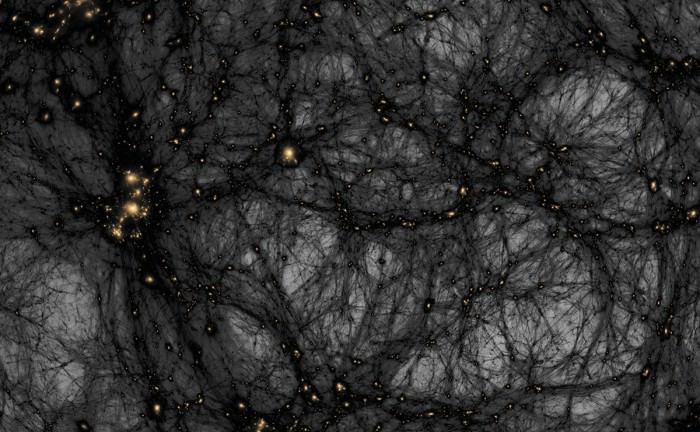
    Image from Dark Universe, showing the distribution of dark matter in the universe. Credit: AMNH

    Randall’s analogy seems stretched, and that might spell trouble for understanding darkness. It’s one thing to acknowledge limitations in understanding of the universe, but it’s another thing to say human beings don’t empathize with people from different races. The former deals with scientific methods of understanding while the latter relies on human morality.

    Moreover, dark matter itself is an auxiliary hypothesis, not an empirically observed phenomena. It is added to theories to make things make sense – not in any deeply justifiable basis. The scientific discussion of dark matter has its own flaws, as professor of astrophysics Paul Kroupa writes, “Yet even within academic circles, there is a lot of confusion about dark matter, with evidence and interpretation often conflated in misleading and unproductive ways.” Kroupa himself published a paper in the 1990’s attacking the ways scientists used dark matter to explaining the structure of satellite galaxies. What the scientists called “dark matter” was explained with other phenomena.

    People will find danger in ignoring the darkest parts of themselves. Repression of these internal monsters or even denying that they exist at all can result in more dangerous psychological problems. Nietzsche’s quote about fighting monsters spoke of humans as works of art. People view themselves through values that can range from elegance and harmony to cacophonous grotesque pieces. These presentations of ourselves – much like paintings, sculptures, or scientific theories – are built on the aesthetic principles we create. The darkness reveals this artistic power that we can use for good and evil.

    July 10, 2017
    Philosophy, Science

  • Dreams shaping the moral landscape (and keeping us woke)

    “Jacob’s Dream” Jusepe de Ribera

    If psychology were alchemy, then dreams might have the secrets people are looking for. At the back of everyone’s mind, it might be true dreams should be ignored. But the subconscious is ever-awake, and, as psychologists Carl Jung and Sigmund Freud would have suggested, dreams offer ways of interpretation and understanding one’s own subconscious. And when the mind shares these secrets, they could become ways we should view the world. They can lead to guilt, remorse, and other changes to responsibility that humans can probe. They can be a form of moral intuition for what we should do in life. How do dreams help us stay woke?

    I’ve deliberated on the contents of my dreams on and off for maybe ten years now. Pondering symbols, colors, and sounds of the experience, I’ve felt an almost-psychic connection to them. Underwater volcanos, broken bridges, and still lakes provide settings, while images from previous experiences and ignored emotions flood them. While I slept, I would have dreams about film characters and close friends, seemingly random and chaotic. Most of the time, I couldn’t have thought more of what these visions meant. They were probably just the images that my subconscious could easily stir up while I slept. They didn’t proceed or behave the same way things in the waking world did. If I saw a man with three legs in my dream, I would have thought “Ah, this man is obviously from the three-legged race of people.” My own thoughts within my dreams seemed to at least have some tendency to make things make sense – even if everything would fall apart when I would all wake up. And I didn’t say nay clear way to prove to others the contents of my dreams – let alone what they meant.

    In some versions of the the Greek mythology of the Death of Orion, Artemis might have killed the hunter Orion while in others, a scorpion directly stung it.

    Another scene from a dream stung with intensity. Imagine that, in this dream, a scorpion twists its tail and plunges into the body of another one. As it does, the victim falls into shock with its body still. Though the dream involves two scorpions while the Greek myth of the Death of Orion did not, I reasoned that the dream must have used the images from this scene. I could probe the dream for the meaning behind its symbols. The scorpion could have represented themes of jealousy, obsessiveness, power, and passion that my mind had associated with its image. Artemis shooting Orion could have meant some sort of mixing of sexual energy a strategic aim towards a goal. Jung might have described a collective unconscious of these psychological symbols while Freud might have suggested something more secretive about these images. As I thought through these possibilities, the images of the dream itself would fade away. With such sharp, insightful messages about behavior, I had to listen to these symbols to figure out the ethical implications of such an existential issue. And I wondered how accurate my analysis was. I turned to science for more information.

    Dreams have been studied with science and theory, like the one from psychologist Calvin Hall. Through a quantitative coding system that would lead to concepts of the self, others, and other experiences, Hall spent decades of work, from the 1940’s to the 1970’s, analyzing dream symbols from reports of individuals. Beginning with university students and processing to people from other walks of life, Hall collected over 50,000 dream reports that codified dreams by categories. Environments, objects, feelings, people, and other types of symbols were compared and contrasted with one another. With as many differences separating human beings, Hall found similarities in the ways dream symbols coincided with experiences in the waking world. These corresponded with conceptions of the the dreamer and other features of the dreamer’s life. The dreamer’s self, environment, and other people could be described in various situations and conceptions from the dreams. An employee being manipulated by his boss in waking life might have dream images depicted himself as ‘weak’ in the presence of his boss. Reactions such as fear or pain may be simple enough to show how an individual perceives the world, but more nuanced reactions, such as guilt or blame, involve concepts which give rise to moral decisions. An individual’s autonomy, responsibility, and other features of decision-making can be at stake with these seemingly random images.

    But putting dreams in the perspective of ethics prompted another question. If dreams were only messages to be decoded and understood, how could they have any autonomy or ethical dimension of their own? In some ways of thinking, a dream can’t be held responsible for my behavior any more than my body would be responsible for heating up when it’s hot outside. Dream interpretation itself can give many possibilities of various images. A dream image an employee might see as a description of himself as ‘weak’ in a could also have sufficient reason to be observed as an internal weakness – completely irrelevant of the employee’s boss. It could even be a random image from the subconscious. Despite my own worries in these interpretations, other philosophers and writers might have their own answers.

    Friedrich Nietzsche wrote that Greek artists found messages from their gods and goddesses through dreams. The deities came from these visions gave them the realistic pictures of these deities. René Descartes pondered how people could prove they weren’t dreaming. Plato believed all men lived in a dream while the philosopher tries to wake up. Blaise Pascal wrote that a pauper dreaming as a king for twelve hours a day is just as happy as a king dreaming as a pauper for twelve hours a day. While these philosophical problems present entertaining theoretical concepts and dilemmas, the real world (which, at this point, is also becoming more difficult to comprehend) is complicated. As we observe the world, in all its good and evil, the subconscious responds in a way that represents the way we would in our everyday autonomous self. Similarities between the objects we see in our waking lives and sensations we experience are evidence for German philosopher Arthur Schopenhauer to believe that the world we observe world is the world of our own reflection. We associate fire with heat because the evident heat emitted by a fire, and, with that association, the fire could be energy, emotion, or some vitalizing symbol. When someone looks into him/herself with reflection, just as someone analyzes his/her dreams, that person understands the nature of the universe. And, with the difficulty with discerning the point at which dreams ended and the waking state began, Schopenhauer conceded that life metaphorically might as well be all a dream. Understanding the limits on these patterns and forms of reasoning, the dreamer’s true nature comes about through dreams.

    “Joseph Reveals His Dreams to His Brothers” Raphael

    Through history and literature, we see dreams becoming a moral voice for others. Roman emperor Dionysius sentenced his servant Marsyas to death after a dream that Marsyas cut the emperor’s throat. One might think the interpretation of this dream might have been justified, though, because Marsyas was planning to assassinate Dionysius. The dream might have sent a message of the reaction that Dionysius would have around Marsyas through Dionysius’ waking thoughts. Yet, if Dionysius’ subconscious was picking up signals about Marsyas in the waking life, they could have easily taken the form of fading thoughts – easily dismissed, forgotten, or ignored consciously. These observations we make in our lives – maybe part of a Jungian collective unconscious – take forms in our dreams. While dreams themselves may seem uncontrollable and irrelevant to the moral basis of our character, Dionysius’ dream might have indicated some culpable aspect of Marsyas’ character.

    It’s an uncomfortable idea – that dreams can be treated in such a similar way to reality. No one would ever dream of such an idea. The ambiguous boundaries of the unconscious and conscious blend into the absurdity and complicated nature of right and wrong. Schopenhauer said that the dreams are part of a continuing life experience. Much like going flipping rapidly through the pages of a book and finding parts you have read and parts you haven’t, dreams give this method of recreation. Waking up reminds us which parts are dreams.

    July 8, 2017
    Philosophy, Science

  • What scientists can learn from entrepreneurs

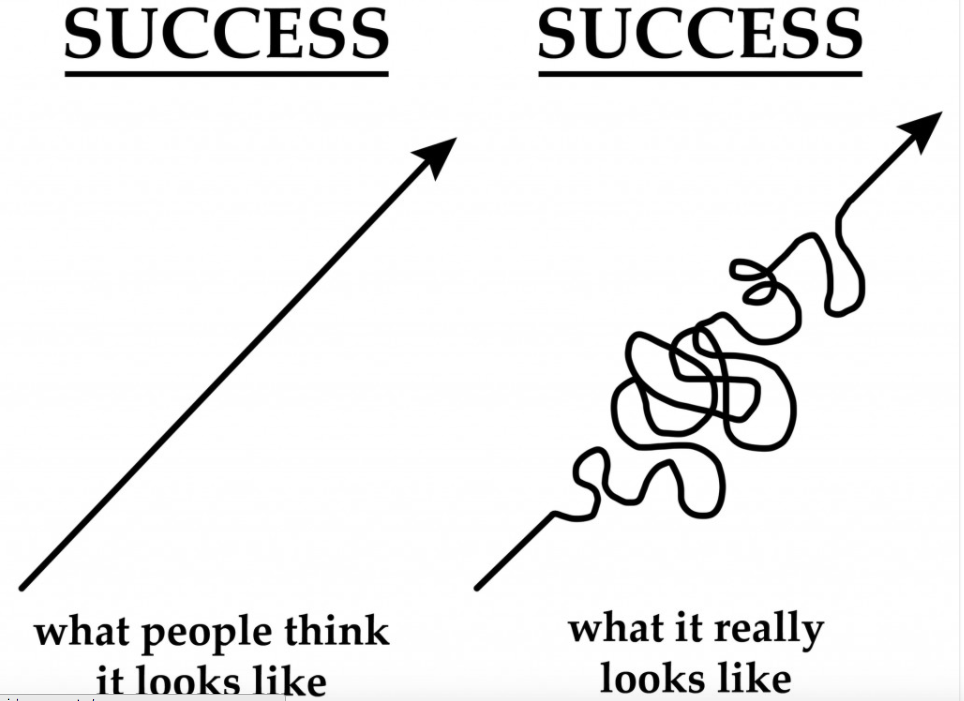
    what-success-really-looks-like.jpg
    For scientists, business strategies might seem unimportant and learning how to market a product may appear unnecessary or even objectionable. But much like any profession, scientists can embrace entrepreneurship to make sure their work has an impact on society. At a recent Bio-sciences Entrepreneurship workshop, professionals from science and medicine learned how to innovate through entrepreneurship.

    Read this article here…

    May 22, 2017
    Education, Science

  • Philosophy at the heart of powerless politics

    “Orestes Pursued by the Furies”John Singer Sargent

    The crises of tomorrow’s democracies come from the human aspect of ourselves. Beyond easily observable forces – scientific, political, or anything else – we seek to make connections with one another. Let’s turn to philosophy.

    On May 1, Professor of Philosophy Martha Nussbaum will give the 2017 Jefferson Lecture in the Humanities at the John F. Kennedy Center for the Performing Arts in Washington D.C. Throughout her career Nussbaum has shone in the public sphere as an intellectual sharing wisdom on the role of philosophy in everyone’s life. In her speech, “Powerlessness and the Politics of Blame,” Nussbaum will do just that. Probing intuitions and experience of our daily lives, Nussbaum will shed light on our emotions and reactions – such as fear, anger, and envy – and how they function in today’s democracies. In her piece in Aeon, she elaborates on the different ways of looking at anger.

    I will be attending the lecture next month to cover more of the story.

    I’ve been greatly moved by Nussbaum’s work as a philosopher and public intellectual. Her ideas and arguments have helped me develop a respect for humanity and analytic thinking in a way that no other scholar has. As I read her book “Not for profit,” I explored the purpose of college education that has driven me through my intellectual pursuits.

    In my career at Indiana University, I’ve sought to create a wonder and unfettered pursuit of knowledge, especially philosophy and ethics, among science and pre-medical students. I drew inspiration from Nussbaum’s method of intellectual discourse and leverage between ancient philosophy and the public sphere. With an analytic approach to these forms of discourse that draw connections between disciplines through history, I presented ethical issues in science and medicine to other students. My friends and I formed a groundwork for learning that goes beyond the classroom and into the heart of how people learn.

    Nussbaum’s writing on virtues and emotions such as anger have helped me instilled values of empathy and wisdom in other students. It is pertinent the nation recognizes the importance of philosophy and other humanities now more than ever.

    April 8, 2017
    Education, Philosophy

  • Guest Post: “3 Tips on Creating More Agile Teams” by Wendy Dessler

    If you intend to make your team more agile, it is possible to pull this off if you have the best information guiding your way. Today, we’d like to make it easy to discover the easiest ways to make your team a lot more responsive.

    Companies have to break out of their shell and forget about focusing on linear teams. It’s time to change the way that teams function in the business landscape. Many organizations are beginning to adopt the agile approach because collaboration between managers, developers, customers, and other teams make it easier to achieve a company’s overall goals.

    So, if you truly want to create an agile team, please use the tips that we are about to share with you below.
    Flexibility between Departments Is the Name of the Game
    When you have a large organization filled with many different teams, they have to be able to collaborate effectively amongst one another in order to achieve their organizational goals. Being agile is all about collaboration. It’s about collaboration between different teams working together. Your marketing team needs to be able to work with your PR team, and your developers and testers need to be able to work together. You can even work with your customers to foster an agile environment.
    The easiest way to create flexibility is to institute a common communication platform. By giving everyone the ability to effectively communicate with one another in one place, team members can transfer knowledge to one another and help each other stay on the same page to achieve similar objectives.

    And when objectives for a project change – which they always do in a living, breathing situation like this – it will be easy to let the entire team know of the new parameters in regards to the overall project.
    Management Should Have a Hands-On Approach in an Agile Team
    In the past, the project manager’s main duty was to delegate different tasks to various team members. Those days are far behind us now. Today’s manager has to get down and dirty and in the trenches with the members of their team. They need to develop a hands-on, direct approach.
    Why is this important? Well, if you really want to nurture an agile team, management has to be willing to show that they are going to be just as flexible as they expect the members of their team to be.
    By leading by example, management will prove to the team beyond the shadow of a doubt that this new agile work environment is here to stay. Once team members begin seeing their managers change, they will naturally fall in line. It’s a trickle-down effect that will have an amazing impact throughout the entire staff.
    Using Consultants Intelligently
    When a company is attempting to implement a new methodology, from time to time it’s important to bring in outside consultants to help facilitate the changeover so that it goes smoothly. Using consultants intelligently is definitely the smart way to make certain interoffice team related changes.

    Third-party consultants are important to your team. So remember to treat them that way. Do your best to nurture them so that they feel like they are part of the family.
    Time Management
    Time management is always an important aspect of an agile team. And properly tracking time on a project using an online time clock will ensure that team members are meeting their obligations. We recommend tracking time at the assignment level. This will make it easier to properly bill for your services and help the entire staff see their strengths and weaknesses.
    Conclusion
    Developing an agile team may seem difficult at first. But if you follow the guidance shared today, the transition will go quite smoothly.
    Wendy Dessler
    Title: Super-Connector at OutreachMama
    Wendy is a super-connector with OutreachMama and Youth Noise NJ who helps businesses find their audience online through outreach, partnerships, and networking. She frequently writes about the latest advancements in digital marketing and focuses her efforts on developing customized blogger outreach plans depending on the industry and competition. You can contact her on Twitter.
    March 5, 2017
    Education

  • Guest Post: "3 Tips on Creating More Agile Teams" by Wendy Dessler

    If you intend to make your team more agile, it is possible to pull this off if you have the best information guiding your way. Today, we’d like to make it easy to discover the easiest ways to make your team a lot more responsive.

    Companies have to break out of their shell and forget about focusing on linear teams. It’s time to change the way that teams function in the business landscape. Many organizations are beginning to adopt the agile approach because collaboration between managers, developers, customers, and other teams make it easier to achieve a company’s overall goals.

    So, if you truly want to create an agile team, please use the tips that we are about to share with you below.
    Flexibility between Departments Is the Name of the Game
    When you have a large organization filled with many different teams, they have to be able to collaborate effectively amongst one another in order to achieve their organizational goals. Being agile is all about collaboration. It’s about collaboration between different teams working together. Your marketing team needs to be able to work with your PR team, and your developers and testers need to be able to work together. You can even work with your customers to foster an agile environment.
    The easiest way to create flexibility is to institute a common communication platform. By giving everyone the ability to effectively communicate with one another in one place, team members can transfer knowledge to one another and help each other stay on the same page to achieve similar objectives.

    And when objectives for a project change – which they always do in a living, breathing situation like this – it will be easy to let the entire team know of the new parameters in regards to the overall project.
    Management Should Have a Hands-On Approach in an Agile Team
    In the past, the project manager’s main duty was to delegate different tasks to various team members. Those days are far behind us now. Today’s manager has to get down and dirty and in the trenches with the members of their team. They need to develop a hands-on, direct approach.
    Why is this important? Well, if you really want to nurture an agile team, management has to be willing to show that they are going to be just as flexible as they expect the members of their team to be.
    By leading by example, management will prove to the team beyond the shadow of a doubt that this new agile work environment is here to stay. Once team members begin seeing their managers change, they will naturally fall in line. It’s a trickle-down effect that will have an amazing impact throughout the entire staff.
    Using Consultants Intelligently
    When a company is attempting to implement a new methodology, from time to time it’s important to bring in outside consultants to help facilitate the changeover so that it goes smoothly. Using consultants intelligently is definitely the smart way to make certain interoffice team related changes.

    Third-party consultants are important to your team. So remember to treat them that way. Do your best to nurture them so that they feel like they are part of the family.
    Time Management
    Time management is always an important aspect of an agile team. And properly tracking time on a project using an online time clock will ensure that team members are meeting their obligations. We recommend tracking time at the assignment level. This will make it easier to properly bill for your services and help the entire staff see their strengths and weaknesses.
    Conclusion
    Developing an agile team may seem difficult at first. But if you follow the guidance shared today, the transition will go quite smoothly.
    Wendy Dessler
    Title: Super-Connector at OutreachMama
    Wendy is a super-connector with OutreachMama and Youth Noise NJ who helps businesses find their audience online through outreach, partnerships, and networking. She frequently writes about the latest advancements in digital marketing and focuses her efforts on developing customized blogger outreach plans depending on the industry and competition. You can contact her on Twitter.
    March 5, 2017
    Education

  • "What should science stand for?" An analytic mind in an uncertain world

    Science is like a jungle sometimes. It makes me wonder how I keep from going under.

    Scientists, journalists, policymakers have emphasize the need to communicate through the right media. Science would exercise a great power buy embracing newspapers, video shows, and social media. Researchers can take to the streets and demand authority among the post-truth alternative facts. In society, what kind of a voice should science have?

    Concerns for science’s role in society vary from the reasonable to wacky to eerie. Some people want empirical-based approaches to policymaking. Others point to an opportunistic, utility-driven vision of mankind. A never-ending search for truth and validity has guided the disillusioned turning towards a promising goal. And there was never any rest for the weary.  The need for progress in pushing forward knowledge for its own sake stand among moral outrage over injustice and inequality.  But more dangerous than world of post-truth alternative facts is an authoritative appeal to intelligence. Public health authorities have shown anxiety about the exercise of individual agency, wrote Ari N. Schulman, senior editor of the New Atlantis. This has ranged from concerns of disease threats to the ability of the public to make lifestyle choices. Science as a neutral authority for answering questions runs throughout these issues.

    In a world of tense conflicts and uncertainty, it is easy to appeal to an authoritative “science.” Journalists, politicians, and even scientists themselves might proclaim “science says…” or “according to research….” This can make what they say appear more valid. Many people think scientists are always getting closer to true, absolute answers. It might be a cure for cancer, a solution to climate change, or any other “magical” wave of the wand. But science is far from any sort of “sleight of hand.” Without context, justification, or a humanized voice, this rhetoric can be troublesome. It could become dogmatic, inauthentic, or plain wrong. Though science has done wonders for mankind, writers should know the limits of inquiry.

    Science can give accurate descriptions of the world, but it must avoid pitfalls. Scientists should be people who want to make the world a better place. Teaching science as an evolving body of knowledge would help society trust scientists. Instead of taking research for granted, people would see scientists as human beings.

    Maybe science can exercise an authority from its own intelligence? The science enthusiasts who want to preserve curiosity in a dark world often appeal to this. Skills in problem-solving and analytic thinking would mean scientists deserve a voice. Intelligence determining social status has had a place in life going back to the days of Plato, wrote Stephen Cave, senior research fellow of the Leverhulme Centre for the Future of Intelligence at the University of Cambridge. “To say that someone is or is not intelligent has never been merely a comment on their mental faculties. It is always also a judgment on what they are permitted to do,” Cave wrote.

    Christopher Columbus Park, Boston.

    I sat bored out of my mind in my Introduction to Latino Studies course. I had to take this class to satisfy one more elective requirement before I could graduate. The professor explained the culture of the course. We were there to understand one another. We would be free to express ourselves in a safe space. There were no right or wrong answers.

    And at this point I noticed another divide between me and the rest of the world.

    I thought this was a ridiculous approach to education. I have never been taught that there are no right or wrong answers. Yes, intelligent human beings need to acknowledge pros and cons of both sides with subjectivity and personal biases. College campuses need to make people feel safe to express ideas. And everyone in society grapples with difficult questions that will never end up with a “perfect” answer, if there could be such a thing. But none of these concerns would imply that there are no right or wrong answers.

    Perhaps what is implied by such a foolish claim is not that there are no right or wrong answers is that people should feel the opportunity to exercise any belief and opinion they want to. But, by justifying this opportunity on the grounds that there are no right or wrong answers, students won’t take into the world of: “normative” beliefs, question-all-assumptions, etc. Instead of heeding to truth and precision, students who espouse this viewpoint shelter themselves on naïve beliefs of the world. This view of the world lets the individual decide what he or she believes is right and wrong. As college campuses take up discussions and forums to make students feel safe, they guarantee echo chambers in which students fail to grow.

    Still, answers shouldn’t be forced onto others. A post-truth world needs “right” and “wrong” answers, but they should not be entertained in such a way that one cannot reason through them. An analytic approach to understanding the world can find clarity, validity, and justification behind what might appear to be questions with “no right or wrong answers.”

    Similarly, as scientists take roles in the public sphere, the grounds for truth and validity aren’t the same as they were in the lab. They may have become successful scientists by finding the right answers to the right problems, but, they must teach people to think for themselves and question authority. How could a scientist instill values of defiance and contrarianism in such a way that isn’t dogmatic or conformist?

    And this is how the analytic mind emerges.

    NASA exhibit at the 2017 Annual American Association for the Advancement of Science conference.

    A curiosity that finds answers. Science as a way to view the world. GMO debates would be framed with greater accuracy and compassion. Evidence-based policymaking could heed to its the limits of its epistemic knowledge. Climate change can be discussed in a way that is truthful, yet sympathetic. The replication crisis of the social sciences can be discussed with sensationalizing. Quantum computing can be appreciated for its practicality but also its elegant physics.

    The general public can feel confident about the true value of science. And scientists themselves can develop their role in society. Such an analytic mind would foster an empathetic wisdom for all people. Seeking purpose in whatever scientific research is going on, people can beyond the sole pursuit of practical benefits and the growing post-truth binary between truth and fiction. These values might be the beauty, wisdom, utility, or skepticism. Whatever these values are, maybe we can figure out what science is.

    February 22, 2017
    Education, Science

Previous Page Next Page

  • Subscribe Subscribed
    • Heuristic
    • Already have a WordPress.com account? Log in now.
    • Heuristic
    • Subscribe Subscribed
    • Sign up
    • Log in
    • Report this content
    • View site in Reader
    • Manage subscriptions
    • Collapse this bar