Skip to content

Heuristic

  • GitHub
  • Email
  • Scholar
  • LinkedIn
  • Twitter
  • Instagram
  • Medium
  • Twitch

  • A Philosophy of Life at IU: On Volunteering, Leadership, and Well-roundedness

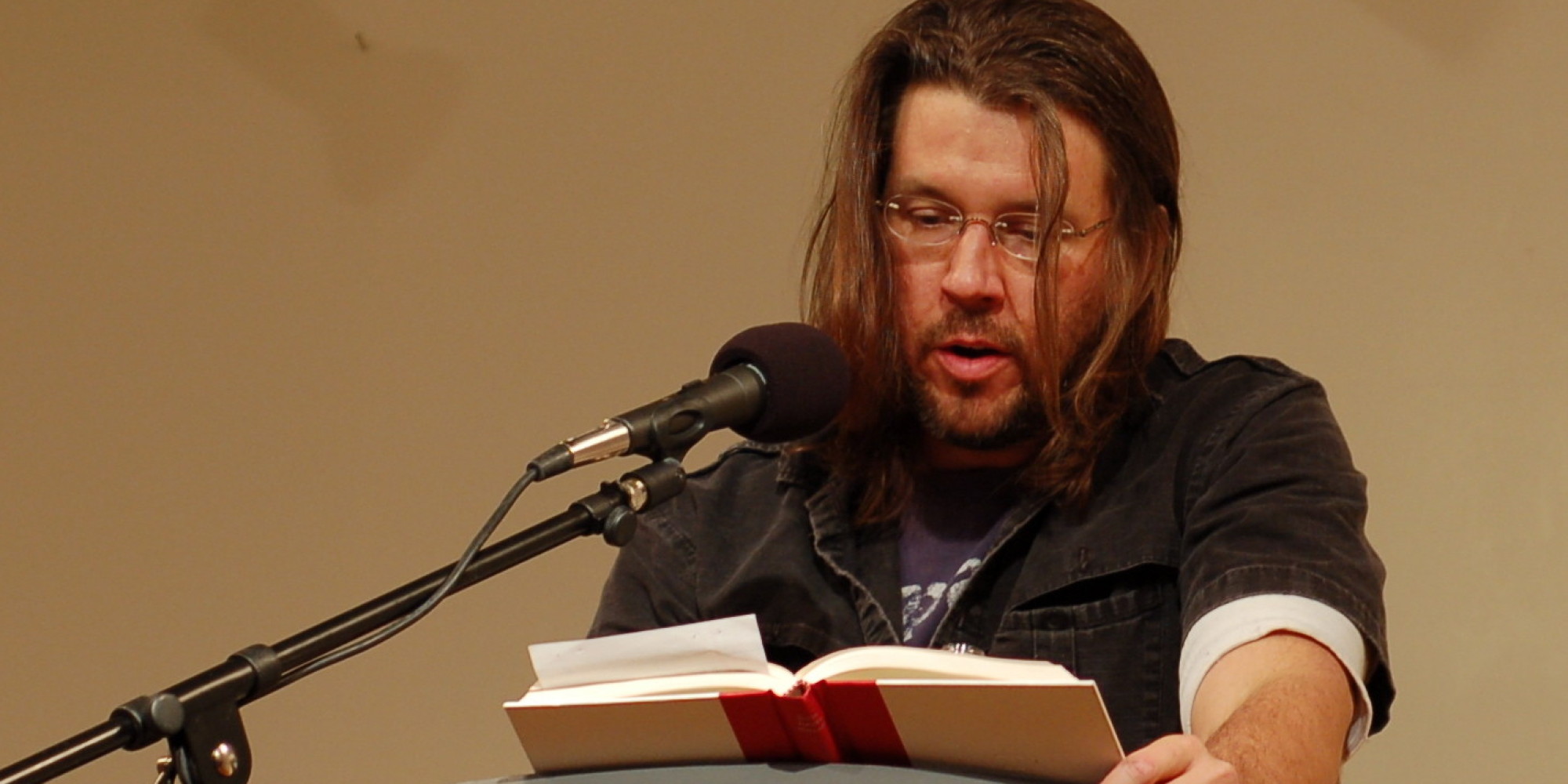
    “The really important kind of freedom involves attention and awareness and discipline, and being able truly to care about other people and to sacrifice for them over and over in myriad petty, unsexy ways every day. That is real freedom. That is being educated, and understanding how to think.” – David Foster Wallace

    When David Foster Wallace addressed the graduating seniors at Kenyon College (like he has done so at several other universities), he made sure to instill ideas of personal growth and meaning in the way we live our lives. Much more important than the actual content we know or the money we make, he encouraged students to embrace the uncomfortable ideas, question ourselves, and develop a keen critical awareness. These skills, many of which of central to the liberal arts education, help us in whatever future careers we choose.

    While college freshman nowadays worry more about getting a job, making money, and preparing for graduate school rather than developing a meaningful philosophy of life, everyone wonders how to live a compassionate life. Though we all want to put a roof over our heads someday and have a reasonably comfortable life, that doesn’t mean that we should approach college as a business. We shouldn’t be so quick to seek utilitarian value, economic materialism, or scientific positivism in our work. We, college students, live in system with many assumptions and axioms about what makes us amazing people. We shouldn’t adhere to them dogmatically, but, instead, think about them critically. In this moment, volunteering, leadership, and well-roundedness are a few examples that come to mind.

    Why do we volunteer? Everyone can give many answers. We want to help others. We want to gain skills to become better people. We want to develop ethical, humanistic qualities. In many cases, there is something that we want to get out of volunteering. We might choose to work at a food shelter because we can put that on our resume or spend time at a senior citizen home so we can earn scholarships for graduate school.

    Seen this way, volunteering is a business. And it’s a problem.

    Volunteering needs to be about the value and morals we understand from our experiences. When religious doctrine encourages followers to aid the poor and spend time in charity, many of those followers would agree that they do not do so for the purpose of getting into heaven, but, rather, for more “noble” goals (such as becoming closer to God, making the world a better place, etc.) A lot of the best scientists, philosophers, poets, or anyone of any field understand that, in order to be the best, you shouldn’t work for the sake of getting a reward, but, rather, for the sake of working itself. Similarly, we should approach volunteering the same way. We need to volunteering without succumbing to the “rat race” of filling up lines on a resume or something similar. (As though virtues and morals could be determined through unskilled labor and a number of hours!) But, regardless of any experience we face, many of us want some sort of reward from volunteering. And this isn’t volunteering; it’s employment.

    To understand what volunteering is, we need better ways of understanding our volunteering experiences. Take, for example, volunteering internships/opportunities in third-world nations. Many of us boast these “life-changing”, “eye-opening.” But we don’t gain understanding of the harsh reality of the world when we’re protected by our invulnerable institutions for our own “business-like” benefit. Instead, we pamper ourselves that we’re making a difference and becoming moral human beings. In reality, real change in human beings doesn’t come from flying to new countries or dying for a cause; it comes from living humbly. Similarly, becoming a truly moral human being isn’t caused by your experience building houses for Habitat for Humanity nor engaging in clinical volunteer programs in Ghana; it comes from your deliberate, self-reflective changes to yourself on a day-to-day basis, many of which volunteering experiences may help you do. Like Wallace said, we do not obtain “meaning” from other places, but, rather, we create our own meaning in life.

    Leadership is another concept that has similar concerns. When we talk about “leadership”, we often think about positions in organizations that involve responsibilities such as programming, networking, organizing, and communicating. We can get involved in clubs, sports, or services But there was something we’ve all taken unquestioningly. With student organizations, programs, and activities promising “leadership experience” that will be given to us, how can we call it “leadership” if it’s something that we must receive from something higher than us?

    We mustn’t take “well-roundedness” for granted, either. Colleges and scholarship programs have drilled the ambiguous, ill-defined phrased “well-roundedness” into our skulls. But what does it mean? Some might say “well-roundedness” is about being good at things outside of the classroom. That could mean we have to play a sport, learn an instrument, etc., but that doesn’t tell us much about who we are. That just means we’re doing certain things when we’re not studying. Other might tell us “well-roundedness” means that, while grades are important, there are other qualities about us. But it’s still difficult to identify distinct, quantifiable skills that give rise to who we are. We might say there are “networking skills”, “social skills”, “communication skills”, “professional skills”, etc., and, as long as you commit to certain activities that are different from another you’ll gain those skills. Seen this way, those skills become the “goals” of well-roundedness. But there are still questions as to how we achieve those skills themselves. And, no matter how intrinsic we think those skills are to us, the university still encourages us to manufacture ourselves into them. Are those “skills” artificial?

    A few days ago, University of Chicago poet Rosanna Warren visited Bloomington to host a reading session at a local arts & gifts shop. Though I’m no poetry aficionado, I was blown away by her translation of contemporary and historical Italian work but also her writing on life in America. When I spoke to her about the philosophy of life for college students, we spoke about how the universities have become militarized and business-driven. But, out of our conversation, one piece of her advice stuck with me:

    “Resist!”

    “The human mind doesn’t like to be so boxed in.”

    I think the way we become moral human beings and prepare for the rest of the world should be approached in a different way. Only through the value of the liberal arts education can we develop meaningful philosophies of life. With the freedom of studying humanities, science, arts, and anything else for nothing but the purpose of studying those things, we understand the way people think. We become better, more productive people through those simple methods. And we can understand that knowledge has more to offer than just a way to make money.

    As Wallace made it clear, the liberal arts cliché about teaching you how to think is “actually shorthand for a much deeper, more serious idea: learning how to think really means learning how to exercise some control over how and what you think.” At the end of the day, our extracurriculars, activities, and everything else don’t tell us anything other than what we get out of them. We need to develop the type of awareness to choose how we construct meaning. That’s how we develop a philosophy of life. 
    October 17, 2015
    Education

  • Douglas Hofstadter’s perpetual search for beauty

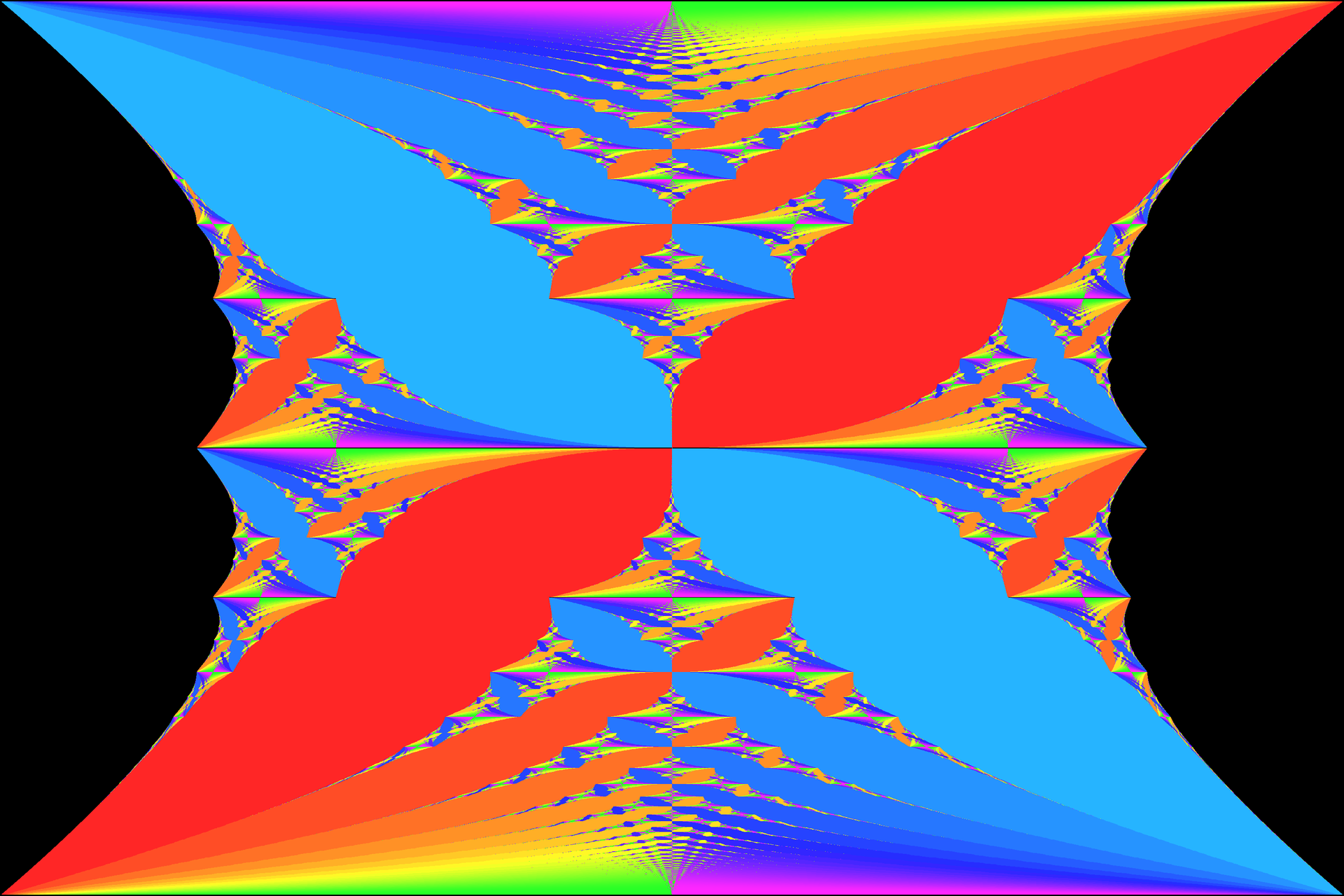
    “Hofstadter’s butterfly, showing the energy levels, E, of Bloch electrons in a magnetic field.In the limit of weak modulation, shown here, the inverse magnetic flux ratio Φ0/Φ determines the internal structure of a Landau band. For example, at Φo/Φ = 1/3, a Landau band splits into three sub-bands.” 

    Rarely do you find people so influential across disparate fields who would rather explore those interests with alacrity, celerity, vim, vigor, and vitality than the typical duties of a professor.

    Douglas Hofstadter, Professor of Cognitive Science and Comparative Literature at IU, has his own way of characterizing his personal style and his personal goals runs as follows: “perpetually in search of beauty.”  After completing his undergraduate degree in Mathematics at Stanford, Hofstadter’s serendipitous life drove him towards Physics research and, later on, work on consciousness, cognition, and perception. His entire work spans the fields of music, the mind, creativity, self-reference, and mathematics. Many know him for his Pulitzer-winning book “Gödel, Escher, and Bach” that explores cognition through mathematics and physics.

    Hofstadter’s Butterfly is an example of mathematical beauty in theoretical numbers, but later empirically discovered in imaging of graphene electrons.

    The other day, Dr. Hofstadter returned to IU to share an autobiographical story of his work. It was incredibly mind-blowing to hear how he had cultivated his passions for thinking, numbers, and everything in-between. The most striking of his love for elegance shone through his explanation of patterns among numbers.

    Hofstadter’s talk began of the physics in the exciting 1950s, in the challenging arena of Bloch electrons, the charges found in crystallized structures, the field was shrouded in mystery and awe. While the most powerful computer at Stanford at University was only as powerful as today’s watches, Hofstadter learned how to program the earliest calculators and graphing tools to explore the field. But, before he serendipitously tumbled into the invisible force-lines of a magnetic field, Hofstadter’s butterfly path lead him through the wonderfully creative number theory. After struggles of failing a physics course as an undergraduate and dropping out of his theoretical mathematics PhD in the 1970’s, Hofstadter meandered into Particle Physics before falling into Solid State Physics. The Brownian drunk walk mirrored his love of the subtle interplay of continuous and discrete mathematics: the theory and wonder that create magically to a one-dimensional Fibonacci-like difference equation playing the role of Schrödinger’s differential wave equation. Through a great stroke of luck, wound up being almost magically parlayed into the empirical discovery of a mysterious, surprising, and visually riveting new type of quantum-mechanical energy spectrum.

    A recursion error during Hofstadter’s presentation. (But maybe it wasn’t so much of an “error.”)

    His story plays unfolds recursively, or self-referentially, as his spontaneous ideas from his college notebooks would later guide his work as a professor. His work would fold in on itself, more and more, until he would find ideas of what human consciousness is. The mind is clearly not a recursive algorithm, nor it is a fractal picture, but the way he explored the beauty of logic and language would lead him to cognitive science. Now, Hofstadter critiques artificial intelligence, technology, and nerd culture.

    My friends who have met and taken classes with Dr. Hofstadter have only expressed mind-blowingly positive experiences, whether the courses are in the sciences or the humanities.

    October 16, 2015
    Science

  • Are You a Bromide? Find out with These Three Easy Questions!

    1. Which of the following would you most likely want to form a bond with?
    a.) Aluminum
    b.) A Texas Carbon
    c.) Texas
    d.) Probably someone who is both reliable and interesting

    2. Do you care about culture or the arts?
    a.) Nah.
    b.) Yeah!

    3. Have you ever wanted to attack a primary carbon attached to an ideal leaving group?
    a.) Of course.
    b.) No way!

    If you answered “a” to all of those questions, Congratulations, you are a bromide!

    Though we commonly refer to “bromide” as the ionic form of bromine, in 1906, Artist Gelett Burgess used the word “bromide” in his essay “Are you a Bromide?” to refer to the unsophisticated group of people inferior to the classy Sulfites. A bromide is staunch in his or her mundanely habitual lifestyle with little to no appreciation of culture or arts. They also enjoy their cliché, trite phrases and sayings. But worry not of any hostility or war between the two groups. Burgess insists that there should be peaceful understanding between the Bromides and Sulfites of  Bromides and Sulfites.

    Sulphite, sulfite…it’s all the same to a bromide.

    The word “bromide” came from the use of bromide salts (like Bromo-Seltzer) for sedatives and tranquilizers. The bromides, with “no salt nor spice nor savor“, very much represent this scientific use. Instead of thinking for yourself and expressing yourself like a Sulphite would, the bromide represents the clichés of the commoners of his time. Some things bromides would often say would be:

    “Now, this thing really happened!”

    “Funny how people always confide their love-affairs to me!”

    “Don’t worry; that won’t help matters any.”

    bruh.

    Burgess’ essay isn’t meant to be taken completely seriously (nor is this blog post), but I thought it was cool to use a chemistry word to describe a group of people. Maybe more relevantly, we should pay attention to the common language we use to describe things, and what that says about us. Though “bromide” isn’t commonly used anymore, we have Urban Dictionary, Twitter and other ways of understanding the underlying meaning of our oft-repeated rhetoric. You might think that “smart” means “an essay you agree with” or that “Africa” means “Poor. But Happy.”

    If we don’t understand, we’ll keep on saying, repeating and changing phrases until we have forgotten how to think. By that point, we will have embraced “bromide” as a new word to refer to our colleagues.

    “Hey, bromide, what’s going on?”

    “My bromides lookin’ fresh!”

    #JustBromideThings

    October 15, 2015
    Science

  • Elegance in science

    The world thus exists to the soul to satisfy the desire of beauty. This element I call an ultimate end. No reason can be asked or given why the soul seeks beauty. Beauty, in its largest and profoundest sense, is one expression for the universe.
    – Ralph Waldo Emerson (“Beauty” from Nature, published as part of Nature; Addresses and Lectures)

    If beauty is the expression for the universe, then it lies in the eye of science. Our scientific endeavors toward understanding the beauty of nature might even tell us something about ourselves.

    If you asked me “What is the most beautiful thing in science?” I would probably respond with Maxwell’s equations. Named after the 19th-century Scottish scientist James Clerk Maxwell, these four equations are one of the most elegant ways to describe the fundamentals of electricity and magnetism. The first equation describes the electric field in relation to charge. Electric field tells us how an electric charge will affect other charges. The second equation explains magnetic flux, or how magnetic substances affect one another. The third equation tells us the electric field associated with this magnetism, and the fourth is about how the electric field changes due to the magnetic field. We can use these equations to form complex relationships in order to describe physical phenomena like the Earth’s magnetic field and the charges of elements. We can use them in a wide spectrum of physics and engineering feats from circuitboards to lasers. We can describe theoretical situations of point charges in empty vacuums through models and simulations. And, because of the concise way in which we can write these four equations, they’re an object of beauty by scientists. The fact that so much information can be conveyed in four equations is a testament to the elegance of science.

    “Elegance” describes how we can explain complicated ideas in simple ways. Often cherished by mathematicians and physicists (but, on occasion, by biologists and chemists), elegant phenomena may be “beautiful” in that we can express more information, theories, or anything else using a small number of words, symbols, or lines of code. In this way, scientists look for elegance as a form of beauty, as an end goal that has aesthetic and practical value.

    Six
 carbons 
once
 formed 
in 
a 
ring,
    with 
sp2 hybridization.
    The
 strain 
was 
relieved,
    and
 all 
six
 achieved
    electron
 delocalization

    ‘The
 stability,
 itself 
is 
dramatic,’
    said
 a 
puzzled 
o­-chemist
 
fanatic.
    ‘All
 these 
factors 
at 
work
    just
 add
 a
 new
 perk.’
    And
 thus 
was 
proclaimed 
aromatic.

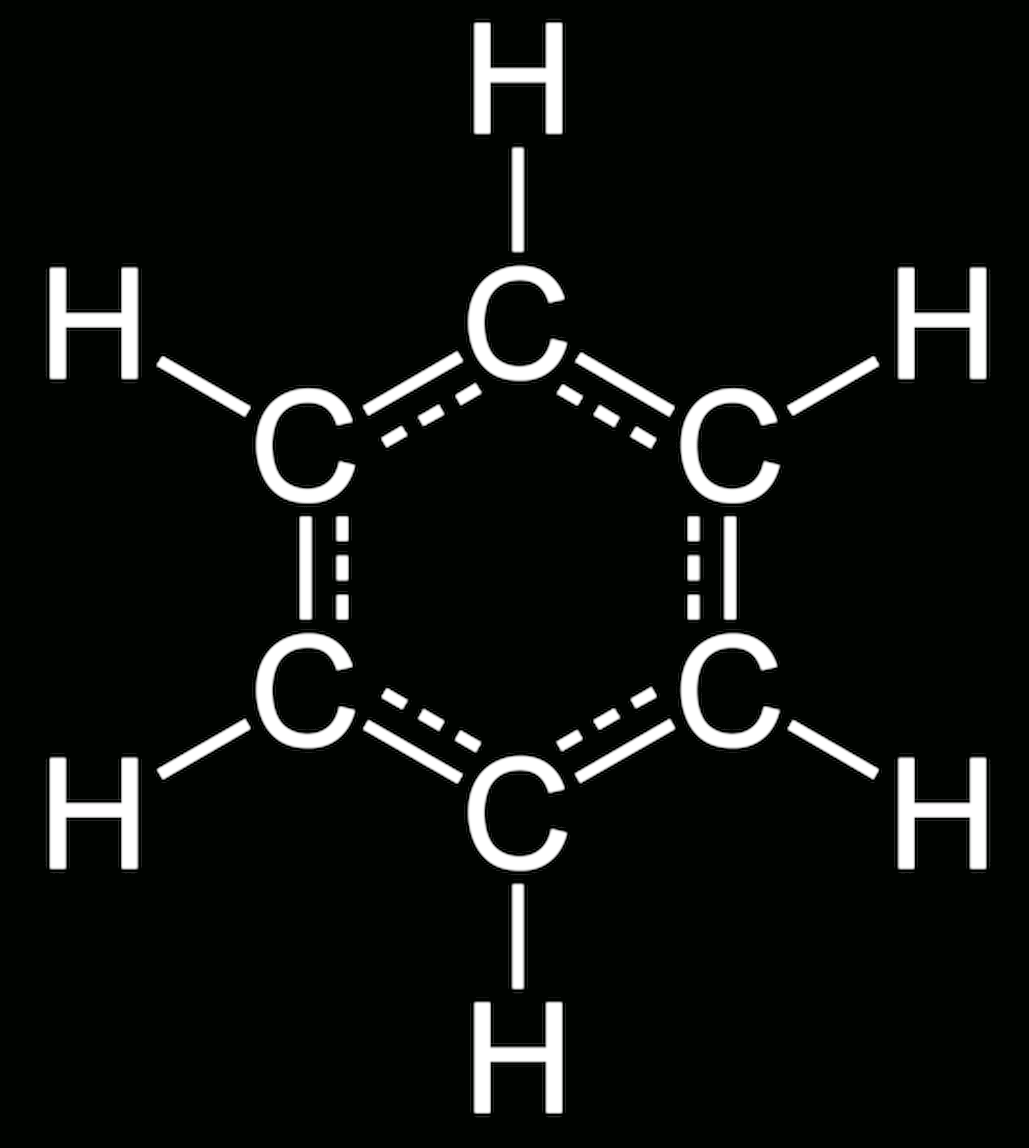
    The chemical compound benzene is very elegant, too. When the 19th century organic chemist August Kekulé had a dream about about a snake eating its own tail (much like the Greek serpent Ouroboros), it occurred to him that the structure of benzene must, similarly, have been a ring of carbon atoms in a hexagonal structure. The simplest of aromatic structures with one hydrogen atom for each carbon atom, benzene lays the foundation for applications in gasoline, plastics, synthetic rubber and industrial solvents. The symmetry and utility of this structure is an evidence to the imagination that chemistry allows. Though elegance is not as frequently used as an end goal in chemistry as much as it is in physics and mathematics, arranging atoms of different elements into bigger and bigger structures carries the idealistic, romantic notion that we can make sense of the complicated from the simple. In this sense, there is elegance through such intuitive explanations of the matter that makes the world. heritage.

    There is simplicity in that the structure of DNA can give rise to phenomena with only four different nucleotide bases at the fundamental level.

    Why do we love brevity? Perhaps it’s practical and easy to measure the most basic principles of a theory in a convenient way. We could say we like Maxwell’s equations and the structure of benzene because they’re easy to draw and write in our lab notebooks.  The French aviator Antoine de Saint-Exupéry wrote that, “A designer knows he has achieved perfection not when there is nothing left to add, but when there is nothing left to take away.” Or maybe the value of brevity is less about the object, but, more extrinsically, about the ways which we can extend simple principles into different unique, complicated situations. We could say we delight at the beauty of how the four bases of DNA give rise to all the biological phenomena we observe. Whatever relation these two forms of brevity have with one another, we create a definition of conciseness that guides, not only aesthetic wonder, but also the rational justification of science itself. For example, Occam’s Razor is a well-known justification for using arguments and methods of reasoning that rely on fewer assumptions. From a purely philosophical point-of-view, it might not be so clear why one would favor theories that require less lines of code or equations that contain fewer variables. But, from statistical arguments of probability and randomness, it’s much more reliable for science to embrace theories and knowledge that minimize chances to be wrong. Fewer assumptions means smaller chances and lesser room for error, and, therefore, more precision and information.

    # Python 3: Fibonacci series up to n
    >>> def fib(n):
    >>> a, b = 0, 1
    >>> while a < n:
    >>> print(a, end=' ')
    >>> a, b = b, a+b
    >>> print()
    >>> fib(1000)
    0 1 1 2 3 5 8 13 21 34 55 89 144 233 377 610 987
    The short, lines of code in Python show simplicity and elegance.

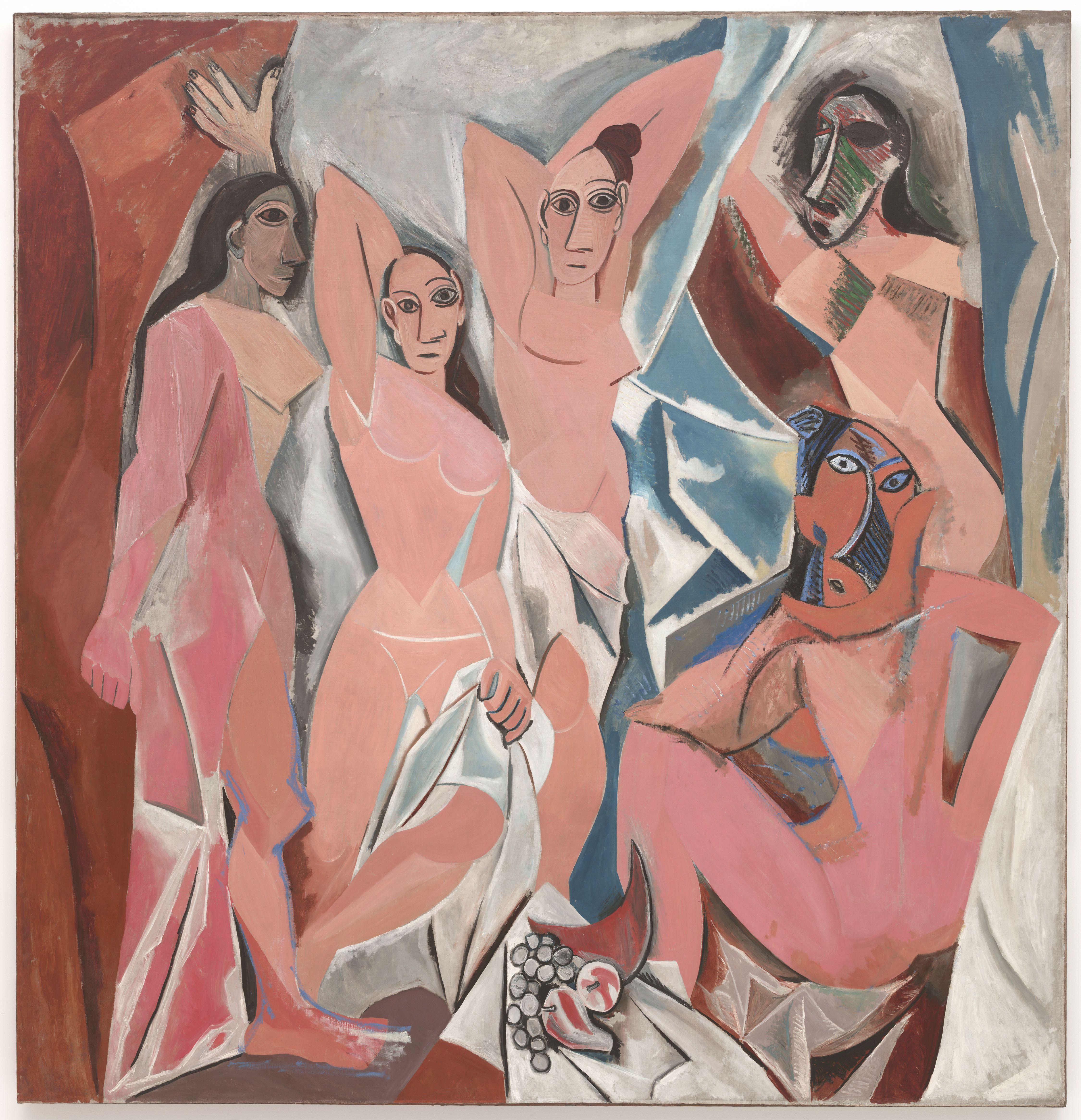
    Did the rise in scientific innovation over the 20th century coincide with the search for scientific elegance? And, if so, perhaps the modernist movements in art paralleled the ignition of our desire to discover elegance in science. The elegance in science comes form our ability to communicate information in the most succinct, concise way possible. Similarly, modernist imagery is known for being pure, rhythmic like the natural geometry of “microscope slides: straight-on views of textured systems (rather than objects in landscapes or architectural spaces)”. Modernist art also embraces the “form follows function.” Elegance as a modernist ideology that we desire to consume and interpret as much information as possible at any given moment. By emphasizing scientific and mathematical elegance as a maximization of utility, one would be reluctant to attribute the same scientific wonder and beauty to something subjective such as a sympathy-based philosophy. Instead, it would be more ideal to attribute the wonder and beauty we observe as results of how well art and science achieve its purpose, namely, through the maximization of this communication utility. This functionality of elegance in science may be an element of modernism. 

    “Wainwright Building” by Louis Sullivan has the “form follows function” principle in its design.

    Moreover, if beauty is in the eye of the beholder, are we adding a subjective human experience to science, a method of inquiry that must remain free from personal bias? Are we just deluding ourselves and inhibiting scientific progress by seeking knowledge for our own sense of beauty?

    Adriaen van Ostade’s “An Alchemist”: The 17th century alchemist’s search in vain for the philosopher’s stone, a mythical substance that promised the ability to live forever or turn things into gold may have been a quest for elegance in that it sought a single goal of perfect enlightenment.  While the searches were unfruitful, the beautiful religious, metaphysical experience of the philosopher’s stone might be seen as the object of a scientist’s affection.

    Perhaps we should embrace efforts to find wonder in science through elegance are best used for the betterment of science, but we should keep in mind the beautiful, artistic value that makes us human. Whether or not we champion nature or the dazzle of science overrules ourselves is important to the way we approach philosophical, legal, and ethical issues in science, medicine, and other fields of amazing work. It’s best for us to see science as, not just a way of obtaining information about the world, but also an art, a philosophy, and a beautiful journey into the unknown. 

    September 29, 2015
    Philosophy, Science

  • Gene Editing is Nothing to Fear

    Read this article in the Indiana Daily Student here….

    Gene editing, a method of genetic modification involving changing the sequence of genes, has been around for decades, but it has been dangerous, expensive and difficult for most of its history. But, thanks to the new genome-editing system (known as CRISPR), we can now modify genes much more easily and efficiently. CRISPR (pronounced like “krisper”) is the new tool that has recently shown promising results. CRISPR uses sections of RNA, a modified form of DNA, to target locations in DNA sequences to be added, changed, or removed.

    Researchers have already used CRISPR to engineer species of zebrafish[1], flies[2], plants[3], and monkeys[4].  With the ability to target diseases such as AIDS and cancer, this newfound research offers fruitful advances in health. 

    In April 2015, Chinese scientists used CRISPR to try to correct a genetic disorder beta thalassemia in non-viable human embryos[5]. Though only a few genes were changed, the research was not published due to ethical issues, The scientists explained, at its current state, CRISPR should not be used in clinical medicine. In light of this, the U.S. National Institute of Health restated its dedication to place heavy restrictions gene editing of human embryos[6]. These restrictions differ from state to state, with some having no restrictions at all. 

    But let’s not worry gene editing will harm us. 
    Some people are worried about integrity of the future, but we’ve been worried about the future throughout history. We’ve aggrandized fictitious scenarios in which our scientific advancements will “outpace” humanity. Aldous Huxley’s “Brave New World” warned of a totalitarian future of human beings conditioned at the will of the ruling elite while the fantasy film (emphasis on “fantasy”) “Gattaca” told of a sci-fi dystopia of designer babies driven by eugenics. 

    Those arguments that we will face dystopian futures are outrageously exaggerated. We’ve been modifying ourselves for a while now, and we’re nowhere near anyone employing gene modification to take over the world. Besides, we have regulations for safety and informed consent of those involved in the research. There’s no need to extrapolate that we will wake up tomorrow as mindless robots, robbed of free will and virtue or, even worse, completely extinct. The fiction will remain fiction.

    Scientists from U.S., U.K., and China will be meeting in Washington during the first week of December to discuss the future of gene editing[7]. 

    The quote “It has become appallingly obvious that our technology has exceeded our humanity” is often attributed to Einstein (though physics teacher Donald Ripley of the 1995 film “Powder” actually stated it). But humanity has always been, and always will be, miles ahead of science. Gene editing has a lot to offer, and, though we are still understanding its potential, it’s better for us to address issues as they arise instead while bearing our values in mind. We’re still human beings capable of justice. 

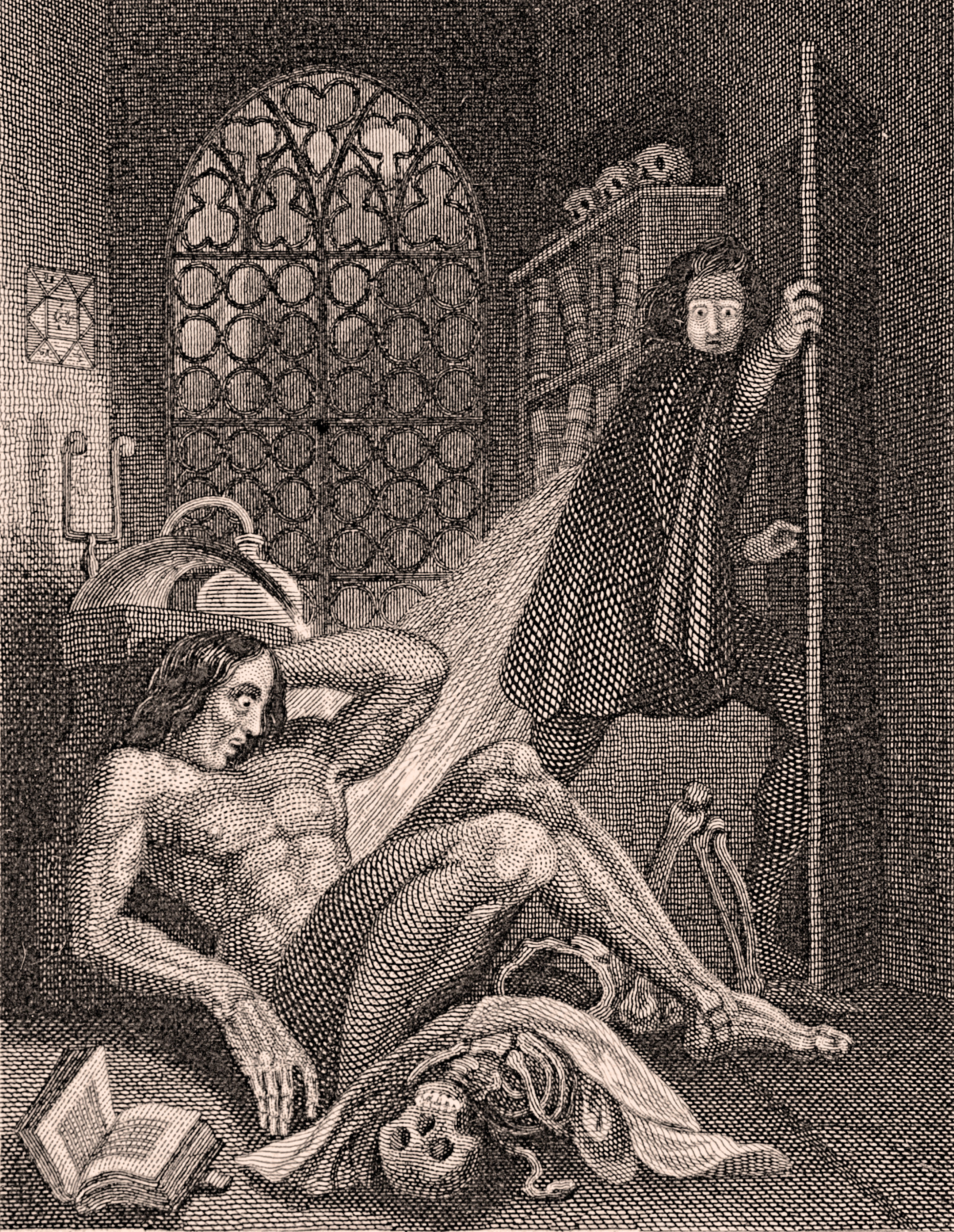
    “Cursed be the day, abhorred devil, in which you first saw light! Cursed (although I curse myself) be the hands that formed you! You have made me wretched beyond expression.”

    Science is exciting. Even the protagonist from Mary Shelley’s “Frankenstein” feared “more, far more, will I achieve; treading in the steps already marked, I will pioneer a new way, explore unknown powers, and unfold to the world the deepest mysteries of creation” (Shelley 486). Let’s not limit what science has to offer for irrational fears and worries. 

    Embrace the future, don’t fear it. Think big. Think careful. We will always move forward with integrity and safety through the exciting world of biomedical research.  

    References:
    [1] https://www.ncbi.nlm.nih.gov/pmc/articles/PMC3686313/
    [2] https://www.ncbi.nlm.nih.gov/pubmed/23709638
    [3] https://www.ncbi.nlm.nih.gov/pmc/articles/PMC3814374/
    [4] https://www.ncbi.nlm.nih.gov/pubmed/26032266
    [5] http://www.nature.com/news/chinese-scientists-genetically-modify-human-embryos-1.17378
    [6] http://www.nature.com/news/nih-reiterates-ban-on-editing-human-embryo-dna-1.17452
    [7] http://uk.reuters.com/article/2015/09/14/uk-health-genes-editing-idUKKCN0RE11G20150914
    [8] https://www.bostonglobe.com/opinion/2015/07/31/the-moral-imperative-for-bioethics/JmEkoyzlTAu9oQV76JrK9N/story.htm
    [9] https://www.newscientist.com/article/dn27166-editing-human-embryos-is-genetics-new-battleground/

    September 28, 2015
    Science

  • Challenge the Status Quo: Strengths and Limitations of Academic Freedom

    Undergraduates of America,
    The time to change history is yours. 
    It’s likely that you’ve spent most of your life growing up in a bubble. It might be true that, in your hometown, you never knew much about the world around you. You may have wondered about things and desired to learn more, but it might have been difficult for you. You might have felt powerless, oppressed, or weak in any way at some points throughout your life. Now that you’re at the university, But the world is exciting, terrifying, and absurd. And that’s what makes you human. Take it in stride. 
    “Elsipogtog” by Fanny Aaisha
    Now, more than ever, you have the freedom of thought to question anything you want. As an undergraduate, you might be idealistic, valiant, noble vision about the future that is not burdened by the past. Regardless of how true your dreams will be, you should keep this ambition cultivated throughout your life.

    “Freedom is acquired by conquest, not by gift. It must be pursued constantly and responsibly. Freedom is not an ideal located outside of man; nor is it an idea which becomes myth. It is rather the indispensable condition for the quest for human completion.” -Pablo Freire (“Pedagogy of the Oppressed”) 

    In Freire’s 20th century Marxist analysis, the student-teacher relationship is similar to an oppressed-oppressor relationship in which the students are given the freedom and power to understand the human condition. This fights dehumanizing issues like violence, prejudice, and exploitation. The learners and the learned create knowledge hand-in-hand. 
    Regardless of whether or not you agree with Freire’s conclusions (one might argue that his work is outdated), an exploration of the status quo will tell you that the message is clear: challenge authority. No more dogmatic listening to what you should make of your college career. Listen with an active mind. The way you change the world is not through what the academic advisors will tell you. And it’s not through what your professors did when they were your age. It’s through something developed by 
    you for the ever-changing 21st century.
    There is a common theme that the education is meant to provide a utilitarian value to prepare us for our future. We value ourselves as students only insofar as we can make money and produce a benefit to society. But, as many scholars have argued over the centuries, the value of an education isn’t something with a price tag. You’re at the university to become a better person, cultivate a love of learning, and understand the true gifts of a liberal arts education. 
    Stepping back in time further, late-19th century German Philosophy Friedrich Nietzsche would lament that utility-based approach to education, as well. He would write:

    as much knowledge and education as possible—leading to the greatest possible production and demand—leading to the greatest happiness: that’s the formula. Here we have Utility as the goal and purpose of education, or more precisely Gain: the highest possible income … Culture is tolerated only insofar as it serves the cause of earning money. (“On The Future Of Our Educational Institutions”)

    It’s easy to see why education needs something more than just preparing us for future careers or for allowing us to make the most money in the future. Unfortunately, while this argument sounds beautiful in theory, it’s far too romantic and idealistic to practically implement. At the end of the day, you need a roof over your head before having the luxury of studying Shakespeare. And the reality of the role that technology is increasingly playing in our society means that it would be ridiculous if undergraduates switched to Philosophy majors in order to truly appreciate Descartes during their four years at the university. 
    And, in spite of the individual freedom of an ideal democracy, there’s something that worries you: Is all of this individual freedom truly good for us?
    Nietzsche wrote that pursuing complete freedom for the student would lead to chaos, and, instead, called for discipline and order among students. He criticized the schools that would “succeed in implanting independence in the place of the dependence, discipline, subordination, and obedience implanted by former generations that thought it their duty to drive away all the bumptiousness of independence!” (“On The Future Of Our Educational Institutions”) We should realize that becoming completely free in the value we get from our education would cause us to have entirely subjective, vague concepts of education. From these limitations, it’s clear we have both practical and pragmatic reasons to question even freedom itself. 
    Mid-October 1871. From left: Erwin Rohde, Karl von Gersdorff, Nietzsche. With his friends, Nietzsche was able to freely express the isolation he experienced in Academia. Only through such unhindered expression can we explore such topics.
    With great power comes great responsibility. I’m not going to tell you what your priorities are nor am I going to try to persuade you to adopt a certain philosophy of education. You should do that yourself. You have the right to choose what you want to get from your education. Maybe it is the process in which we examine our concept of freedom in the context of education that truly gives us answers. If your classes don’t encourage enough skepticism and inquiry, then you’re missing out on those things. 

    Now who’s stopping you?

    September 18, 2015
    Education

  • Imposter Syndrome: Noble Humility or Shameful Insecurity?

    Read this article in the Indiana Daily Student here….

    From the first day of an introductory course in philosophy, psychology, or any field, we are inundated by the daunting knowledge and opportunities of the world. You realize that there’s so much to explore and learn. The things you know about the world might be wrong, and the things that you’re proud of might seem trivial, irrelevant, or unimportant in the face of the amazing things that others have done. Others might tell you that you’re intelligent, hardworking, or diligent, but you feel as though you’re not what everyone thinks you are. To make matters worse, socioeconomic and biological factors of the world might cause us to lose sight of what we truly have control over. We might think that we are only doing well because we were born to the right family, the top school, or the best genes. Students of color might feel as though they are recipients of affirmative action. Women might feel as though society should not expect them to believe they are intelligent. It doesn’t matter if you’re the prince or the pauper, the smartest or the strongest, the highest or the lowest. You wonder, “How did I get here?”

    Fake It Till You Make it

    We may manifest our negative feelings in healthier ways. This might come about through modesty. But, too often, we have tendencies to deny any positive quality others say of ourselves. We may end up disliking moments in which we must show off or speak about our own accomplishments. This could be during communication such as presentations, interviews, meetings, or even personal ways such as completing coursework. During these times when we must actualize what we have done, you may pretend to be more skilled than you believe you are, or “fake it till you make it.” This will help you understand how to feel good about your accomplishments, since how you feel about yourself is only a feeling that should not reflect anything negative that you have done. And, while it is definitely noble to behave modest in our successes (be them intellectual or otherwise), it certainly doesn’t mean that we should ignore any positive trait we may have.

    As for factors that are truly outside our control (such as how we were born, what environment we grew up in), it is possible to take pride in what you have achieved while remaining grateful in one way or another. But, more importantly, it’s irrelevant to worry about whether or not factors outside your control have shaped your success. For the African American worrying that he/she might have had extra support in the college admissions process on account of his/her skin color or for the endowed wealthy student realizing that his/her family had access to the best resources, those are things that should not affect how you view yourself. But the position you are on the path doesn’t determine how successful you are. What you give to the world does. Maybe it’s not about the cards that are given to you, but the way you play them. That’s who you are who you are. You can make something meaningful of your life while simultaneously appreciating what others have given to you. And, at the end of the day, we don’t really know how lucky we could have ever been. So we should always remain grateful. That’s the type of modesty and appreciation that should promote humanism and virtues in the sciences (and the rest of academia).

    September 7, 2015
    Philosophy

  • “We are What We Do”: The American Dream and Education

    Who are we? At the beginning of many of my classes and activities (from kindergarten to college), my teachers sometimes coerce us to introducing ourselves to others. It usually involves telling others your name and a something you do. You can share that you play a sport, an instrument, or a video game; you can tell others about a hobby or a skill; or you can introduce yourself with your job. We see each other as trumpeters, origami enthusiasts, or accountants. We define ourselves by what we do. Why?

    Identity is, of course, not limited to the things that we do. We know who we are by what we look like, personal qualities and traits, memories, and stories. If someone shows you a picture of yourself, you can easily identify it as yourself. If someone asks you about what you did last summer, you can easily recall memories in order to identify the ones that you had done. But could you use impulses of motor control to identify the way you sign your name or throw a dart? We’ve always assumed that the things we do are implicitly contained within our knowledge, and, therefore, constitute who we are. The common link between perception and action has recently been explored very well through cognitive studies. Doing things might just be another part of identity this same way. Though the cognitive studies may serve a foundation for how this phenomena arises, we can explore norms and trends in history to fully understand how we are shaped by what we do.

    The criteria and standards for collegiate admission might have influenced us into the norm of action as identity. As the mother prepares her three-year-old daughter for swimming lessons while picking up her middle-school son from science camp, people who dream of success know they need to do things. Academia’s use of extracurriculars as criteria have caused us to identify with those activities more. And our tremendous amount of effort we put into these sports, instruments, or any other activity makes us hold onto those extracurriculars. Regardless of our purpose, the self-identification with the activity may serve as some sort of reward (i.e., I want to call myself a “scientist” in some sense as a result of my scientific research). As a result, we wear our extracurriculars like badges. We introduce ourselves as “Hi I’m so-and-so and I play the violin!” We can achieve this “identification” when we do the things that we do. And we are pressured into activity with the fear that we don’t want to show up to work on Monday to share that you spent your weekend pondering life introspectively instead of doing something.

    Land of Opportunity To Do What you Want

    Taking pride in what we do might appeal to standards of free will and determinism created by American self-determination. Placing the identity in terms of what we do lends our identity to our own free will while yielding to the determinism of the activity itself. What I mean is that we choose what we do but the activity that we choose still has some predetermined value and meaning. When I tell people I’m a physics major, it appeals to the hard work I’ve put into my undergraduate career while simultaneously appealing to what we collectively, commonly associate with someone who studies physics (i.e., I’m an introverted lunatic who loves mathematics/science etc). Making action part of the identity gives us this power over who we are while conceding some of that influence to what is already established by the activity itself.

    Who can deny that, as part of the American Dream, we want everyone to earn the rewards of what they do. We are promised that, as long as we work hard, there’s a chance. We all understand that it’s not possible for everyone to be rich, but it doesn’t stop us from the meritocratic understanding that we are here for the possibility. And, even as big cars and fancy houses are not always achievable, we still hold onto the credo that the hard work and determination will lead to success. These ideals lay the foundation for the beliefs that what makes us who we are is what we do.

    College students are certainly no exception to the American Dream’s effects of identity with action. We spend our entire lives building ourselves up with experience as though we instantly become better people because we can simultaneously play a sport, learn a language, volunteer at a local shelter, and do well on tests. As such, we celebrate our value and identity as students as though they were determined by the things we do. We might see the things we do as value in and of themselves rather than as means to obtain the greater value within them. While it is true that one may benefit from taking part in those opportunities, it’s questionable whether or not they should be end goals in and of themselves and whether or not the value is intrinsic or extrinsic. Is this the American dream? Or have we lost sight of the purpose of the college education?

    Why did I make this blog? Though my friends love creating profiles for themselves on LinkedIn, Twitter, or any similar social networking site, I preferred to abstain from succumbing my identity to the standards and stringent formats of established profiles. I wanted something that offered more freedom for me to create my own ideas, thoughts, and identity. By creating my own identity from my actions (as opposed to the discussed “action is part of identity”), I like to think it gives me more power in communicating to others. And maybe I can call myself a writer, too. 

    September 6, 2015
    Philosophy

  • "We are What We Do": The American Dream and Education

    Who are we? At the beginning of many of my classes and activities (from kindergarten to college), my teachers sometimes coerce us to introducing ourselves to others. It usually involves telling others your name and a something you do. You can share that you play a sport, an instrument, or a video game; you can tell others about a hobby or a skill; or you can introduce yourself with your job. We see each other as trumpeters, origami enthusiasts, or accountants. We define ourselves by what we do. Why?

    Identity is, of course, not limited to the things that we do. We know who we are by what we look like, personal qualities and traits, memories, and stories. If someone shows you a picture of yourself, you can easily identify it as yourself. If someone asks you about what you did last summer, you can easily recall memories in order to identify the ones that you had done. But could you use impulses of motor control to identify the way you sign your name or throw a dart? We’ve always assumed that the things we do are implicitly contained within our knowledge, and, therefore, constitute who we are. The common link between perception and action has recently been explored very well through cognitive studies. Doing things might just be another part of identity this same way. Though the cognitive studies may serve a foundation for how this phenomena arises, we can explore norms and trends in history to fully understand how we are shaped by what we do.

    The criteria and standards for collegiate admission might have influenced us into the norm of action as identity. As the mother prepares her three-year-old daughter for swimming lessons while picking up her middle-school son from science camp, people who dream of success know they need to do things. Academia’s use of extracurriculars as criteria have caused us to identify with those activities more. And our tremendous amount of effort we put into these sports, instruments, or any other activity makes us hold onto those extracurriculars. Regardless of our purpose, the self-identification with the activity may serve as some sort of reward (i.e., I want to call myself a “scientist” in some sense as a result of my scientific research). As a result, we wear our extracurriculars like badges. We introduce ourselves as “Hi I’m so-and-so and I play the violin!” We can achieve this “identification” when we do the things that we do. And we are pressured into activity with the fear that we don’t want to show up to work on Monday to share that you spent your weekend pondering life introspectively instead of doing something.

    Land of Opportunity To Do What you Want

    Taking pride in what we do might appeal to standards of free will and determinism created by American self-determination. Placing the identity in terms of what we do lends our identity to our own free will while yielding to the determinism of the activity itself. What I mean is that we choose what we do but the activity that we choose still has some predetermined value and meaning. When I tell people I’m a physics major, it appeals to the hard work I’ve put into my undergraduate career while simultaneously appealing to what we collectively, commonly associate with someone who studies physics (i.e., I’m an introverted lunatic who loves mathematics/science etc). Making action part of the identity gives us this power over who we are while conceding some of that influence to what is already established by the activity itself.

    Who can deny that, as part of the American Dream, we want everyone to earn the rewards of what they do. We are promised that, as long as we work hard, there’s a chance. We all understand that it’s not possible for everyone to be rich, but it doesn’t stop us from the meritocratic understanding that we are here for the possibility. And, even as big cars and fancy houses are not always achievable, we still hold onto the credo that the hard work and determination will lead to success. These ideals lay the foundation for the beliefs that what makes us who we are is what we do.

    College students are certainly no exception to the American Dream’s effects of identity with action. We spend our entire lives building ourselves up with experience as though we instantly become better people because we can simultaneously play a sport, learn a language, volunteer at a local shelter, and do well on tests. As such, we celebrate our value and identity as students as though they were determined by the things we do. We might see the things we do as value in and of themselves rather than as means to obtain the greater value within them. While it is true that one may benefit from taking part in those opportunities, it’s questionable whether or not they should be end goals in and of themselves and whether or not the value is intrinsic or extrinsic. Is this the American dream? Or have we lost sight of the purpose of the college education?

    Why did I make this blog? Though my friends love creating profiles for themselves on LinkedIn, Twitter, or any similar social networking site, I preferred to abstain from succumbing my identity to the standards and stringent formats of established profiles. I wanted something that offered more freedom for me to create my own ideas, thoughts, and identity. By creating my own identity from my actions (as opposed to the discussed “action is part of identity”), I like to think it gives me more power in communicating to others. And maybe I can call myself a writer, too. 

    September 6, 2015
    Philosophy

  • How to Make a Beautiful Science Presentation

    Now that my internship at the University of Chicago Conte Center for Computational Neuropsychiatric Genomics is over, I’m home in Indiana for a week before heading back to Bloomington for the start of university. During the last week of the internship, I received a great deal of praise for my project presentation. I’m very grateful for the appreciation of those who enjoyed it, and, since I spend a great deal of time putting it together, I’d like to talk about how scientists should make presentations (whether that presentation is a powerpoint, poster, talk, or anything similar).

    Aesthetics is key. Choose an appropriate color scheme that is both eye-catching and practical. When preparing a presentation in front of a large audience, light words on dark backgrounds are visually relaxing. Solid white on black might be a bit painful, but bright or gray-ish colors flow better. Dark words on light backgrounds require a bit more focus and energy to read, but may be ideal for diagrams, figures, and pictures. And, if you are designing a poster (not a presentation), then you would want the audience to spend more time reading your text like it is an essay or a short novel, and, therefore, one might opt for darker text on a lighter background. If there is any doubt, choosing a background that is gray-ish or somewhere in-between light and dark may be a good option, as well.

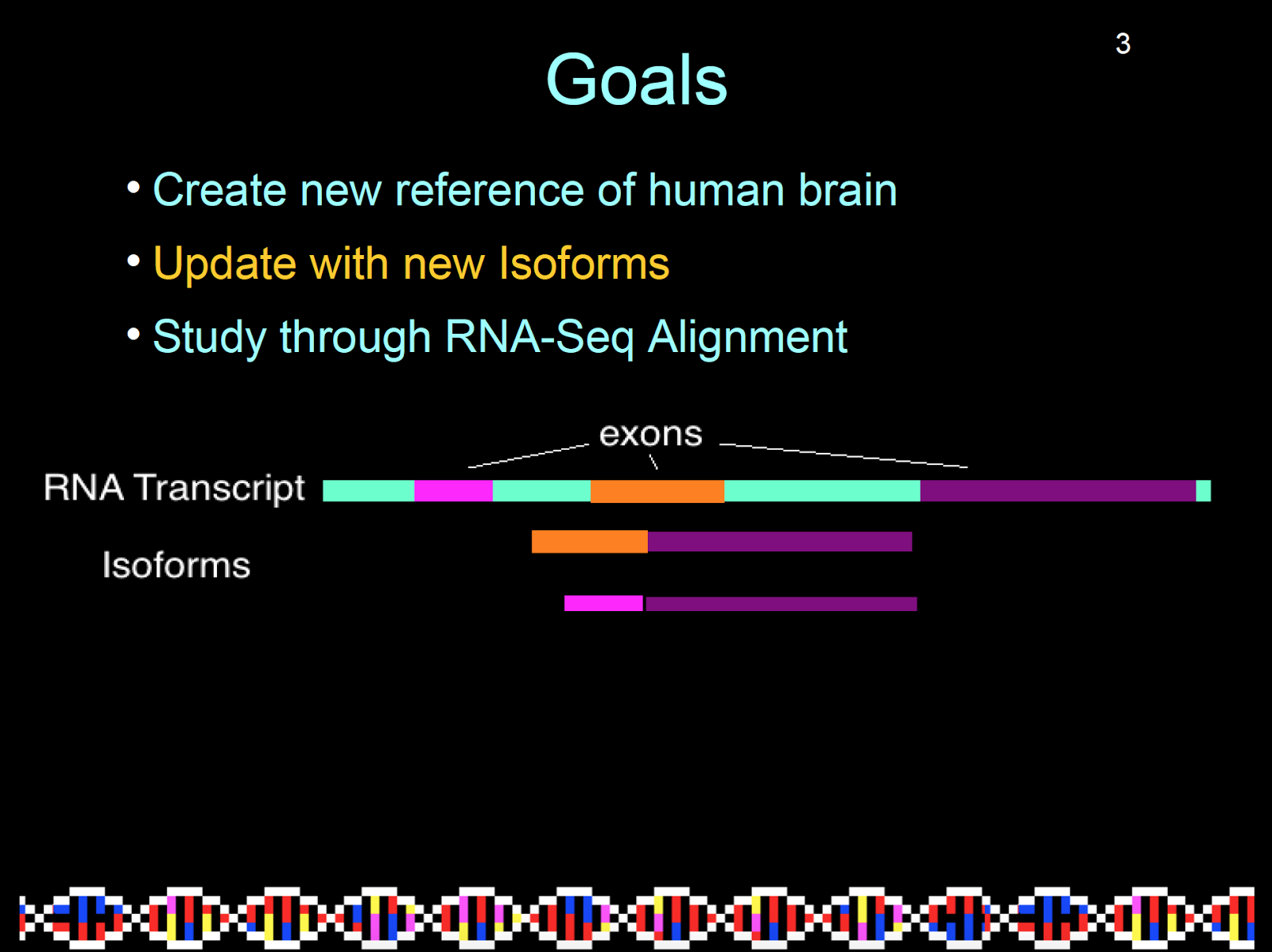
    Orange and cyan complement each other well. Each bullet point is highlighted in orange when it is covered in the presentation.

    Appropriately labeled diagrams are shown large and clear.

    Go big. Make everything about your titles, axes, figures, diagrams as big as possible without interfering with other parts of your project. The bigger it is, the easier it is for people to read.

    Details are important. If pictures don’t have adequate space between them or text isn’t properly aligned with its slide on a powerpoint, then that might (read: will) make a difference to how people perceive your presentation.

    Use Trial and Error. When I was designing my slides, I would sometimes go through about 5 or 6 different arrangements of pictures, text, and graphs until I was satisfied. Between each edit, I had to take a step back to get an idea of how well part of my project would flow with other parts and what type of impression was given off.

    Most importantly, though, science is all about communication. When a scientist understands the way nature works, his/her first instinct is to take note of it. But, even before a scientist can scribble numbers in a lab notebook or download data from online servers, he/she must put it in some sort of language for the appropriate audience. This means that he/she must be aware of who might read whatever information the scientist writes. And, finally, it begs the question: how do we understand nature? Science, in this way, is communication. It is a language of looking at the world in which someone translates the physical reality into a form for others to understand. It doesn’t matter if it’s a newspaper editor writing about a recent drug discovery or a string theorist hastily plowing through equations. There is a rhetoric essential and inherent to the scientific inquiry that we must show in the way we present science.
    September 3, 2015
    Science

Previous Page Next Page

  • Subscribe Subscribed
    • Heuristic
    • Already have a WordPress.com account? Log in now.
    • Heuristic
    • Subscribe Subscribed
    • Sign up
    • Log in
    • Report this content
    • View site in Reader
    • Manage subscriptions
    • Collapse this bar